
Last updated November 16, 2026
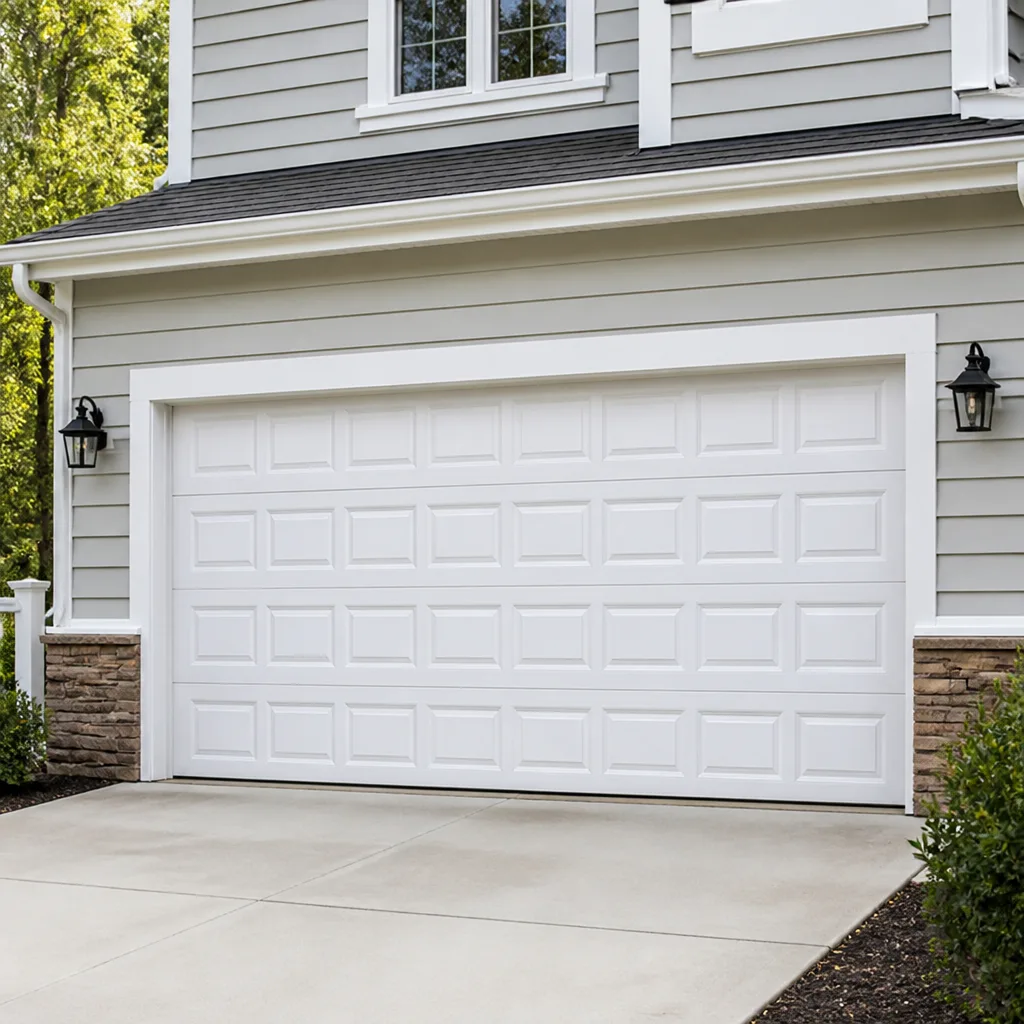 Raised-panel steel
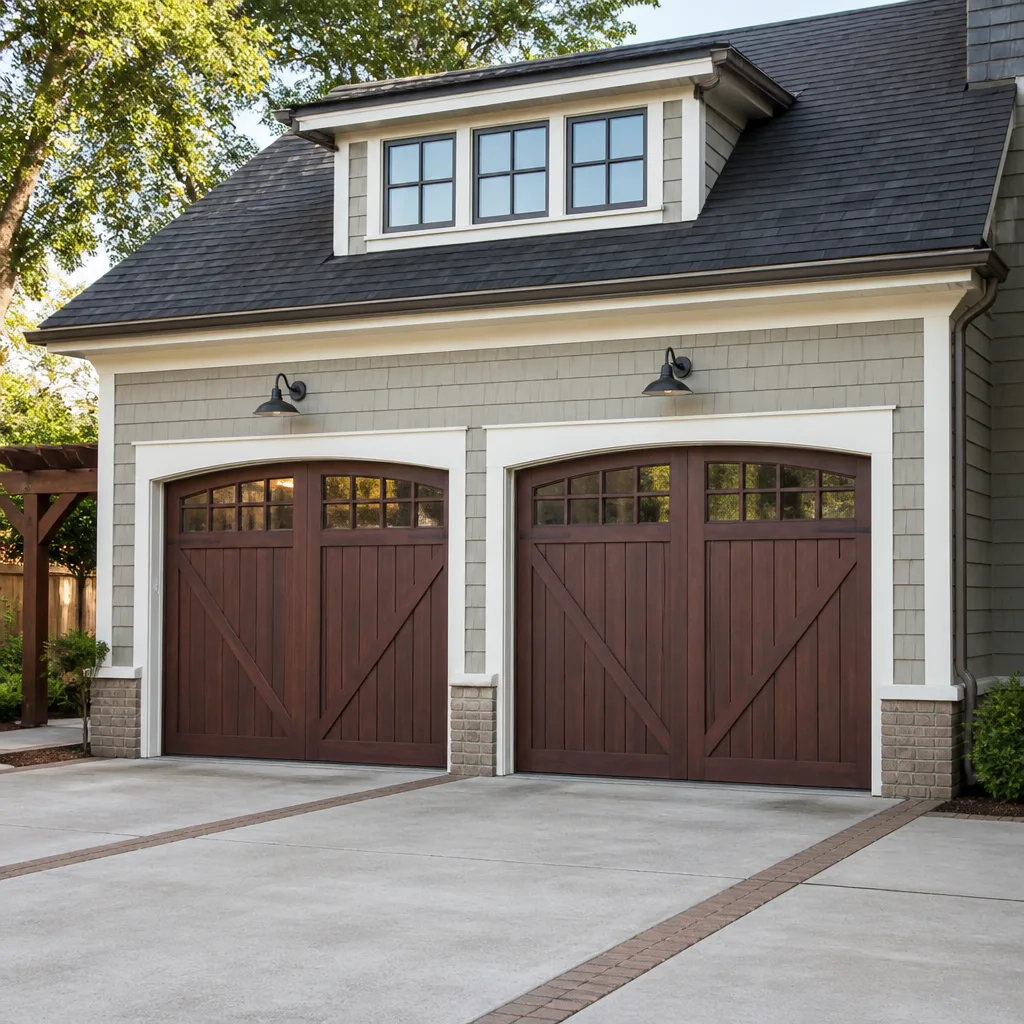 Carriage house
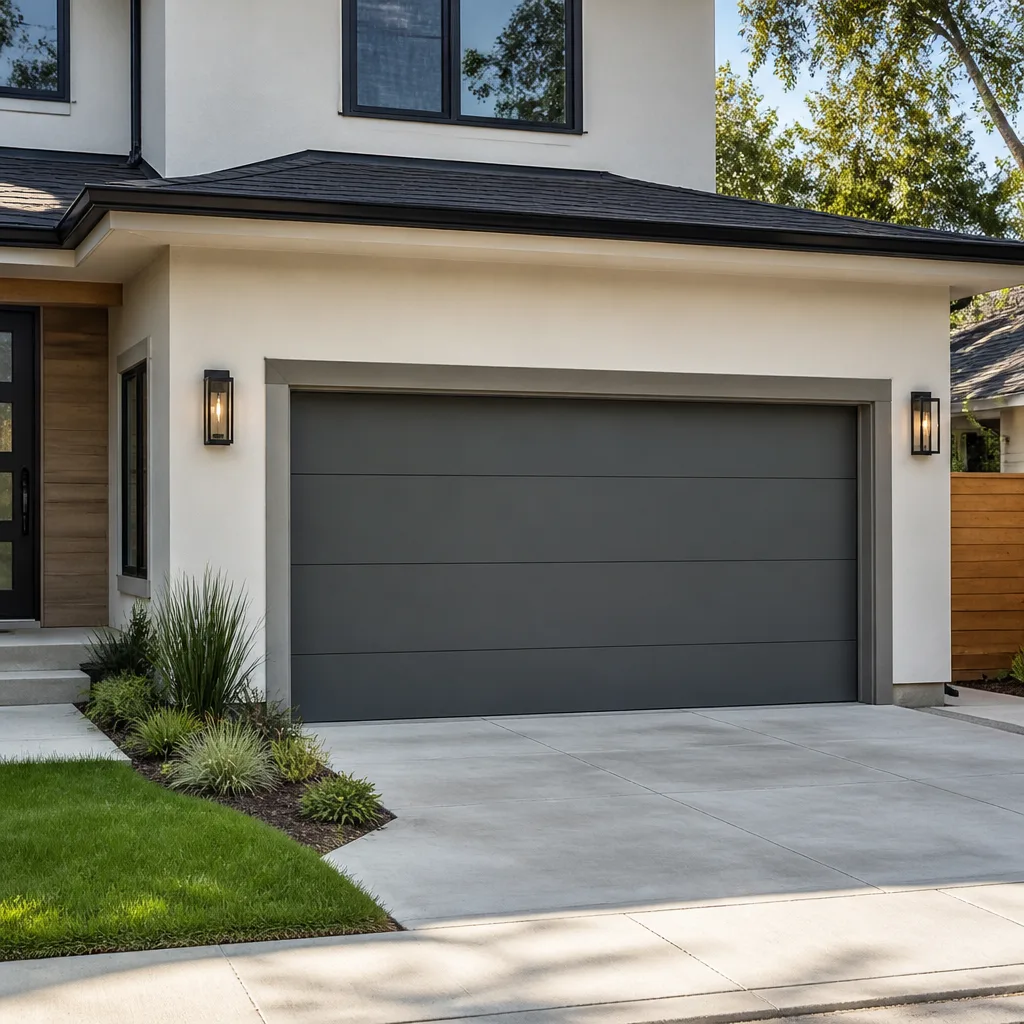 Modern flush
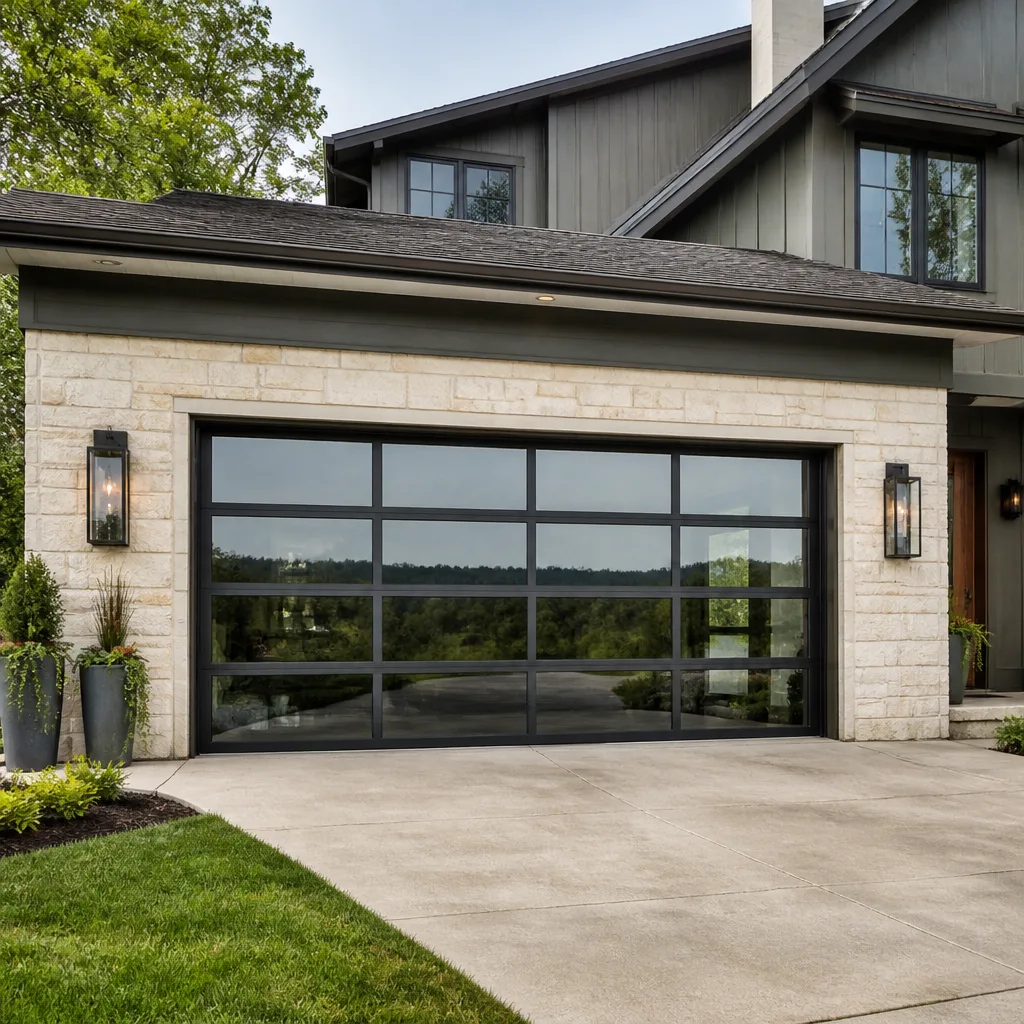 Full-view glass
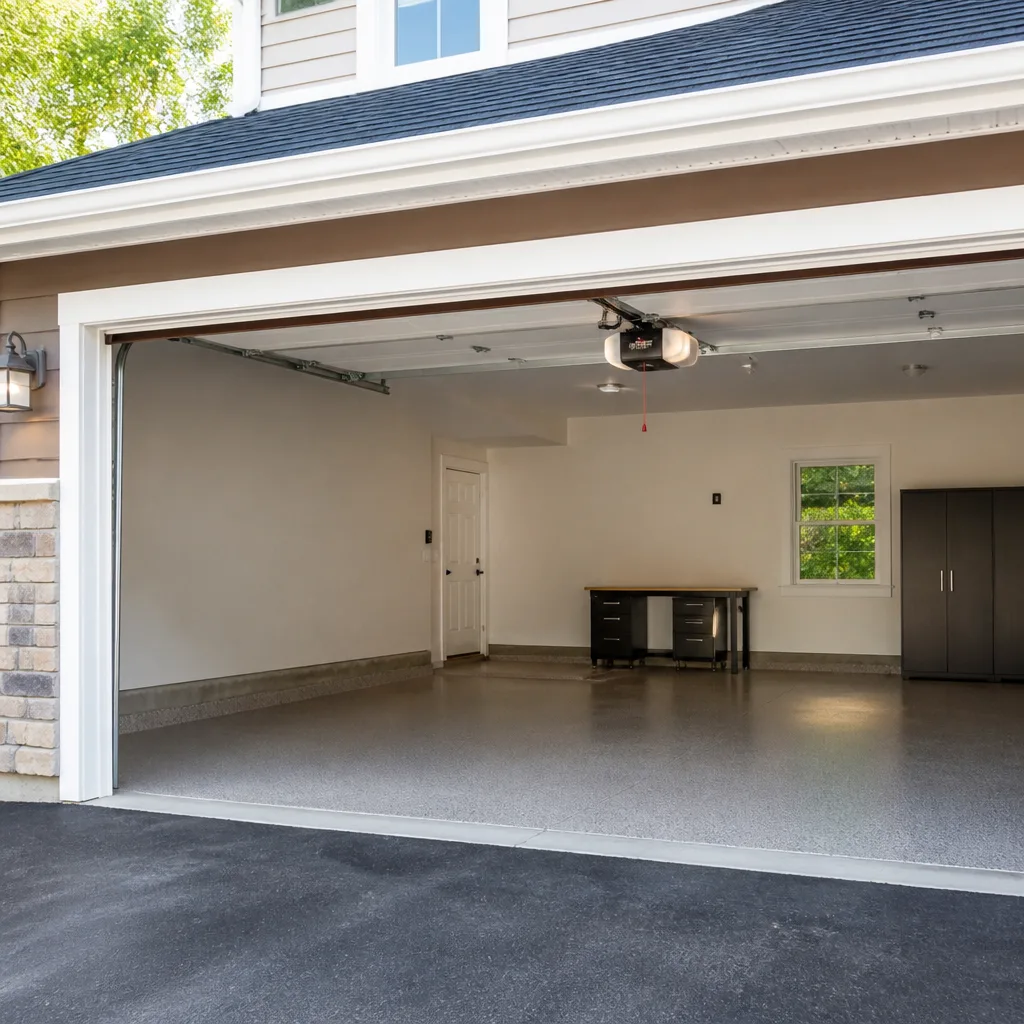 LiftMaster openers
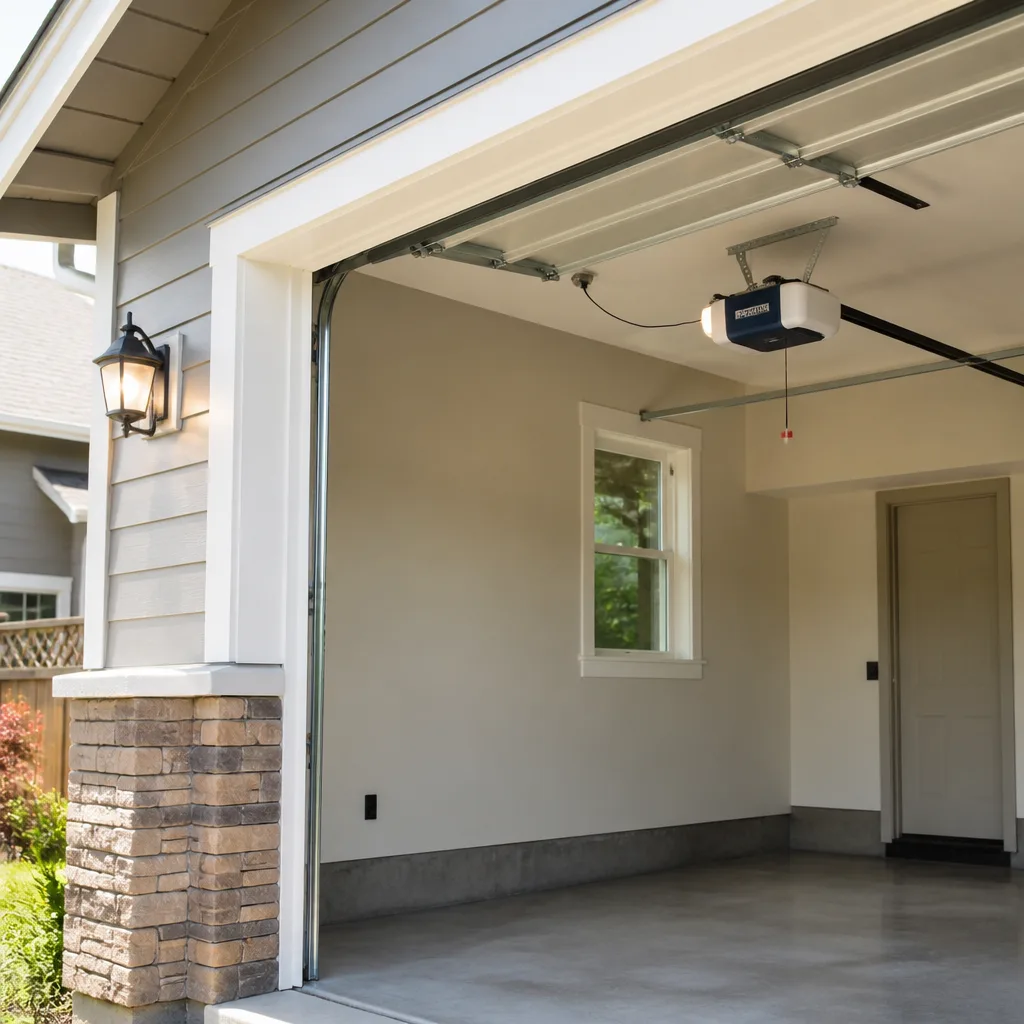 Chamberlain openers
Full 25-point door and opener safety check with every visit - springs, cables, rollers, tracks, and your LiftMaster or Chamberlain opener included
You get a price before we start. It does not change when the pro arrives.
Get your free estimateGarage Door Warning Signs: A Miami Gardens Homeowner’s Reference Guide
Most garage door failure guides describe the end of the story: the door won’t open, or something went bang. The useful part comes earlier. Garage doors rarely fail without warning, and in Miami Gardens the warnings look different from the ones national articles describe. Heat, humidity, and heavy summer rain put stress on springs, cables, and seals in ways a homeowner in a drier climate never sees. The signals are quiet at first: a door that grows louder over months, a seal that stops sealing, a panel that flexes when the wind pushes. This guide covers what to watch for, what each sign means, and a 30-second check you can run monthly to catch most problems while they’re still minor repairs.
Quick Answer
The main garage door warning signs are uneven or jerky travel, a door that feels heavy or reverses when you lift it by hand, rust on springs and cables, gaps and compression loss at the weather seal, and panels that flex or rattle in wind. In Miami Gardens, heat and seasonal rain speed up wear on springs and seals, so the earliest signals often show up in how the door moves and how it sounds, not in visible breakage. Any sign involving springs or cables calls for a trained technician, not a homeowner repair.
Styles & brands we work with
- Raised-panel steel
- Carriage house
- Modern flush
- Full-view glass
- LiftMaster openers
- Chamberlain openers
Table of Contents
- Why Garage Door Warning Signs Look Different in Miami Gardens
- Reading Rust on Springs, Cables, and Bottom Brackets
- Interpreting Opener Strain: Normal Load vs. Forcing a Fix
- Weather Seal Warning Signs in Heavy Rain
- Panel Signs That Point to Wind-Load Trouble
- Noise and Speed: What a Slower, Louder Door Is Telling You
- The 30-Second Monthly Visual Check
- When a Warning Sign Becomes a Safety Issue
Why Garage Door Warning Signs Look Different in Miami Gardens
Garage door components in Miami Gardens live under conditions that push wear rates in a particular direction. Summer heat keeps metal expanding and contracting across a wide daily range. Humidity stays high for much of the year. Rain arrives in hard bursts rather than slow drizzle, which works on seals and thresholds harder than steady light rain does. None of this destroys a door overnight. What it does is make the early warnings more gradual and easier to miss, because they show up as small changes in movement and sound rather than sudden failures.
A garage door is a balanced system. Springs carry most of the door’s weight, and the opener handles only the remaining load. When springs lose tension or cables start to rust, that balance shifts, and the opener quietly absorbs the difference. It keeps running. The door keeps opening. Nothing looks broken. By the time a homeowner notices something is wrong, the opener has usually been compensating for a mechanical problem for months.
That gap between when a problem starts and when it becomes obvious is exactly what this guide is designed to close. In our experience working on doors across Miami Gardens, the repairs that stay small are the ones where a homeowner called because of a sound or a movement pattern, not because the door had stopped. The signs below are grouped by component so you can check the parts of your door that wear fastest in this climate first.
- Springs and cables show corrosion first and movement problems second.
- Rollers and hinges get louder as they lose lubrication and pick up grit.
- Weather seals fail through compression loss, not just cracking.
- Panels and tracks telegraph wind-load problems through flex and rattle before any visible bend.
If you own a door from one of the major brands, it helps to know that the warning signs are largely brand-agnostic. A Wayne Dalton door and a Raynor door both announce spring wear the same way. The brand matters when it comes time to source the right replacement part, not when the door is telling you something’s wrong. For more on the repair side of this, see our garage door repair page.
Reading Rust on Springs, Cables, and Bottom Brackets
Rust on garage door hardware in Miami Gardens tends to start in specific places, and the difference between cosmetic surface rust and rust that signals a component near failure is easier to read than most homeowners expect. The three places to look are the torsion spring coils, the lift cables, and the bottom brackets where the cables attach.
Surface rust vs. structural rust
Surface rust is a thin, even orange-brown film that sits on the metal and doesn’t flake or pit. It’s common on older springs and rarely a reason to replace anything by itself. Structural rust looks different: it’s darker, it lifts and flakes, and it usually concentrates in patches rather than spreading evenly. On a torsion spring, structural rust eats into the coil wire itself. When the wire thins in one spot, that spot becomes the point where the spring eventually breaks. You can see the difference with your eyes, from the ground, without touching anything.
Cables rust from the inside out, so the outer surface can look fine while the core is weakening. The early visual signs are fraying near the drum, a cable that looks kinked or uneven in tension, or a thin film of orange on the strands near the bottom bracket. Any of those means the cable is worth having inspected. Cables are under heavy tension, and a cable that fails suddenly is a genuine hazard. That’s a trained-technician item, never a homeowner one.
What to check and when
- Look at the spring coils from the ground with the door closed. Note any flaking, pitting, or concentrated dark patches rather than an even film.
- Look at the cables where they run from the drum down to the bottom bracket. Frayed strands or an orange tint on the strands are both worth a call.
- Look at the bottom brackets where the cable attaches. Heavy rust there means the hardware around the cable connection is weakening too.
- Listen for a single loud scrape or catch during a cycle. That’s a spring or cable catching, and it’s a sign the component is already compromised.
- Check the color of any rust you find against the surface vs. structural description above. If it’s flaking or pitted, don’t run the door more than necessary until it’s inspected.
None of this asks you to climb up or touch anything. It asks you to look at your door from the ground and notice what the metal is telling you. Springs and cables are the two components in a garage door system most worth treating with caution. When either one shows structural rust, the safe move is to stop cycling the door until a technician has looked at it.
Interpreting Opener Strain: Normal Load vs. Forcing a Fix
Your opener compensates for resistance. That’s what it’s designed to do, and it’s also why a struggling opener can mask a mechanical problem for a long time. The question is how to tell normal load variation from a door that’s forcing the opener to work harder than it should. In Miami Gardens, where the heat already adds load to the whole system, the distinction matters.
Normal load variation is small. The door might sound slightly different in the hottest part of the day than it does in the morning. A Craftsman or LiftMaster opener might run a touch louder when the door is cold. That’s expected, and it’s usually tied to temperature and lubrication, not a failing part.
Opener strain looks different. It’s a pattern that shows up consistently and gets worse over weeks. Watch for these signals:
- A door that starts a second slow: the opener ramps up, hesitates, then moves. That hesitation means the opener is meeting resistance it isn’t meant to carry.
- The opener runs after the door stops: the motor continues briefly after travel ends, which points to tension or balance problems on the door itself.
- Grinding or growling from the opener housing: usually a gear or rail issue, but worth checking the door’s balance first so you don’t replace opener parts to solve a door problem.
- Reversal or erratic travel: the door hits the force limit and reverses. That’s the opener’s safety system doing its job, and it’s telling you the door is binding somewhere.
- Repeated limit adjustments that stop holding: if the opener loses its travel settings, the strain is forcing something out of position.
The right first step with any of these is a door balance check, not an opener replacement. A trained technician lifts the door by hand with the opener disengaged to see how it behaves without power. If the door doesn’t hold position when left half-open, the balance is off, and the door needs mechanical attention before the opener does. That’s the diagnosis-first approach that keeps a repair small instead of letting it drift into a full opener replacement. For the opener-specific side of this, our garage door opener repair page covers how the diagnostics work. Many general repair shops hand opener work off to someone else or decline it outright. We treat it as its own specialty, which is why a symptom like a grinding rail or a slow start can be traced to the right component instead of swapped out as a guess.
Weather Seal Warning Signs in Heavy Rain
The weather seal at the bottom of a garage door is the first line of defense against rain, and in Miami Gardens, where rain often arrives in fast, heavy bursts, it takes more punishment than most homeowners realize. A failing seal doesn’t always look broken. The most common failure mode is compression loss: the rubber or vinyl still looks intact, but it has lost the spring that pushes it against the floor. Once that happens, water finds the seam.
What compression loss looks like
Kneel down or look at the bottom of the door from a low angle on a dry day. The seal should press firmly against the floor along the whole length. Look for these signs:
- A visible light gap under the door at one or both corners, even when the door is fully closed.
- Flattened or bowed rubber along the middle of the seal where it no longer springs back after the door opens.
- Corner gap formation: the seal is fine in the center but lifts at the corners, which is where wind-driven rain gets in first.
- Water on the garage floor after a hard rain, especially if it’s tracking toward the door and in along the sides.
- Mildew or dark staining on the seal or on the concrete just inside the door, which is a sign of repeated moisture.
Cracking and peeling matter too, but compression loss is the one that catches homeowners off guard because the seal can look complete while it’s already failing to do its job. The fix is usually straightforward once the problem is correctly identified: a new bottom seal, or a track and threshold adjustment if the door isn’t sitting square. That’s the kind of repair worth doing early, before the floor inside the door takes on water long enough to stain concrete and feed mildew. A new seal is a small job. Replacing swollen or water-damaged panels is a bigger one.
Panel Signs That Point to Wind-Load Trouble
Panels take a beating in Miami Gardens, and the critical distinction is between cosmetic damage and signs that the wind-load integrity of the door has been compromised. Aesthetic dents matter less than the structural signals below, because those are what determine whether the door holds up in a storm.
Wind-load integrity means the door can resist pressure pushing against it from outside without flexing, bending, or pulling out of its tracks. The early warning signs of compromised integrity show up in movement, not just appearance:
- Panels that flex or oil-can under hand pressure. If a panel pushes in and pops back like a drum head, the panel’s structural stiffness is gone.
- Rattling in wind that’s new, even a light breeze. A door that used to be quiet and now rattles is telling you the panels, hinges, or tracks have loosened.
- Uneven gaps between panels. Look at the seams where the panels join. Gaps that widen toward one side mean the door is no longer square.
- Hinges pulled out of the panel or screws that won’t hold. That’s a sign the panel material around the hinge is weakening.
- Panels pushed out of the tracks after a storm. Even if they popped back in, a door that’s left its track is worth having checked.
In a Miami Gardens home, door orientation and exposure matter. A door facing an open stretch gets more wind load than one sheltered on all sides, so the same door in two yards can wear very differently. If your door sits in an exposed spot, the flex and rattle signals are worth taking seriously and acting on sooner. Track and hinge tightening, and sometimes panel or track replacement, restore the door’s ability to hold against pressure. Ignoring those signs is how a door ends up damaged in a storm rather than merely noisy in it.
Noise and Speed: What a Slower, Louder Door Is Telling You
Sometimes the earliest sign is the simplest to notice and the easiest to dismiss: the door sounds different, or it moves differently, than it did a year ago. In Miami Gardens, homeowners often attribute a slower, louder door to the opener, when the door’s own hardware is usually the source. Here’s how to read what the change is telling you.
A slower door
Slow travel, especially in the first cycle of the day, usually points to one of three things: springs that have lost some tension, rollers or tracks that have picked up grit, or a hinge that’s binding. The door is moving, but against more resistance than before. That resistance gets paid for by the opener, which is why a slow start and an opener running hot often travel together. A door that hesitates, catches, then continues, is a stronger signal: something in the mechanism is binding in one spot, and that spot tends to get worse, not better.
A louder door
Noise changes in stages. A door that’s a little louder could be dry hinges, worn rollers, or a loosening track. A door that’s noticeably louder and rattling as it travels is worth a closer look. The most useful check is to listen for location. A rattle that comes from the top panel near the opener rail points at the rail or the opener’s connection to the door. A rattle that comes from the sides points at the tracks or hinges. A grind at the bottom points at the bottom brackets or the cables. Our team works on LiftMaster, Chamberlain, Genie, and Raynor openers as well as Clopay, Amarr, and Wayne Dalton doors, so a noise from almost any part of your setup is within what we diagnose routinely.
The speed-and-sound check costs nothing and takes a minute. Stand in the driveway, close the door, and open it once. Listen and watch the full cycle. If it hesitates, rattles in a new spot, or sounds louder than it did a season ago, you’ve found a warning sign before the failure. Our technicians have up to 8 years of experience, and knowing which sound belongs to which component is what saves you from paying for the wrong repair.
The 30-Second Monthly Visual Check
This is the routine we’d run on our own doors in Miami Gardens. It takes about 30 seconds and catches most developing problems while they’re still small. Do it from the ground, with the door closed, once a month. No tools. No climbing.
- Look at the springs. Glance at the coil for flaking, dark patches, or pitting. Surface film is fine; structural rust warrants a call.
- Look at the cables. Check for frayed strands, kinks, or an orange tint near the bottom brackets.
- Look at the floor gap. Kneel down and check the bottom seal for light gaps, especially at the corners.
- Pull the release handle (with the door closed) and lift the door by hand to about halfway. It should lift with modest effort and stay put when you let go. If it drops or falls back, the balance is off.
- Reengage the opener and run one full cycle. Watch for hesitation, listen for new rattles, and note if the door changes speed along the way.
That’s five checks in under a minute. It won’t tell you everything a trained technician can, but it will catch the most common developing problems before they turn into a door that won’t open. The two steps that matter most are the balance check and the noise check, because they surface mechanical problems the opener is already busy compensating for.
When a Warning Sign Becomes a Safety Issue
Some garage door signs are diagnostic. Others are safety issues that call for stopping what you’re doing and getting a qualified technician out. The distinction matters, because the components involved can cause serious injury if handled by a homeowner.
Torsion springs and lift cables are under heavy tension at all times. A spring that’s rusted structurally or shows a visible gap in its coil can break without warning, and a failing cable can whip. If you see structural rust, a kinked cable, or a cable that’s come off its drum, keep the door closed and stop using the opener until a trained technician has inspected the door. That’s not a caution we add to cover ourselves. It’s the standard approach any reputable technician takes, because these parts are designed to be serviced by someone with the right tools and the safety knowledge to control the tension.
Similarly, a door that binds, reverses, or falls on its own during the monthly balance check is a safety problem rather than a convenience one. The door’s weight isn’t being held the way it should be. Don’t keep cycling it to “see if it does it again.” That’s the exact moment to stop and call. Our garage door repair team in Miami Gardens can inspect the door and give you a written estimate before any work starts, so you know what you’re getting into. If you want a sense of what the work looks like, our Miami Gardens service area page covers how we work across the city.
Common Mistakes to Avoid
Most of the costly garage door mistakes we see in Miami Gardens are avoidable, and they usually come from misreading a warning sign rather than missing it. Here are the ones worth avoiding.
- Blaming the opener for the door’s problem. When a door gets heavy or hesitant, the opener is the part that’s struggling, not the part that’s failing. Replacing the opener to fix a spring problem means the new opener inherits the same strain and wears out faster.
- Treating rust as cosmetic. Surface film is cosmetic; structural rust is a warning. Assuming every bit of orange on a spring is harmless is how a spring fails before anyone inspects it.
- Overlooking the weather seal until it’s damaged the floor. A seal that looks intact can be losing compression and letting water in. The cost of a new seal is modest compared with the cost of water-damaged panels or stained concrete.
- Lubricating without checking the balance first. Greasing tracks that need straightening quiets the symptom and masks the cause. Fix the door’s geometry before chasing the noise.
- Running a door that reverses or binds. If the door stops and reverses, something is blocking it. Forcing it to keep going is how a minor binding problem turns into damage to the panels or the opener’s gears.
- Ignoring new rattles after a storm. A door that rattled in the wind and now travels a little loose is telling you its hinges or tracks moved. That’s worth a check while the fix is small.
- Waiting for the spring to break. Springs give warning. A rusted, flaking spring coil is a heads-up, and scheduling the spring replacement before it fails keeps the repair on your schedule instead of an emergency call.
See the difference
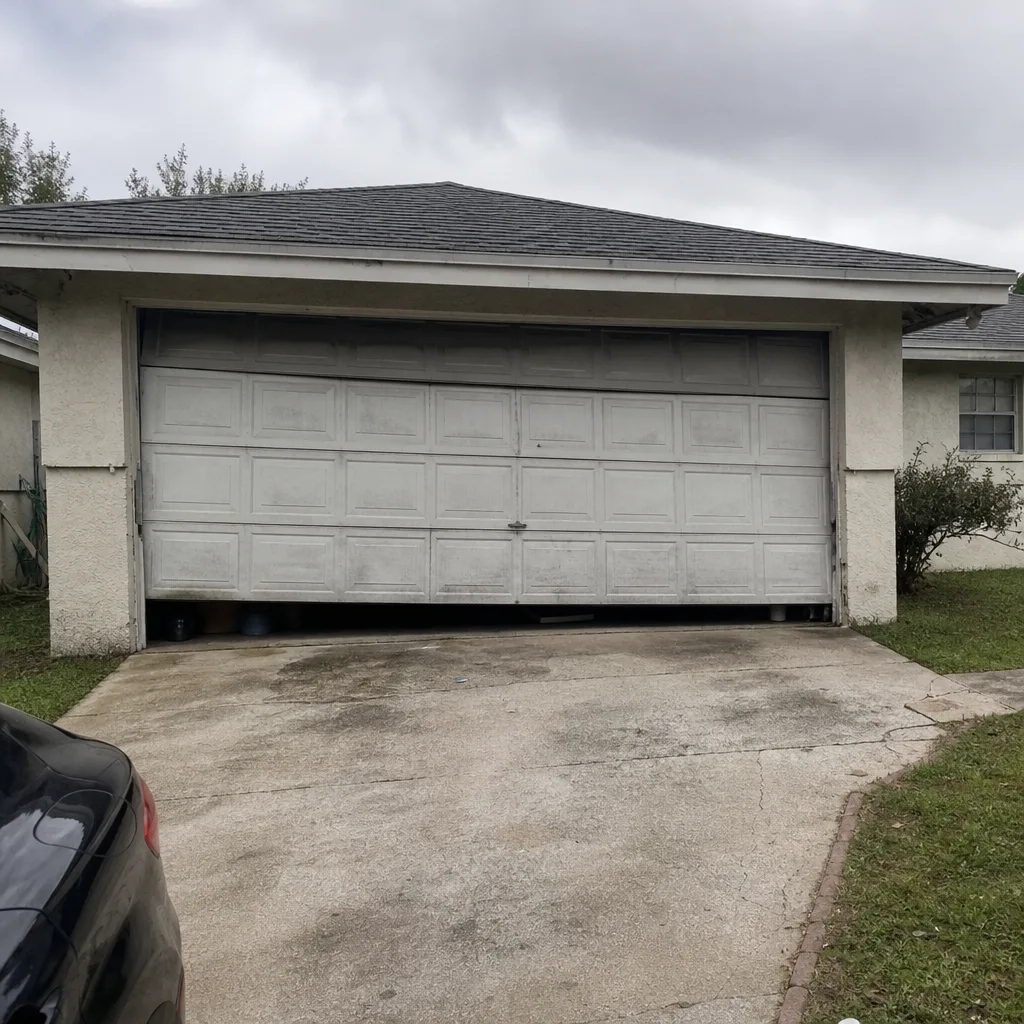 Before
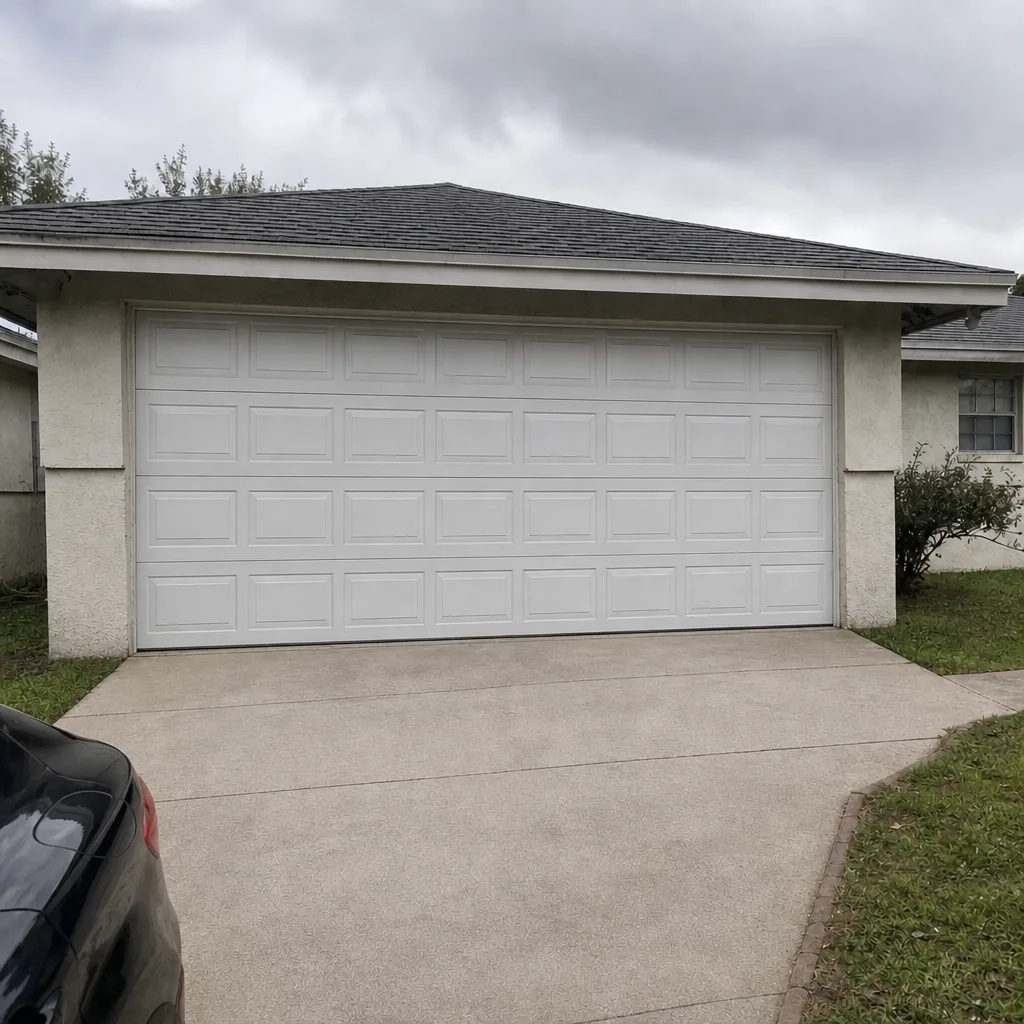 After
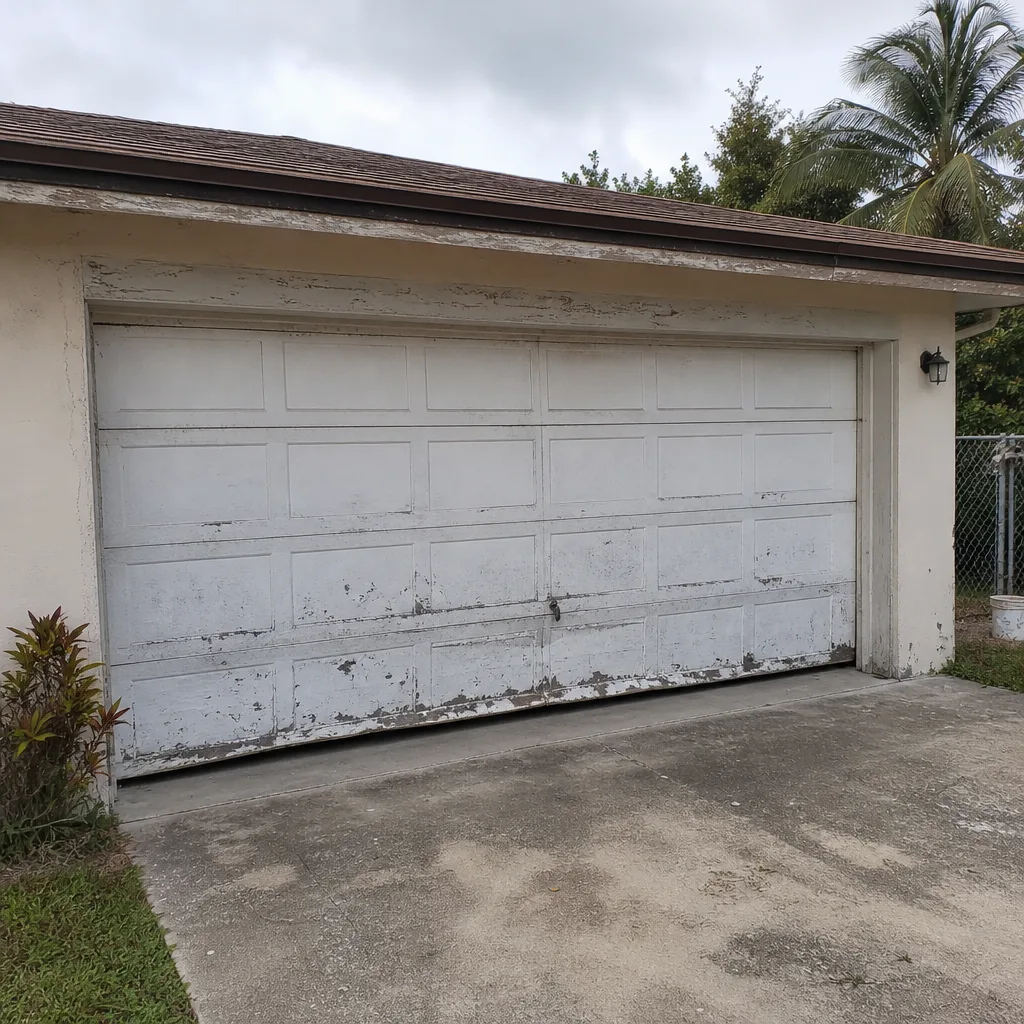 Before
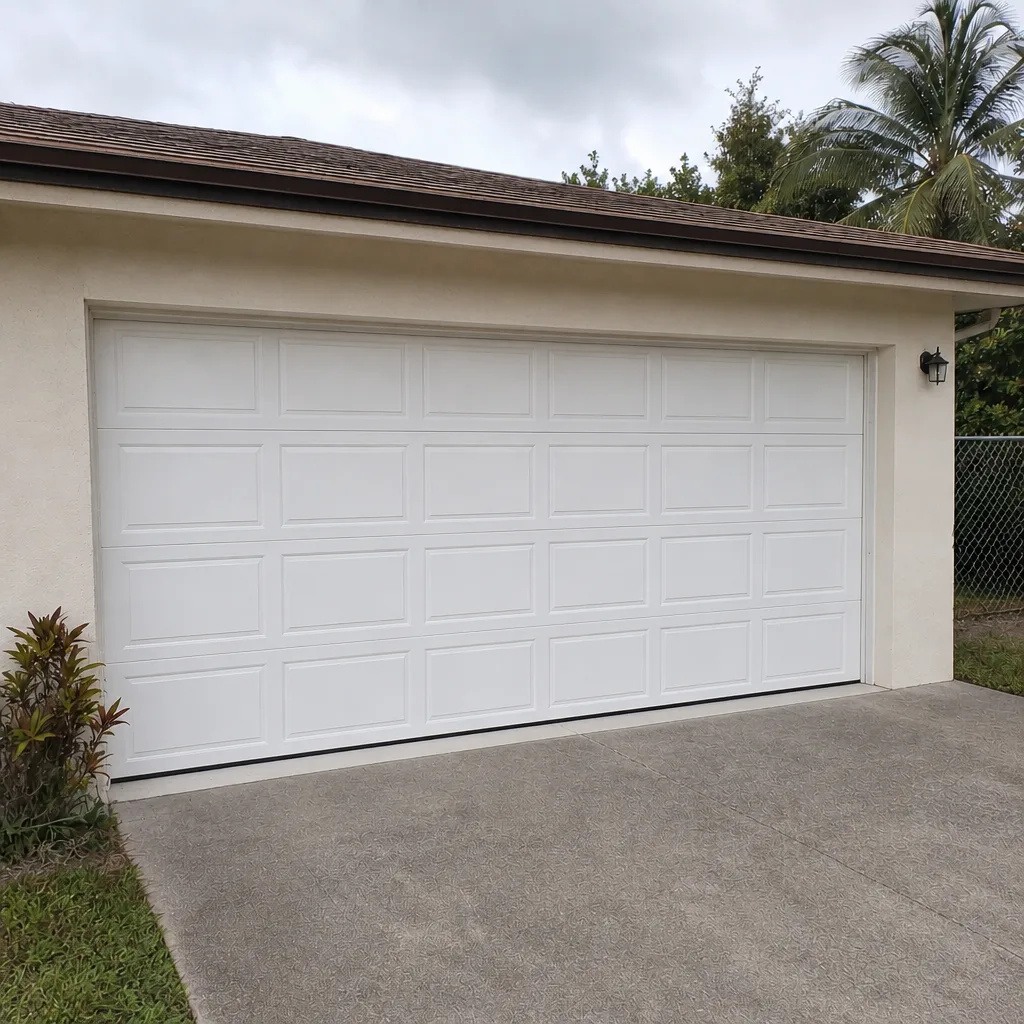 After
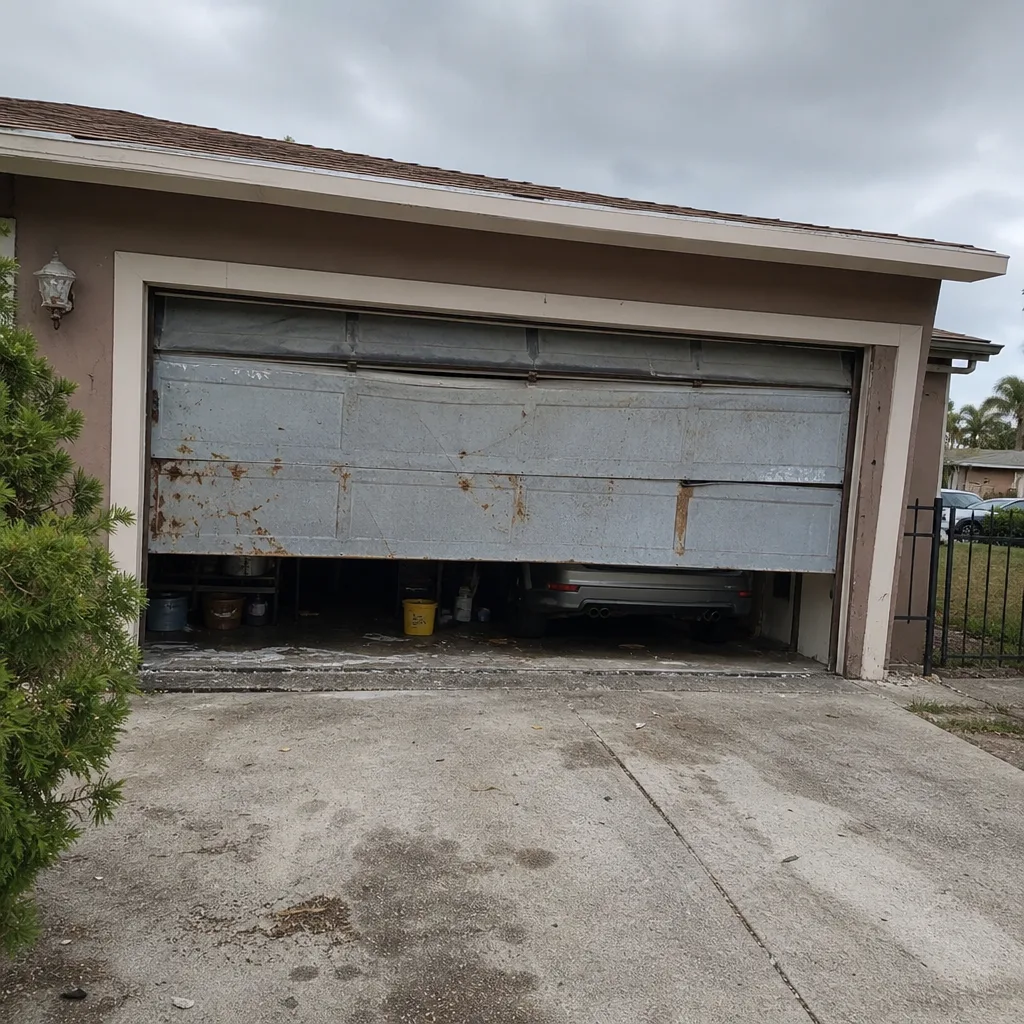 Before
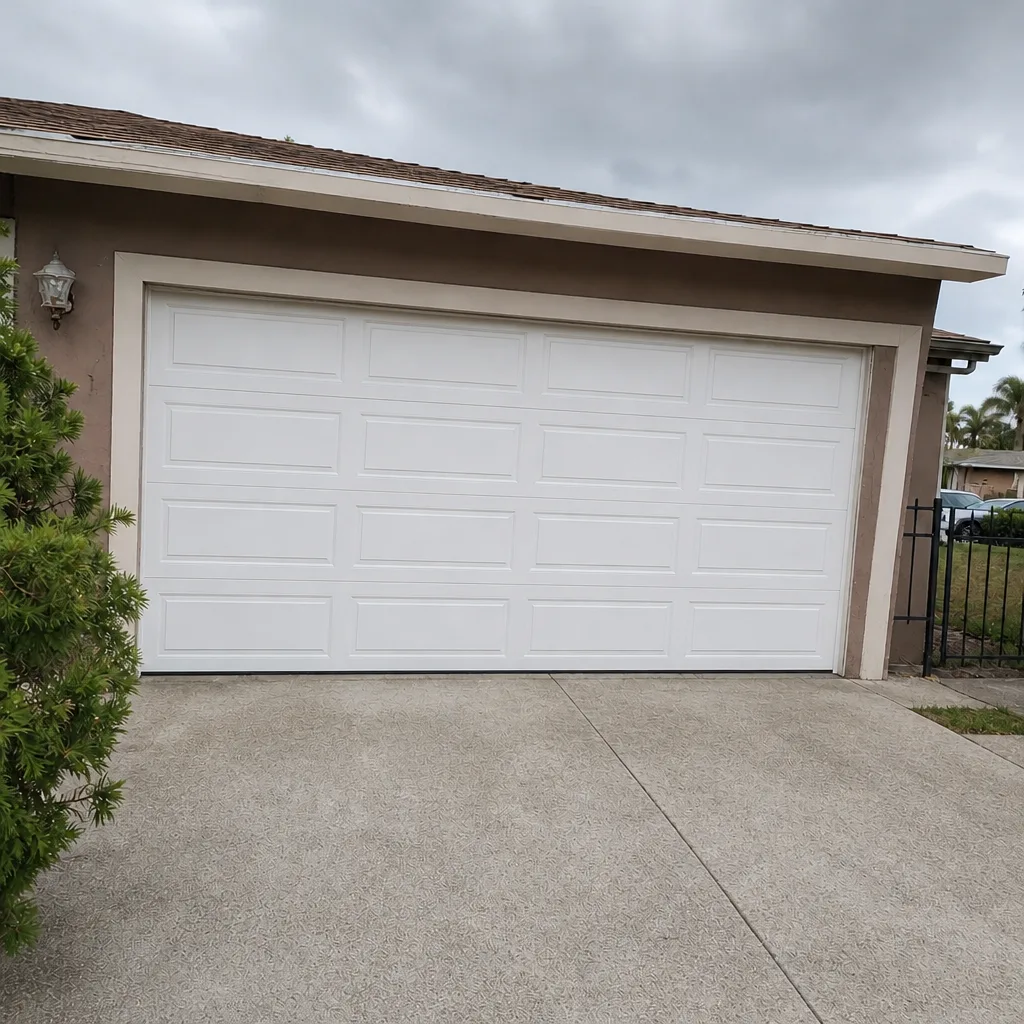 After
When to Call a Professional
Some repairs are worth doing yourself: a light bulb in the opener, a wiped-down seal, a check that costs nothing. Others should go to a trained technician, and those are the ones tied to the safety-critical parts of the system. Call a professional when:
- You find structural rust, flaking, or pitting on a spring or cable.
- A cable looks kinked, frayed, or has come off its drum.
- The door binds, reverses, or falls back during the balance check.
- The opener starts, grinds, or runs after the door stops traveling.
- A panel flexes under hand pressure, or the door rattles in a breeze.
- A storm has pushed the door out of its tracks.
Sunstone Garage Door Repair offers free estimates in Miami Gardens, and though we can’t tell you exactly what your door needs until we see it, the written estimate sets the price before any work starts. Call (855) 360-7295. We answer 24/7. Fast dispatch from 7am to 7pm, Sunday through Friday. Whether the door needs a new spring, a seal, or opener repair, we work on the brand you already own, and we recommend the fix based on your door rather than a vendor’s margin.
Frequently Asked Questions
The most common early sign is a door that moves a little slower or louder than it used to. In Miami Gardens, heat and humidity speed up wear on springs and lubricated parts, so a door that hesitates or sounds rougher than it did a year ago is often telling you that a component is starting to fail. Call (855) 360-7295 for a free estimate on what that symptom means for your door.
Surface rust is a thin, even orange film; structural rust is darker, flaking, and pitted. Flaking or pitting on a spring coil means the wire is thinning, and that’s a reason to have the spring inspected rather than continue to use the door. A trained technician can confirm whether the spring needs replacement. Call (855) 360-7295 for an estimate.
Yes, if the slowness is new and consistent. A door that hesitates or moves slower than it used to is usually fighting resistance from worn springs, dry rollers, or a binding hinge, and that resistance is being absorbed by the opener. The earlier that’s diagnosed, the more likely the repair stays small. Call (855) 360-7295 for a free estimate.
Yes, that’s the most common seal failure in Miami Gardens. The seal can look intact while losing compression, which lets water in at the corners during heavy rain. A new bottom seal or a threshold adjustment usually solves it. Call (855) 360-7295 for an estimate on a seal replacement.
You can lubricate hinges and rollers during routine upkeep, but if the door is louder than it used to be, lubricating without checking the balance first often masks a mechanical problem. The right sequence is to have the door’s balance and hardware checked first, then maintain the parts that are in good shape. Call (855) 360-7295 for an inspection and a free estimate.
Leave the door closed if possible and don’t cycle the opener until a technician has looked at it. A door that’s out of its tracks is under uneven load, and forcing it back can damage the panels and the opener. Call (855) 360-7295. We answer 24/7, with fast dispatch from 7am to 7pm, Sunday through Friday.
The Bottom Line
Garage door failure in Miami Gardens usually gives months of warning. The signals to watch for are movement changes, new noise, structural rust on springs and cables, compression loss at the weather seal, and panels that flex or rattle in the wind. The 30-second monthly check catches most of them. When something points at the springs, cables, or the door’s balance, stop and call a trained technician. For everything else, act on the small sign early and you’ll spend less time and money than you would on the emergency version of the same repair. We offer free estimates and written pricing before work starts. Call (855) 360-7295. We answer 24/7. Fast dispatch from 7am to 7pm, Sunday through Friday. You can read more about the company on our Sunstone Garage Door Repair page.
Written by the team at Sunstone Garage Door Repair.