
Last updated November 16, 2026
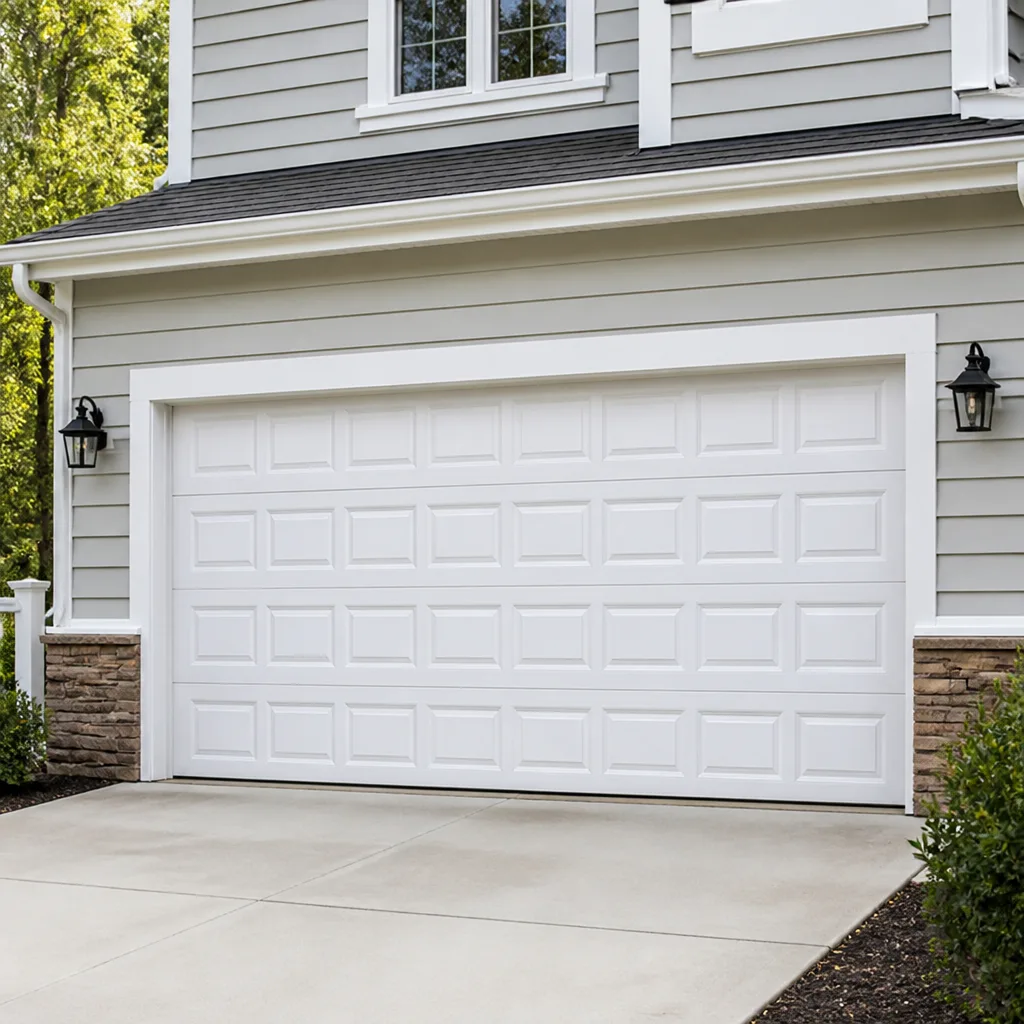 Raised-panel steel
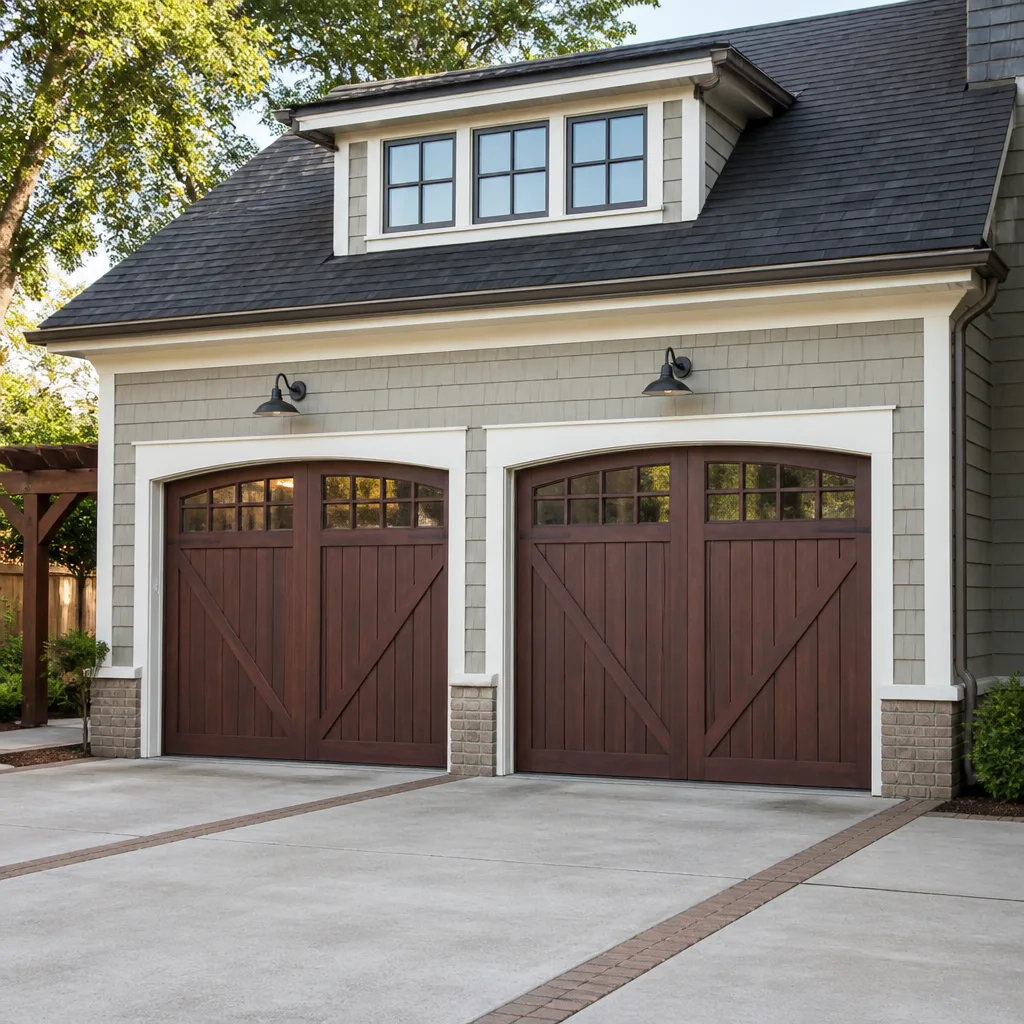 Carriage house
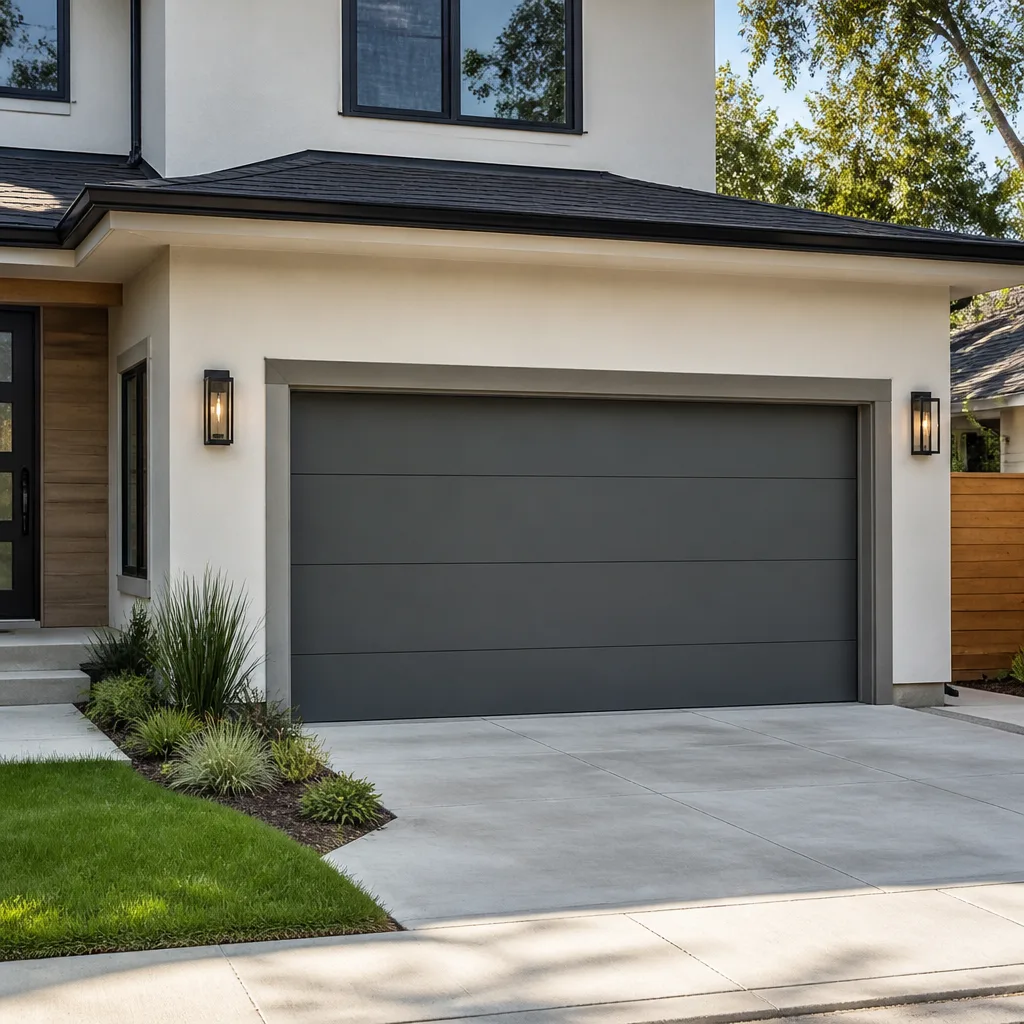 Modern flush
 Full-view glass
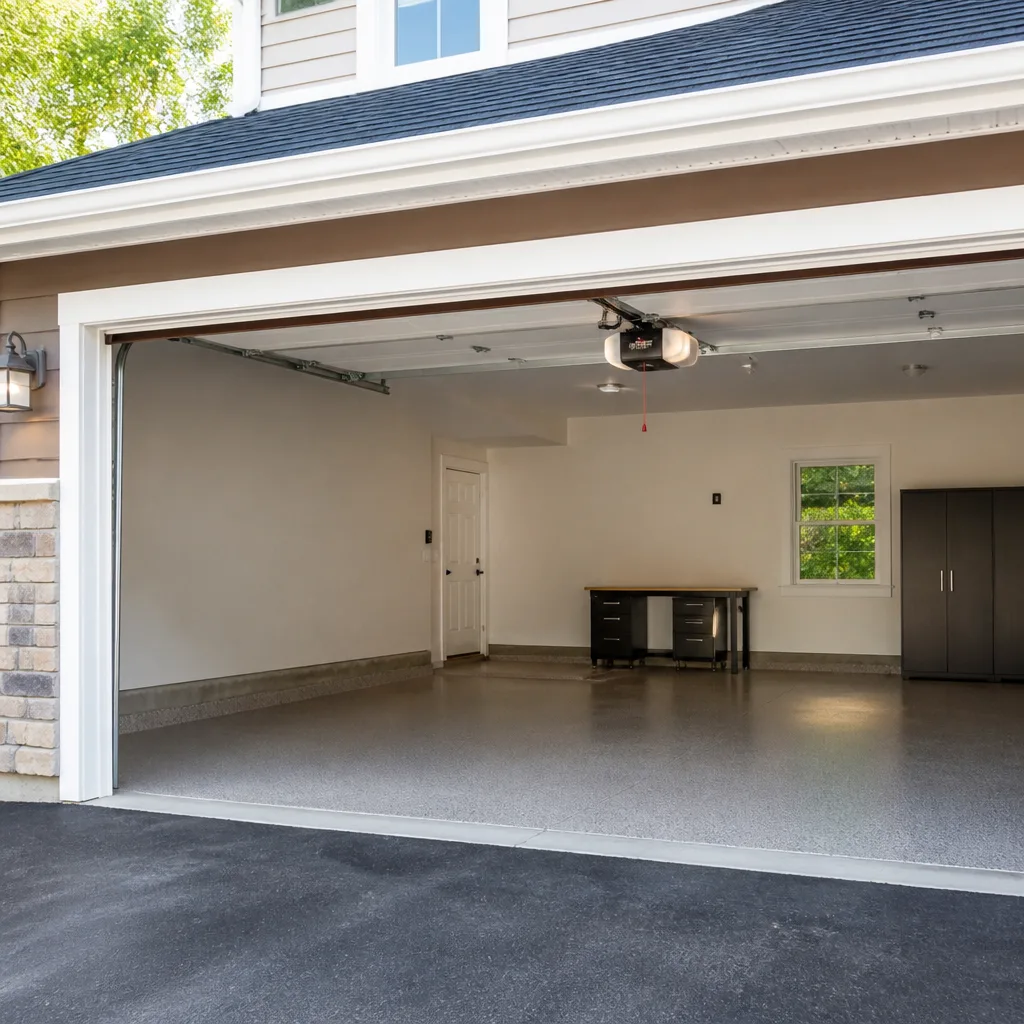 LiftMaster openers
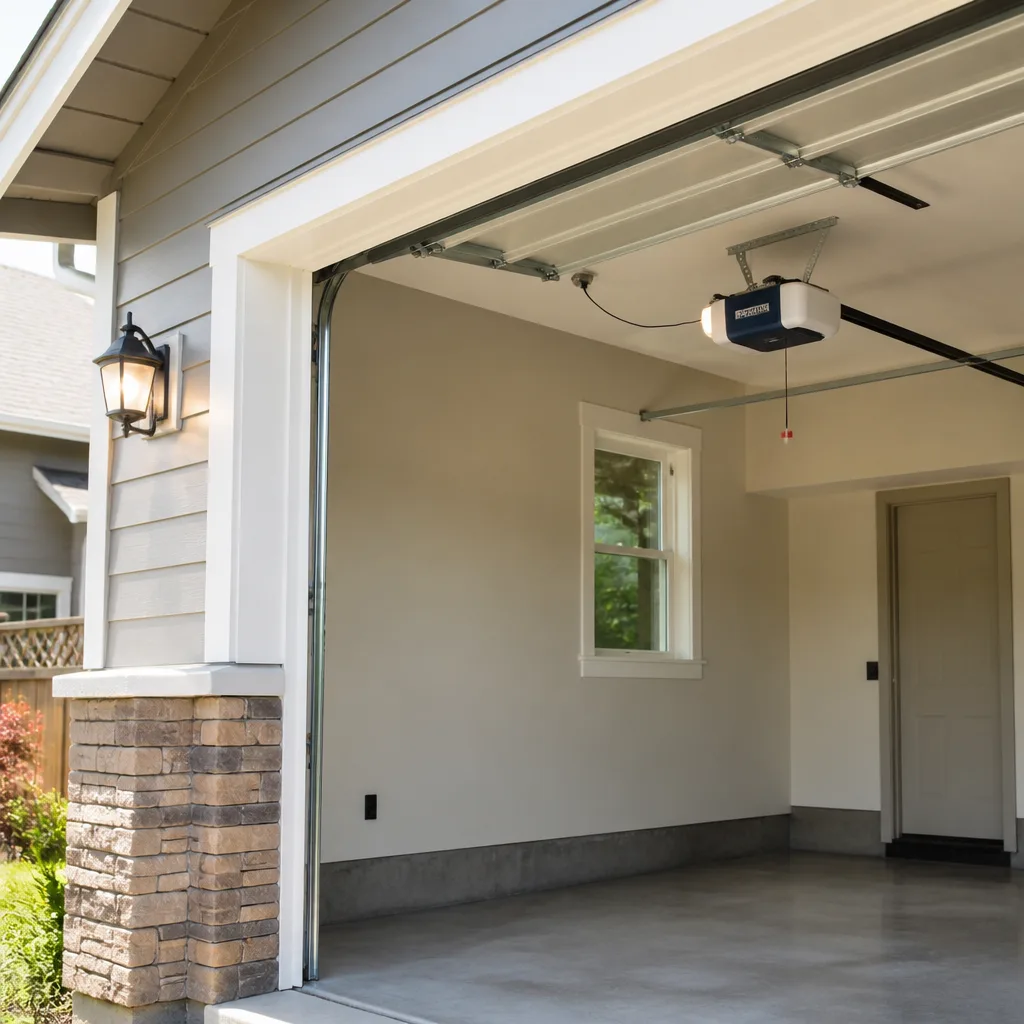 Chamberlain openers
Full 25-point door and opener safety check with every visit - springs, cables, rollers, tracks, and your LiftMaster or Chamberlain opener included
You get a price before we start. It does not change when the pro arrives.
Get your free estimateHow to Hire a Garage Door Contractor in Miami Gardens: A Step-by-Step Guide
Florida does not require a dedicated garage door contractor license. Most homeowners find that out after a bad hire, not before. The absence of a specialty license means the field in Miami Gardens contains two very different kinds of operators running nearly identical marketing: legitimate, insured specialists and handymen who watched a few videos. This guide walks through a concrete vetting process you can complete before anyone touches your door. You’ll learn which Florida license categories actually matter, how to check them quickly, what insurance paperwork to demand, and which diagnostic questions expose a contractor who’s guessing.
Quick Answer
To hire a garage door contractor in Miami Gardens, verify the contractor’s Florida DBPR license category and status, request a current certificate of insurance showing general liability and workers’ compensation coverage, and ask diagnostic questions about code and product approval. Prioritize contractors who understand Miami-Dade product approval requirements over those who lead with review counts. Get a written estimate with a fixed price before any work starts, and never accept a quote given before the door is examined.
Styles & brands we work with
- Raised-panel steel
- Carriage house
- Modern flush
- Full-view glass
- LiftMaster openers
- Chamberlain openers
Table of Contents
- Which Florida license categories actually cover garage door work
- How to verify a contractor’s credentials in under two minutes
- Why Miami-Dade product approval matters more than years in business
- The insurance documents to request, and what’s adequate
- Red flags specific to South Florida’s post-storm contractor surge
- Diagnostic questions that reveal whether a contractor knows local code
- What a proper written estimate should contain
- The work you should never let anyone talk you into doing yourself
Which Florida License Categories Actually Cover Garage Door Work?
No Florida license category is specific to garage doors. The work falls under general contractor or specialty contractor categories, which means the license number is the starting point of verification, not the end of it. In practical terms, a legitimate garage door company in Miami Gardens will operate under one of a few DBPR-recognized categories, and you should know which one you’re looking at.
- Certified General Contractor (CGC): The broadest category. Covers structural work including door installation and load-bearing openings. Common for companies that handle new door installation and opening modifications.
- Certified or Registered Specialty Contractor: Narrower scope categories. Some specialty registrations cover door and window installation. This is the category many residential repair companies fall under.
- Registered (local) contractor: Registered at the county level rather than with the state. Valid for certain scopes of work in Miami-Dade. Ask which scope, and get it in writing.
What you’re looking for is a license that matches the work being quoted. A specialty contractor may be perfectly legitimate for a torsion spring replacement and completely out of scope for a full door installation that alters the opening. The contractor should be able to tell you, without hesitation, which category they hold and what scope it covers. If the answer is vague, that’s your answer.
One more detail: a license number alone proves nothing. Anyone can print a number on a business card. Verification is a separate step, and it takes less time than the phone call you just made.
How to Verify a Contractor’s Credentials in Under Two Minutes
You can verify a Florida contractor’s license in about the time it takes to boil water. The Florida Department of Business and Professional Regulation maintains a public license database, and it’s free to search. Do it while the contractor is still on the phone with you.
- Ask for the license number in writing. A text or email is fine. A contractor who hesitates on this step is telling you something.
- Search the DBPR license database. Enter the number and confirm the name matches the person or company quoting the work. Mismatches are common when a licensed contractor lets an unlicensed friend use their number.
- Check the status. Active, delinquent, suspended, and revoked all appear in the record. A delinquent license is not a valid license for your purposes.
- Confirm the category. The database lists the license class. Match it to the scope of work you were quoted.
- Screenshot it. Save the result with the date. If a dispute comes up later, you have a record of what you verified.
If the contractor asks why you’re checking, the answer is simple: you’re hiring someone to work on a system that holds several hundred pounds of tension above your car. Verification is normal and reasonable. Legitimate contractors in Miami Gardens expect it and usually appreciate being asked, because it separates them from the ones who can’t pass the check.
We work on the brand you already own, which means we’ve walked into plenty of situations where a previous contractor’s license didn’t match the work. The pattern is consistent: the problems surface months later, not on the day of the repair.
Why Miami-Dade Product Approval Matters More Than Years in Business
Miami-Dade County is one of the few jurisdictions in the country with its own product approval system for building materials and assemblies. A Notice of Acceptance, or NOA, is the county’s documentation that a specific product has been tested and approved for use in the high-velocity wind zone that covers Miami Gardens. A contractor’s familiarity with this system tells you more about their competence than a decade of general experience does.
Why it matters for garage doors specifically: garage doors are large openings in the building envelope, and in a wind event they’re among the first components to fail if they aren’t rated and installed correctly. A reinforced door installed without the correct anchors, tracks, or brackets is not a compliant installation, regardless of what the door’s label says. The NOA covers the assembly, not just the panel.
Here’s the distinction that separates specialists from generalists. Ask a contractor what product approval documents they’ll be working from, and listen carefully:
- A specialist answers with specifics. They name the NOA for the product line, know the difference between a door’s impact rating and its wind-pressure rating, and can tell you what the reinforcing hardware looks like.
- A generalist answers with confidence and no substance. They say “it’s all approved” or “we use the good ones” without pointing to a document.
The NOA system is also why you want a contractor who has pulled permits for garage door replacements in Miami Gardens before. Permit requirements vary by scope and by the age of the home, and the local building department has the final word on what’s needed. A contractor who says “you don’t need a permit for this” without checking is either guessing or cutting a corner.
Years in business and review counts are easy to inflate. An NOA number is a document you can look up. If you’re comparing contractors who look identical on paper, this is the tiebreaker.
The Insurance Documents to Request, and What’s Adequate
Ask for two documents: a certificate of insurance showing general liability coverage, and a certificate showing workers’ compensation coverage. Do this before any work is scheduled, not on the day. A legitimate garage door contractor will provide both without pushback, usually within the hour.
General liability. This covers damage to your property. A door falls and damages your vehicle, or a track rips loose from the framing and cracks your drywall. For residential garage door work in South Florida, a contractor carrying less than a million dollars in general liability is carrying too little for the exposure. Ask for the limit, not just the policy. The certificate will show it.
Workers’ compensation. This covers the people actually doing the work if they’re injured on your property. Without it, an injury on your driveway can become a claim against your homeowner’s policy. This is the coverage most frequently missing, and the one homeowners rarely think to ask about. A contractor operating as a sole proprietor may be exempt from workers’ comp in Florida, which is legal but shifts the risk to you if they’re injured. Ask directly whether the people who show up are covered, and get it in writing.
Two details to check on the certificates themselves:
- The named insured matches the company quoting the work. A certificate issued to a different entity isn’t your coverage.
- The policy is current. Check the effective dates. A certificate from a policy that expired eight months ago tells you nothing.
You can request a certificate of insurance as a matter of routine. Doing so doesn’t imply distrust; it tells the contractor you know how this works. For our garage door repair work, we expect the question and answer it plainly.
Red Flags Specific to South Florida’s Post-Storm Contractor Surge
After a storm passes through South Florida, out-of-state crews arrive with magnetic signs on their trucks and rates that undercut everyone local. Some are legitimate. Many aren’t. The pattern is predictable enough that you can spot it before you sign anything.
Unlicensed out-of-state crews. A truck with an out-of-state plate and a registration number that doesn’t verify in the Florida DBPR database is the clearest red flag there is. Florida licenses don’t transfer automatically. If the contractor can’t produce a Florida license number that verifies, stop the conversation, no matter how good the price looks.
Storm-chaser pricing. Two tells. First, a quote far below everyone else’s, which usually means noncompliant materials or a crew that will be gone before the door fails. Second, a quote that jumps after the door is examined, with a justification that was never mentioned on the phone. The written estimate should be the price. If it isn’t, you’re being worked.
Pressure to skip permits. A contractor who says “we can do this without a permit, it’ll save you time” is telling you they don’t want the inspection. Garage door replacements in Miami-Dade often require permits, and the requirements depend on the home and the scope. The building department is the authority. A contractor who avoids it isn’t being efficient; they’re avoiding scrutiny.
Other signals worth noting in Miami Gardens: no physical address on the estimate, payment demanded entirely in cash before work begins, a refusal to give a written scope, and a phone number that’s only answered by text. None of these alone guarantees a problem. Two or three together do.
One more, subtler: an estimate that lists brand names without specifics. A quote that says “LiftMaster opener” without a model number is a placeholder. The same goes for doors. Any legitimate quote names the product.
Diagnostic Questions That Reveal Whether a Contractor Knows Local Code
These questions work because they can’t be answered with marketing. A contractor who knows the local code answers them specifically. A contractor who’s guessing deflects, generalizes, or changes the subject. Ask them on the phone before you schedule anything.
- “What product approval documents will you reference for this door?” The answer should name an NOA or point to a specific document, not “it’s all approved.”
- “Does this job need a permit, and who pulls it?” A competent answer acknowledges that requirements vary and that the building department has the final word. A confident “no permit needed” without checking is a red flag.
- “How do you determine whether the spring needs replacing versus the door being out of balance?” A specialist diagnoses first. Anyone who quotes a spring replacement before examining the door is selling parts, not solving a problem.
- “What’s the difference between an impact-rated door and a wind-pressure-rated door?” This one separates the field fast. The two ratings cover different things, and a contractor who doesn’t know the difference doesn’t understand what they’re installing.
- “If the opening has shifted, how do you handle it?” Older homes in Miami Gardens sometimes have framing that’s moved over the years. A contractor who has an answer for out-of-square openings has done this work before.
- “Can you service the opener I already have?” Opener work is a specialty. A contractor who only works on doors may decline or outsource. We service LiftMaster and Craftsman openers regularly, as part of our garage door opener repair service.
Notice that none of these questions ask about price. Price comes after diagnosis. A contractor who quotes a number before asking about your door is quoting a category, not your job. Our technicians have up to 8 years of experience, and the first thing they do on-site is diagnose.
What a Proper Written Estimate Should Contain
A written estimate is not a courtesy. It’s the document that makes the price enforceable. In Florida, a verbal quote is essentially unenforceable in a dispute, and the contractor’s memory of the conversation will differ from yours. Get it in writing, and read it before you sign.
- The exact scope of work. What’s being replaced, what’s being adjusted, and what’s being left alone. “Repair door” is not a scope.
- Product details by brand and model. A door, opener, or spring should be identified specifically. If you’re replacing a Wayne Dalton door, the estimate should name the model.
- Line-item pricing. Labor and materials separated, so you can see what you’re paying for. A single lump-sum number is harder to evaluate and easier to inflate later.
- The permit line, or a written statement that no permit is required. If a permit is being pulled, the fee should appear.
- Warranty terms. What’s covered, for how long, and by whom. Manufacturer warranties and workmanship warranties are different things, and both should be stated.
- Payment terms. When payment is due, and whether any deposit is required. A deposit, by itself, is normal. A demand for full payment before work begins is not.
- The final price, stated as final. The written estimate sets the price. If the contractor discovers something unexpected, they should stop and tell you before proceeding, in writing.
For context on typical ranges, a single torsion spring replacement on a residential door in the Miami Gardens area usually lands somewhere in the low-to-middle hundreds of dollars, with a matched pair running roughly double since both springs are replaced together. A new opener installed runs higher, and a full door replacement runs higher still. Those are estimates, and every job gets its own written price. The estimate is free, and the number on it is the number you pay.
The Work You Should Never Let Anyone Talk You Into Doing Yourself
A garage door is one of the most dangerous systems in a home, and the danger is concentrated in a component you can’t see at rest. The torsion spring above your door holds enough stored energy to cause serious injury if it releases while someone is working on it. Extension springs, the other common type, are under the same tension along the horizontal tracks. This is not a job for a homeowner, and it’s not a job for a handyman who hasn’t been trained on it.
Skip any contractor who suggests that you save money by handling part of the work yourself, or who offers to “show you how” to adjust a spring or cable. The correct answer from a professional is that the spring assembly is a closed system handled only by trained technicians with the right tools. The same caution applies to the cables and to the door’s balance, which can shift suddenly when a component fails.
Our safety position is simple: diagnosis is something you can watch and ask about, repair is not something you should attempt. If a contractor is careless about this boundary, they’re careless about other things too. In our experience, the contractors who cut corners on safety also cut corners on permits and materials.
If a cable or spring has failed and the door is stuck, leave it in place and call. Don’t force the door open. The door can drop suddenly if the remaining spring or cable gives out. Same-day service is available for most repair calls.
Common Mistakes to Avoid
- Choosing on price alone. The lowest quote in Miami Gardens is often the one with the shortest lifespan. A door or opener installed with noncompliant hardware will cost more to fix later than the savings on the original job.
- Skipping the DBPR license check. It takes two minutes and eliminates most of the field. A contractor who hesitates when asked for a license number is telling you what the database would tell you anyway.
- Not asking for workers’ compensation. Most homeowners ask about general liability and stop there. Workers’ comp is the coverage that protects you if someone is injured on your property.
- Accepting a verbal quote. The price is what’s in writing. A verbal number is a starting point for negotiation, not a commitment.
- Letting anyone quote before diagnosis. A contractor who names a price before examining the door is guessing. The right sequence is diagnosis first, then estimate.
- Assuming a brand-loyal dealer will give you a neutral recommendation. A dealer who sells only one brand will recommend that brand. A multi-brand contractor can compare, and that’s worth more than a manufacturer’s sticker.
- Overlooking permit requirements because a contractor said they weren’t needed. The Miami-Dade building department decides, not the person doing the work.
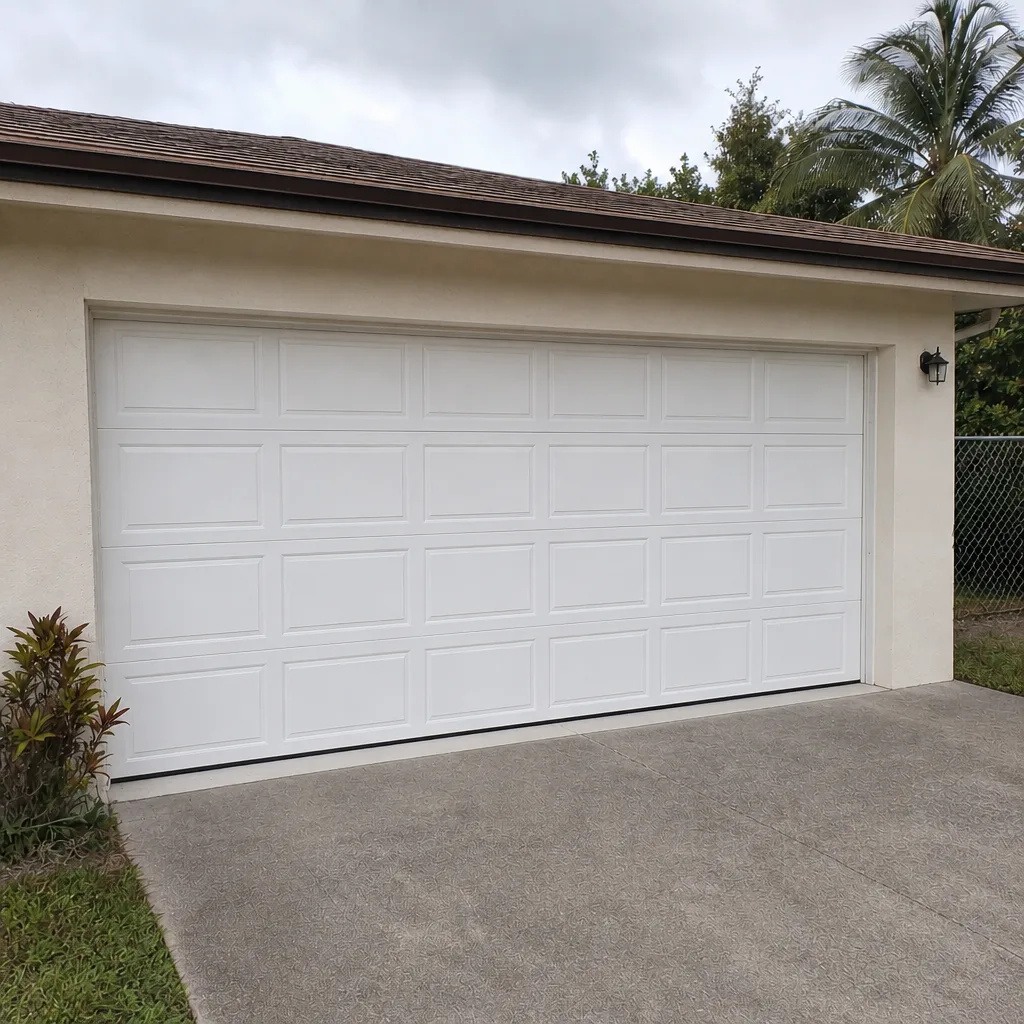
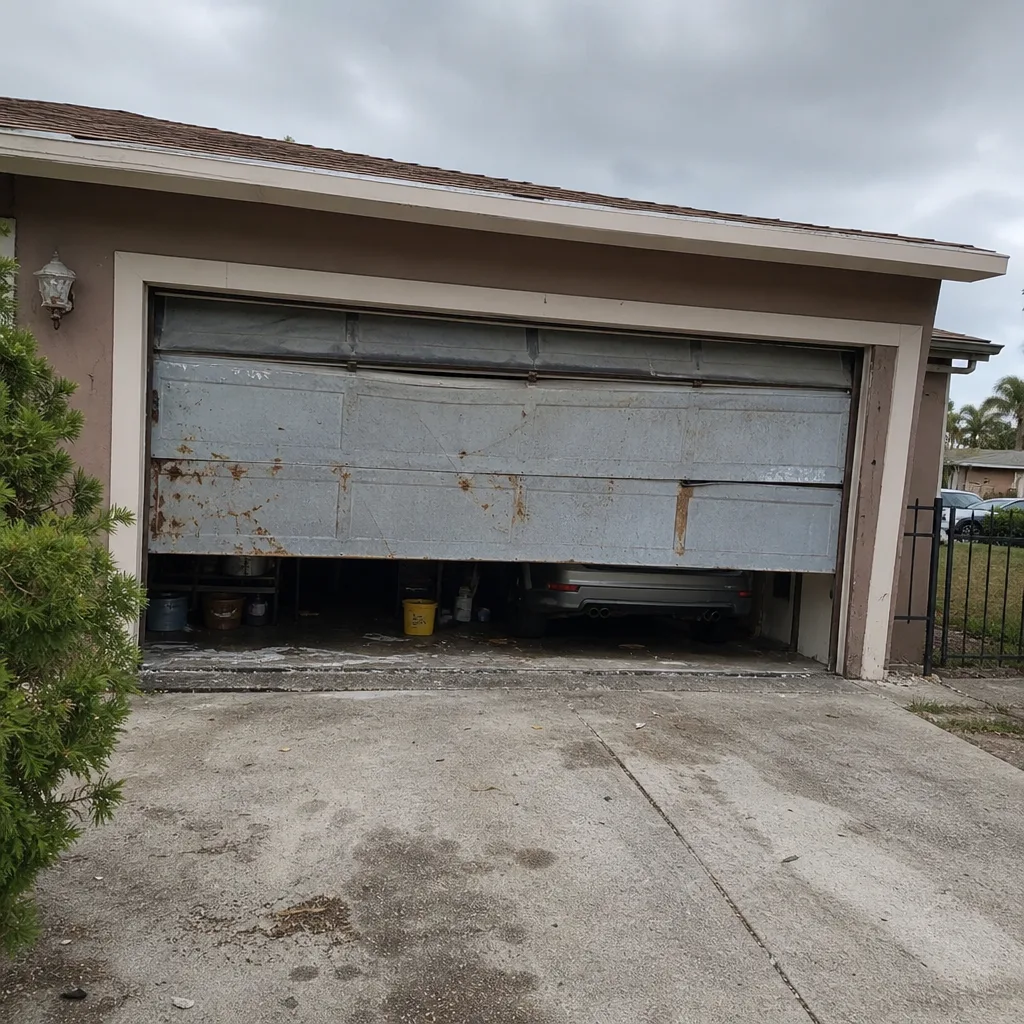
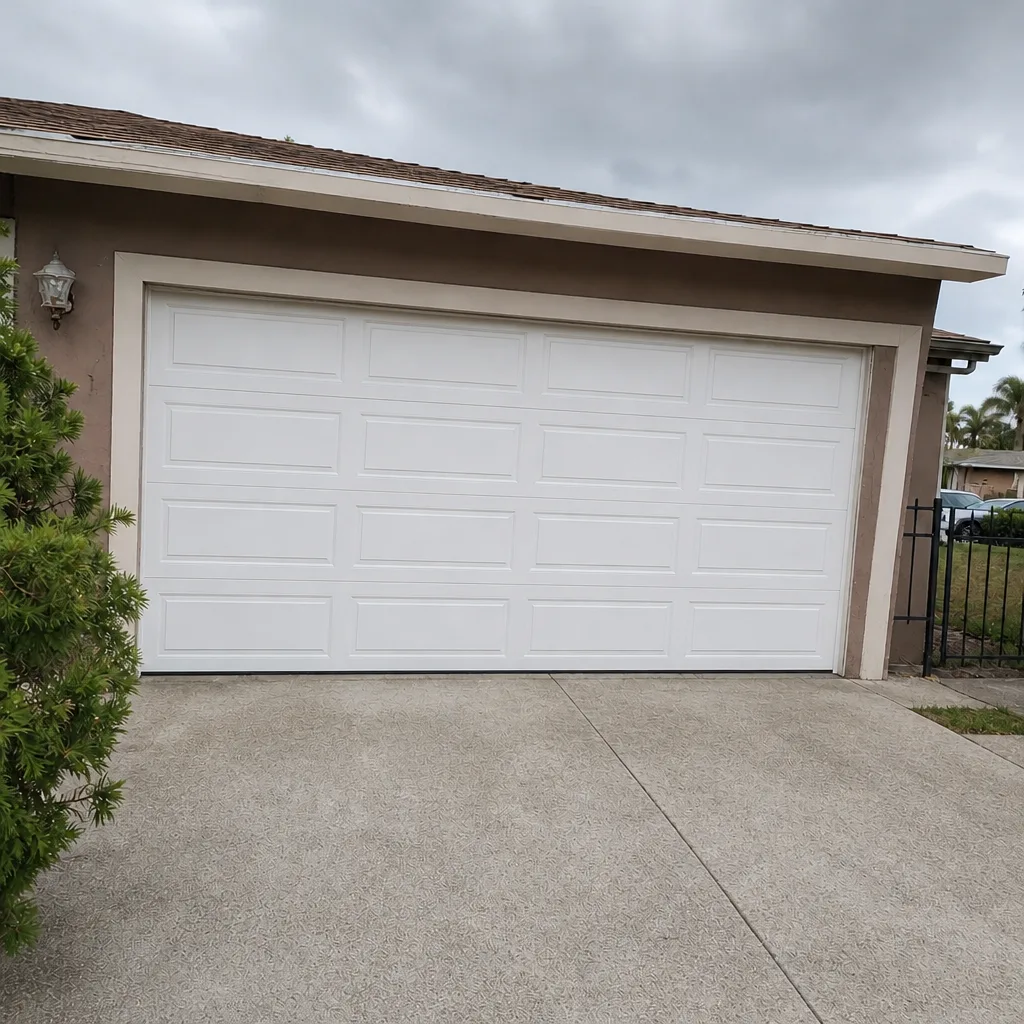
See the difference
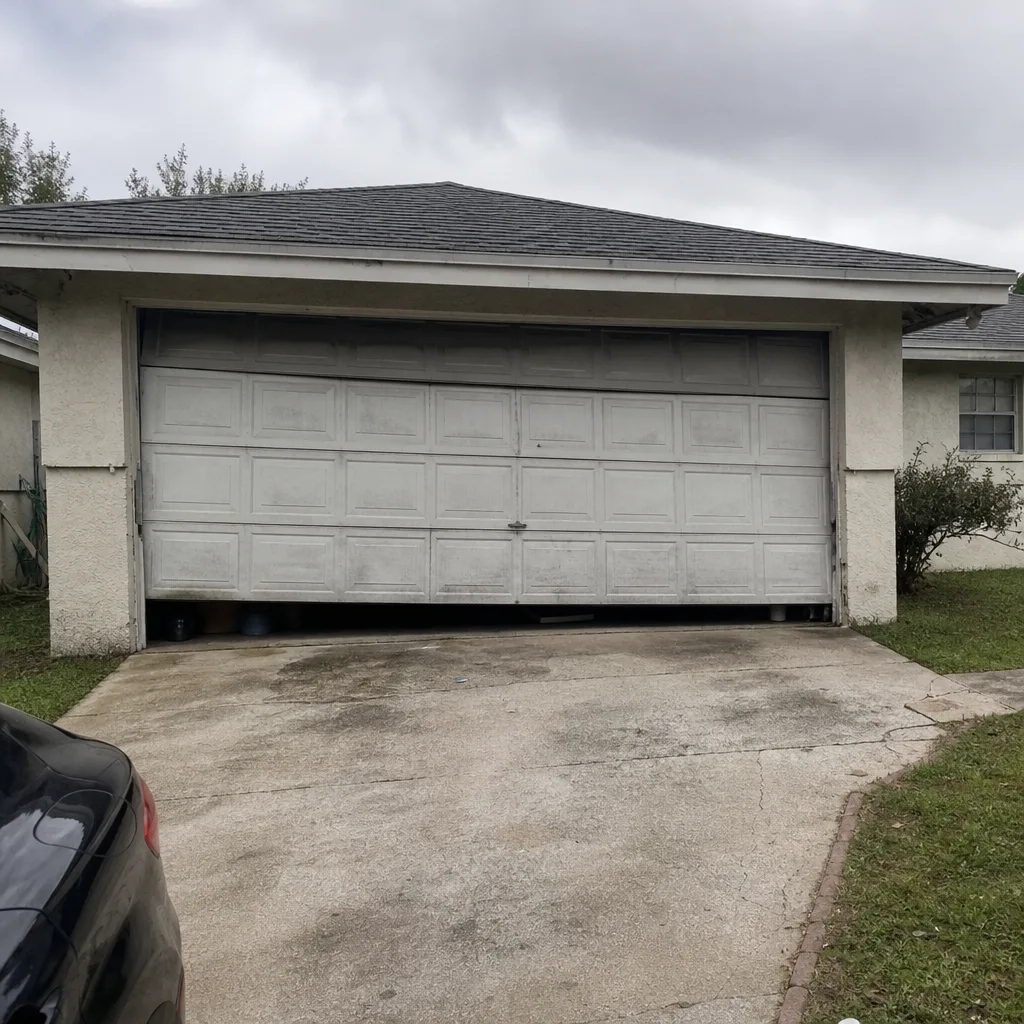 Before
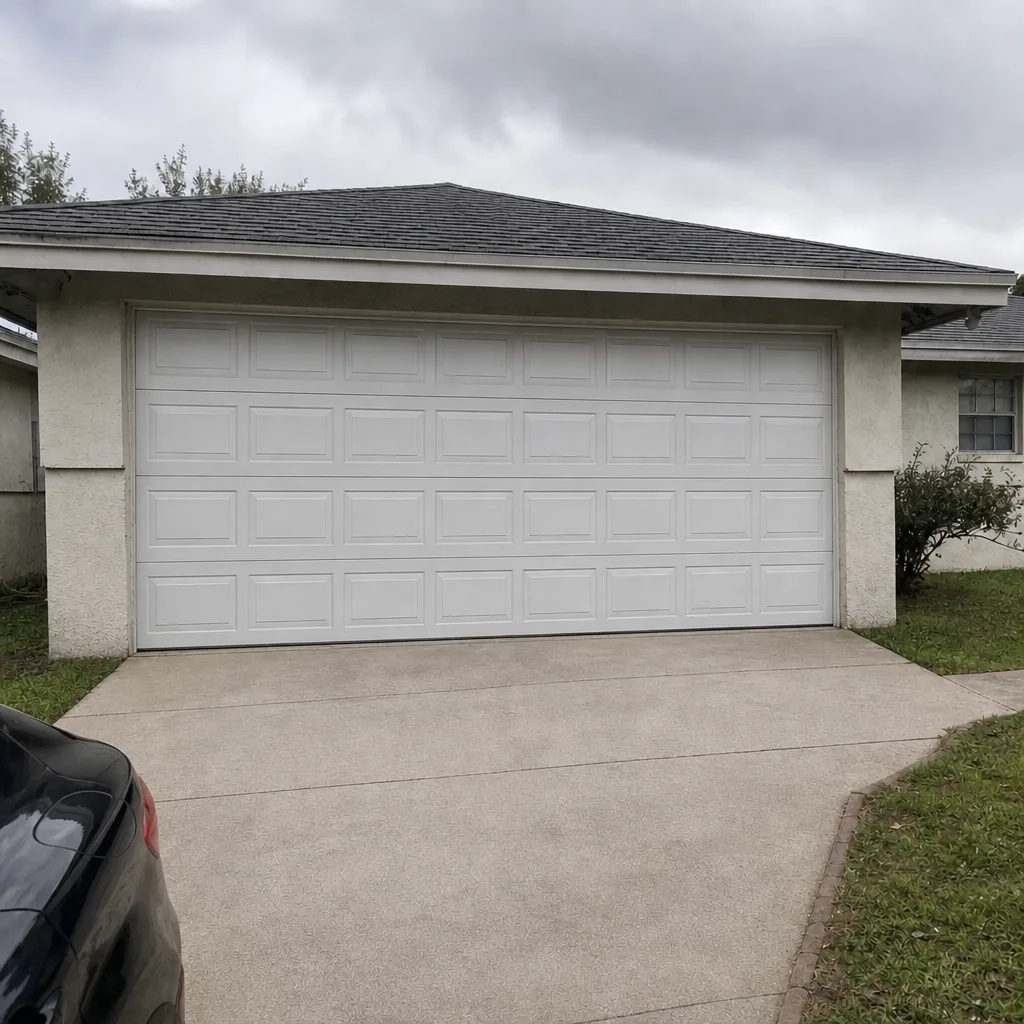 After
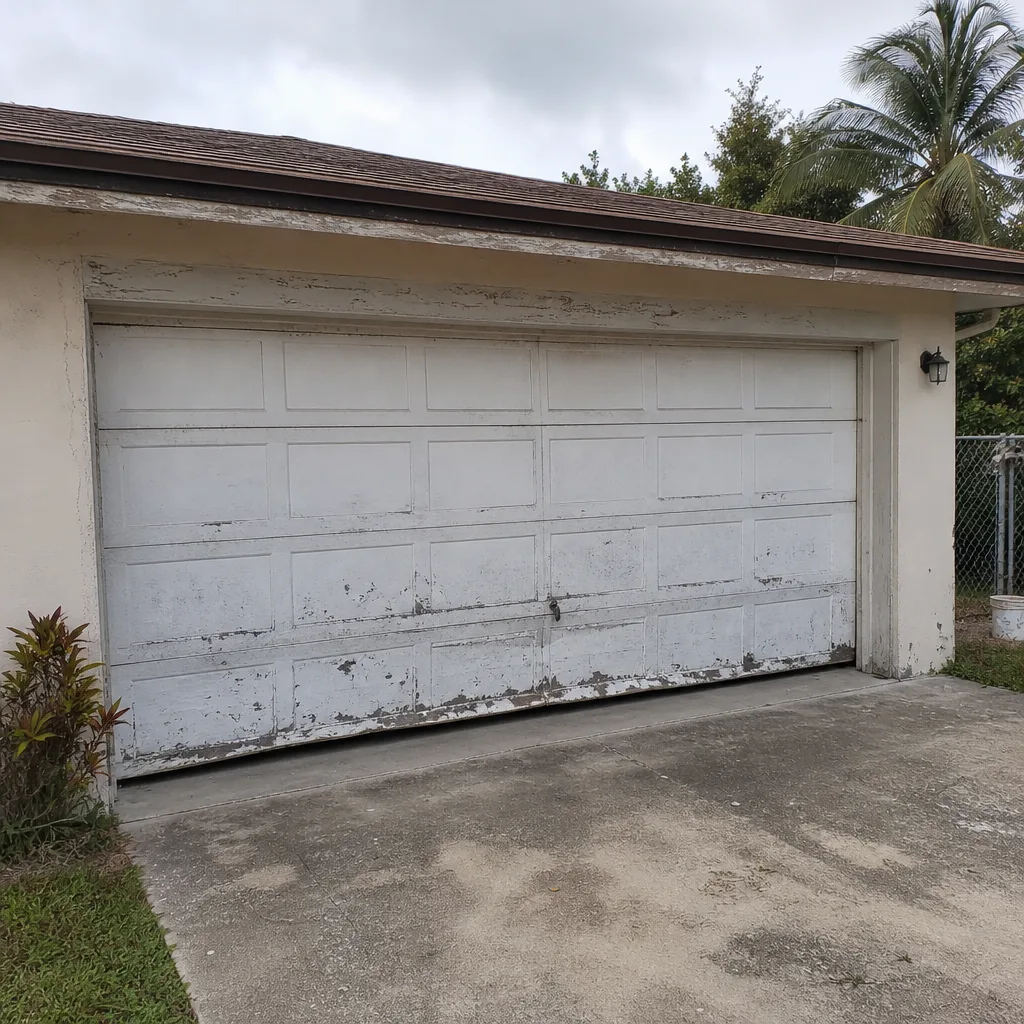 Before
 After
 Before
 After
When to Call a Professional
Some garage door issues are cosmetic and can wait. Others are urgent, and the difference matters. Call a professional when the door won’t open or close, when it opens unevenly or comes off the tracks, when the opener runs but the door doesn’t move, when you hear a sharp snap from the spring area, or when the door’s balance has clearly changed. In Miami Gardens, the doors on older homes take a beating from the heat and humidity, and the mechanical parts wear faster than homeowners expect. If your door has become a daily source of friction, it’s telling you something. We work on Wayne Dalton, Raynor, and the major opener brands, and we diagnose before quoting. Sunstone Garage Door Repair offers free estimates in Miami Gardens; call (855) 360-7295.
Frequently Asked Questions
Most garage door repairs in Miami Gardens fall in the low-to-middle hundreds of dollars, with a single torsion spring replacement typically landing in that range and a matched pair running about twice that since both springs are usually replaced together. Opener repairs and door adjustments run lower. The written estimate sets the final price, and estimates are free. Call (855) 360-7295 for an exact quote.
Florida does not issue a dedicated garage door contractor license. Legitimate contractors operate under a general contractor or specialty contractor category issued by the Florida DBPR, and you can verify any license number in the state database in under two minutes. Ask for the number in writing and check the status and category before scheduling. If a contractor can’t produce a verifiable number, don’t hire them.
A garage door contractor working in Miami Gardens should carry general liability coverage of at least a million dollars for residential work, plus workers’ compensation coverage for the people doing the work. Request certificates for both and confirm the named insured matches the company quoting. Some sole proprietors are legally exempt from workers’ comp in Florida, which shifts the injury risk to you, so ask directly and get the answer in writing.
Same-day service is available for most repair calls in Miami Gardens. Call (855) 360-7295. We answer 24/7, and fast dispatch runs from 7am to 7pm, Sunday through Friday. If you call outside dispatch hours, we’ll book you into the next opening. Don’t force a stuck door open before we arrive, since the door can drop if the remaining spring gives out.
No. The written estimate sets the price, and that’s the number you pay. If the technician finds something unexpected, they stop and explain it before proceeding, and any change gets documented in writing first. A contractor who changes the price after the work starts without telling you is breaking the estimate, not adjusting it.
Yes. Sunstone Garage Door Repair connects Miami Gardens homeowners with licensed and insured independent professionals, and our technicians have up to 8 years of experience. We service the eight major brands, including LiftMaster, Craftsman, and Wayne Dalton, and we diagnose before recommending any repair. Call (855) 360-7295 for a free estimate.
The Bottom Line
Hiring a garage door contractor in Miami Gardens comes down to verification, not reputation. Check the Florida DBPR license category and status, request general liability and workers’ compensation certificates, and ask the diagnostic questions that reveal whether a contractor understands Miami-Dade product approval and permit requirements. Prioritize contractors who diagnose before quoting and put the price in writing. The guide’s core insight holds: because Florida doesn’t license garage door work as a specialty, your vetting process is the only thing standing between a legitimate specialist and the field of handymen who market identically. For a free estimate from a team that works across the major brands, Sunstone Garage Door Repair is here to help.
Contact
If you’ve read this far and want a second opinion on a quote, or you’re ready to schedule a free estimate, call (855) 360-7295. We answer 24/7. Fast dispatch from 7am to 7pm, Sunday through Friday. We cover Miami Gardens and the surrounding neighborhoods, and we’re happy to walk through what a proper estimate should look like before you commit to anyone.
Written by the team at Sunstone Garage Door Repair.