
Last updated November 16, 2026
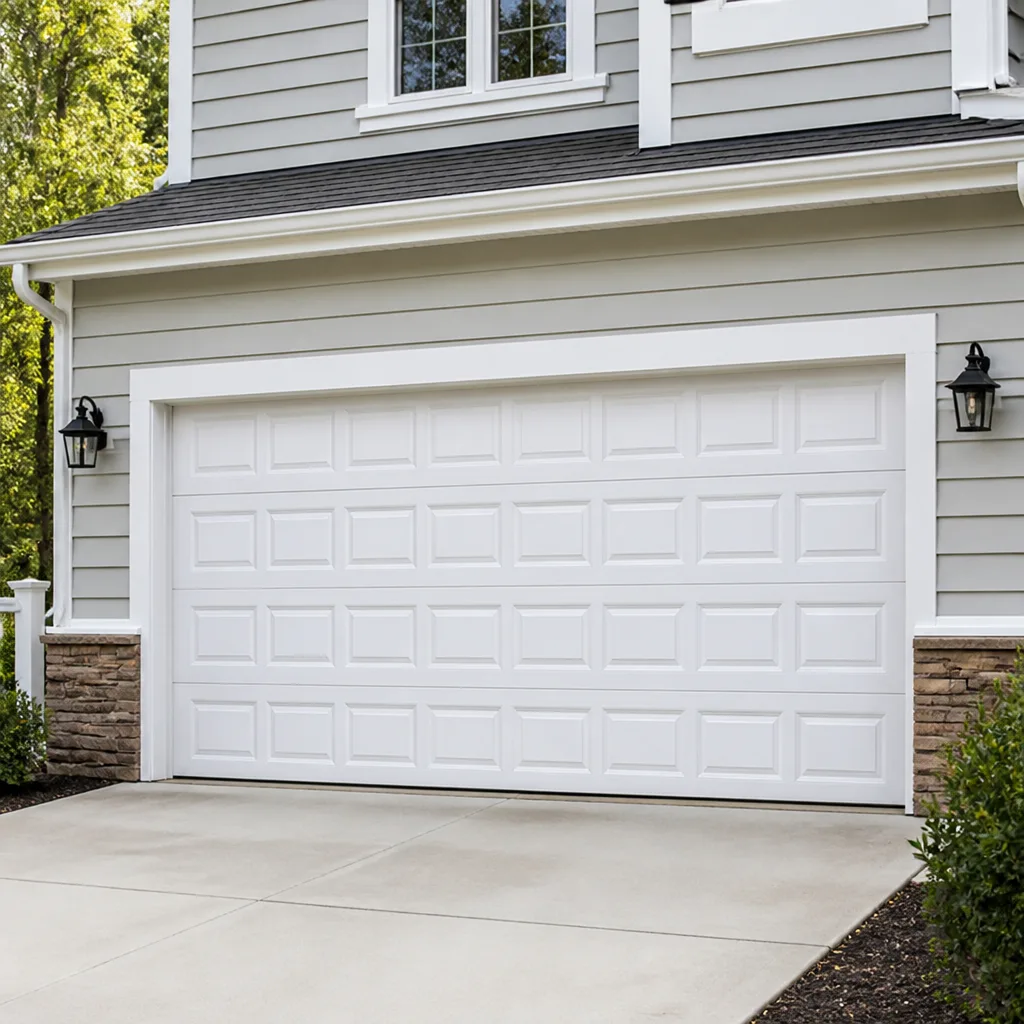 Raised-panel steel
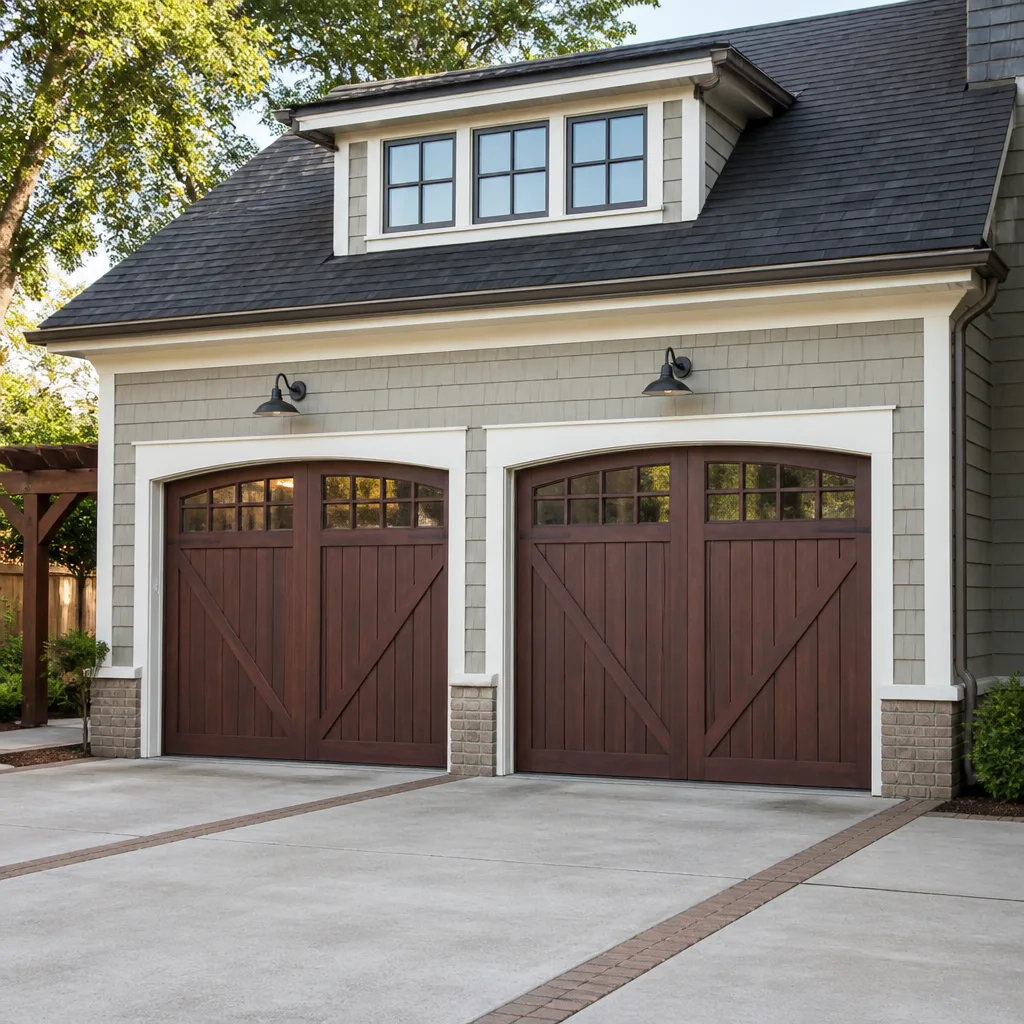 Carriage house
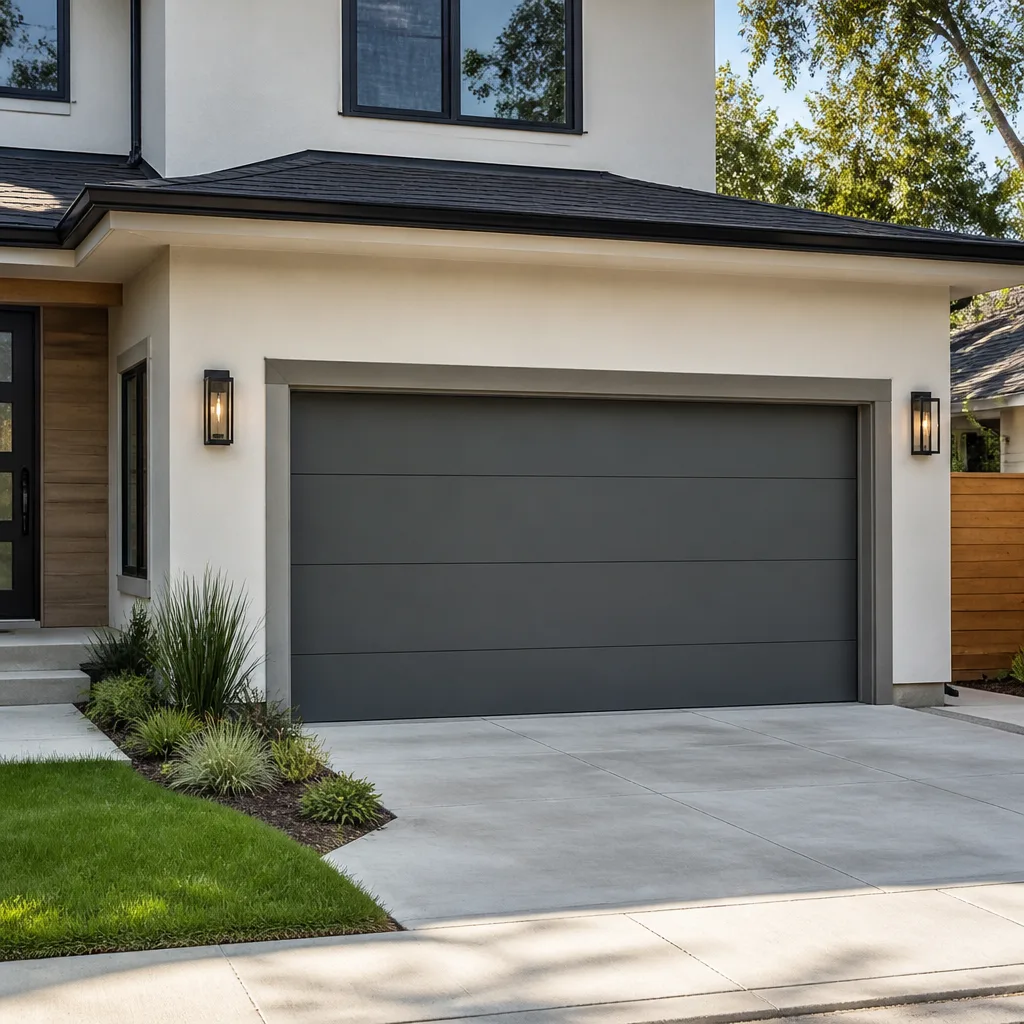 Modern flush
 Full-view glass
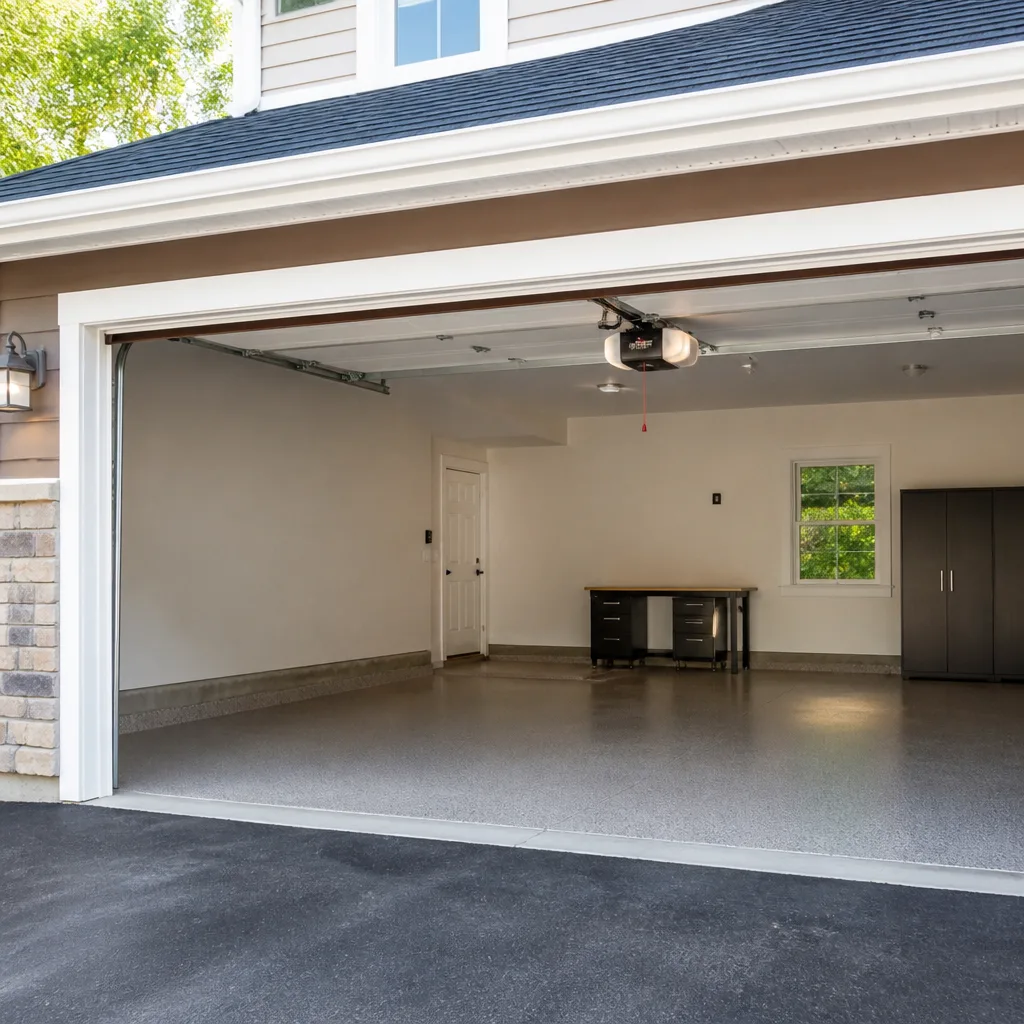 LiftMaster openers
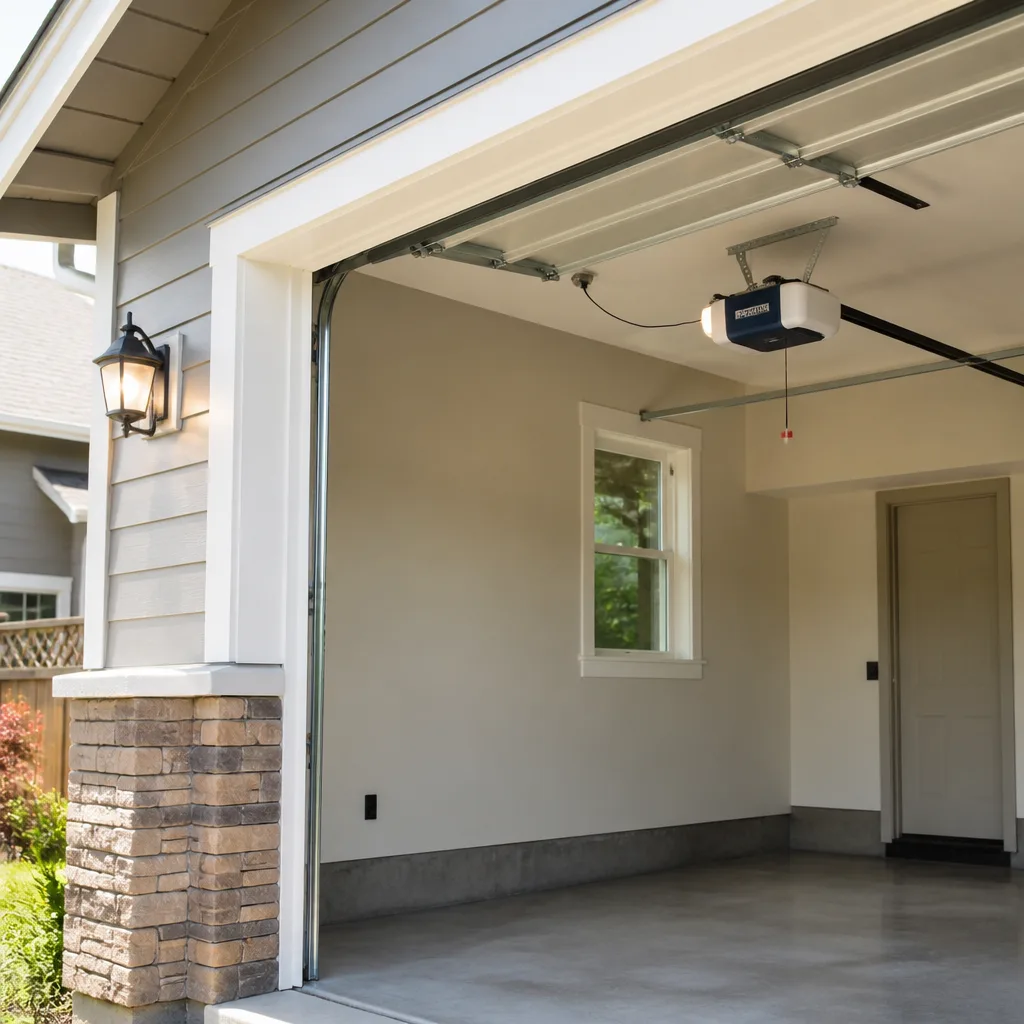 Chamberlain openers
Full 25-point door and opener safety check with every visit - springs, cables, rollers, tracks, and your LiftMaster or Chamberlain opener included
You get a price before we start. It does not change when the pro arrives.
Get your free estimateGarage Door Repair Maintenance Schedule: What to Do and When
Most garage door maintenance guides were written for climates with four seasons. Miami Gardens has two: hot and humid, then hurricane season. That distinction changes every interval on the schedule. A door that sits through months of heavy humidity, baking afternoon heat, and the build-up to storm season doesn’t wear the way a door in a temperate city does, and a checklist copied from a national brand’s calendar will have you tightening bolts in the wrong month and skipping the checks that actually matter here. In this guide we’ll walk through a month-by-month schedule built around how doors fail in Miami Gardens, what you can handle yourself and what needs a technician, the lubrication products that survive 90-degree heat, and how to document your maintenance so it holds up if you ever file an insurance claim. Mention Miami Gardens once more than you’d expect? We will, because the local climate is the whole point.
Quick Answer
The short version: in Miami Gardens, garage door maintenance should be front-loaded before hurricane season, not spread evenly across twelve months. Plan a full hardware and balance inspection in spring (April-May), a re-inspection after any storm with sustained winds above 45 mph, and quarterly lubrication and safety-reverse checks in between. Springs, cables, and torsion hardware belong in a technician’s hands every 12 to 24 months because salt-laden air and heat cycles accelerate corrosion faster than a national guide will admit. Everything else – cleaning tracks, testing the safety reverse, tightening accessible bolts – you can do yourself in about 30 minutes a quarter.
Styles & brands we work with
- Raised-panel steel
- Carriage house
- Modern flush
- Full-view glass
- LiftMaster openers
- Chamberlain openers
Table of Contents
- Why a Miami Gardens Maintenance Calendar Looks Different
- The Month-by-Month South Florida Schedule
- Spring Prep: Front-Loading Before Hurricane Season
- What to Do After a Storm
- The Corrosion Timeline Nobody Tells You About
- Lubrication That Survives 90-Degree Heat
- DIY vs. Technician: What’s Realistic Each Quarter
- Documenting Maintenance for Insurance
Why a Miami Gardens Maintenance Calendar Looks Different
Garage doors are mechanical systems made of steel, aluminum, plastic, and rubber, and every one of those materials reacts to heat and moisture. In a place like Miami Gardens the reaction is fast and constant. The door faces months of humidity that keeps metal surfaces damp, then heat that expands and contracts the panels and hardware, then storm season that adds wind load and driven rain. A door in a cooler, drier climate might sit at equilibrium for years between real problems. Doors here don’t get that rest.
Here’s what that means in practice. The steel components most likely to corrode – springs, cables, hinges, and the torsion shaft – sit inside a garage that’s often hotter than the outside air and holds moisture after every storm. Salt carried on the humid air settles on those parts and starts the pitting process long before you’d see anything wrong from the outside. Meanwhile, the rubber weather seal along the bottom of the door dries, cracks, and pulls away faster in the heat, letting more weather inside. None of this announces itself. It accumulates quietly until a spring snaps or the door stops closing flush.
That’s why the schedule in this guide is built around when things fail here, not when a national marketing calendar says to check them. Doors in Miami Gardens get more inspection in spring and more attention right after storms than a generic annual checklist provides, because that’s when the risk actually spikes. If you want a full-service option that handles everything from a single hinge to a new door, our Sunstone Garage Door Repair team works on the brand you already own and diagnoses by symptom, not by brand assumption.
The Month-by-Month South Florida Schedule
Think of this as a working calendar rather than a rigid rulebook. The core principle: heavier inspection in spring, storm-driven inspections in summer and fall, quieter maintenance in the cooler months. You don’t need a tool bag for every month – a few months are just a walk-around and a visual check.
- January-February: Walk the door and listen. Note any new noise, vibration, or hesitation. Do a full lubrication pass on springs, hinges, rollers, and tracks. Test the safety reverse.
- March: Clean the tracks with a damp cloth and check for buildup. Inspect the weather seal along the bottom and sides for cracking. Tighten any accessible bolts on hinges and brackets. Snap a photo of the hardware for your records.
- April: Book your pre-hurricane season technician inspection. This is the most important scheduled service of the year. Spring, cable, roller, and balance condition all need a professional eye before storm season.
- May: Pre-season safety review – test the auto-reverse, check the photo-eye alignment, and confirm the door opens and closes smoothly with no binding. Make sure the manual release works.
- June-July: Storm watch. After any sustained wind event, do a quick visual check for bent panels, popped hinges, or a door that fails to seat flush. See the storm section below.
- August-September: Peak storm season. Re-lubricate moving parts and inspect the bottom seal for wear caused by heat and moisture. Keep the tracks clear of debris that can blow in.
- October-November: Post-season inspection. This is the second-best time for a full technician review to catch damage from summer storms before it becomes a bigger issue.
- December: Year-end documentation. Update your maintenance log, file any receipts, and note anything you want addressed at the spring service.
The pattern is intentional: heavier technician involvement in spring and post-season, lighter self-checks in between. In our experience here in garage door repair work, the doors that fail catastrophically are almost always the ones where nobody looked at the hardware until something broke.
Spring Prep: Front-Loading Before Hurricane Season
If you do only one scheduled thing all year, make it this: a full hardware and balance inspection in April, before hurricane season. A garage door is one of the largest moving objects a homeowner owns, and wind load turns small weaknesses into real hazards. Loose hinges, worn rollers, or a partially corroded spring that might have waited out a calm summer can fail under storm stress.
A proper pre-season inspection covers:
- Torsion springs and cables: Look for visible pitting, gaps, or uneven tension. This part is a technician’s job – springs under tension can injure you badly if you touch them. Never loosen or adjust a torsion spring yourself.
- Hinges and brackets: Check for looseness, rust, and bend. Tighten accessible bolts.
- Rollers and track: Confirm rollers move freely and the track is straight and clear. A bent track is a storm failure waiting to happen.
- Balance test: With the door half open, disconnect the opener and check that the door stays in place without drifting. If it drops or climbs, the balance is off.
- Weather seal: Replace any cracked or pulled-away rubber along the bottom.
- Opener and safety reverse: Test the auto-reverse with an object in the door’s path and confirm the photo-eye alignment.
Spring prep is also the right time to look at the opener itself – especially if it’s a LiftMaster or Chamberlain unit that’s been running through the summer heat. A dedicated opener check catches early signs of motor strain, gear wear, or remote issues before a busy season. Our garage door opener repair specialists treat opener work as a specialty, not an afterthought, and that matters when the failure is in the logic board rather than the door.
What to Do After a Storm
After any storm with sustained winds above 45 mph, do a quick walk-around before you use the door. It takes about five minutes and can catch damage early. If anything looks off, stop and book a technician rather than forcing the door open.
- Look at the panels. Are any bent, dented, or shifted out of alignment? Even minor panel damage can mean the door won’t run true.
- Check the track. Debris, fallen branches, or wind-driven objects can bend the track. A kink in the track means the rollers won’t travel cleanly.
- Inspect the hinges and brackets. Storm wind can loosen hardware. Look for popped or bent hinges.
- Test the manual release. Make sure you can open the door by hand if the opener fails. Never force it.
- Check the bottom seal. High wind and driven rain can rip the bottom seal or push debris under the door.
- Run the door once, slowly. Listen for new noise or grinding. Watch for hesitation. If the door stops partway or reverses unexpectedly, call a technician before you use it again.
Hail is uncommon here, so most storm damage to doors comes from wind, driven rain, and debris. That’s a different failure pattern than a northern guide describes. The point is to check after storms, not just at fixed intervals. Storm-triggered inspections are what keep a small bend or a loosened hinge from turning into a full garage door repair job.
The Corrosion Timeline Nobody Tells You About
National maintenance guides account for weather in general. They rarely account for salt-laden air carried on constant humidity and settled on the steel of a garage door and its hardware. In Miami Gardens, that combination runs on a fairly predictable cycle: springs, cables, and hinges start showing meaningful corrosion in roughly 18 to 24 months, faster than the multi-year intervals a typical national checklist implies.
What that means for your schedule:
- Months 1-6: No visible corrosion, but the metal is already being exposed to salt-laden humidity. Lubrication helps protect it.
- Months 6-12: Early pitting may appear on springs and the torsion shaft. You might notice a rough texture or a small amount of discoloration on hinges.
- Months 12-18: Cables can start to fray, springs may show visible rust, and hinges can stiffen. This is when a technician’s inspection matters most.
- Months 18-24: Corrosion accelerates. If a technician hasn’t inspected the springs and cables by this point, the risk of a spring failing or a cable letting go climbs noticeably.
The practical takeaway: your technician should physically inspect springs and cables at least once every 12 to 24 months. If your door is a Clopay or Amarr steel model, pay particular attention to the springs and hinges – steel components take the corrosion load first. A trained eye catches pitting and early cable fraying long before a failure, and replacing a worn spring on a schedule is far less disruptive than replacing it after it fails during a storm.
Lubrication That Survives 90-Degree Heat
Not all lubricants are equal in this climate. The wrong product can attract dust, gum up rollers within weeks, and actually accelerate wear. Here’s what works in Miami Gardens heat and what to avoid:
- Use: A white lithium grease for springs and hinges, or a silicone-based lubricant for rollers and tracks. These hold up in heat without attracting dirt.
- Avoid: Heavy petroleum-based grease that thins at high temperatures and runs, and WD-40 as a long-term solution – it’s a light solvent, not a lasting lubricant, and it dries out fast in the heat.
- Avoid: Lubricating the tracks themselves. Tracks should be clean and dry. Greasing the track attracts debris and makes the rollers slip and skip.
- Apply lightly: A small amount goes a long way. Over-lubrication is a common mistake in hot climates and can cause buildup that gum up rollers within a few weeks.
Lubricate moving parts roughly every three months, and more often during the hottest stretch. That’s a fifteen-minute task you can handle yourself and it’s the single cheapest thing you can do to extend the life of your hardware. A Wayne Dalton or Craftsman door responds to regular lubrication the same way any other brand does – the difference is a technician knowing where tension is off and where it isn’t.
DIY vs. Technician: What’s Realistic Each Quarter
A lot of maintenance is genuinely within a homeowner’s reach. Some of it isn’t, and the line between them matters – both for your time and for your safety. Here’s the honest split.
What you can do yourself (about 20-30 minutes per quarter):
- Clean and inspect the tracks with a damp cloth
- Lubricate springs, hinges, and rollers with the right product
- Tighten accessible bolts on hinges and brackets
- Test the safety reverse and photo-eye alignment
- Check and replace the bottom weather seal
- Test the manual release
- Visual walk-around after storms
What needs a technician (calibrated tools and real risk if done wrong):
- Torsion spring inspection, adjustment, or replacement – these are under high tension and can cause serious injury. Never touch them yourself.
- Cable inspection and replacement for fraying or looseness
- Track alignment and straightening
- Balance and tension measurement with a calibrated scale
- Opener motor, gear, or logic diagnostics
- Full post-storm structural assessment
The reality is that most of what a homeowner can do takes a half hour and a can of lubricant. The rest needs someone with the right tools and the training to touch a torsion spring safely. That’s not a sales pitch – it’s just where the line falls. Our technicians have up to 8 years of experience working across major brands, and we’d rather tell you honestly what you can handle than have you take on a job that’s risky. If you’re unsure where a specific issue falls, the free estimate settles it.
Documenting Maintenance for Insurance
Here’s a step most homeowners skip, and it can cost them after a storm. If your door is damaged and you file a claim, insurers often look at whether the equipment was maintained. Undocumented maintenance can complicate a payout, not because you were negligent, but because the insurer can’t confirm the condition of the door beforehand. The fix is simple: keep a log.
- Keep every receipt for lubrication, parts, seals, and any professional service.
- Note the date and what was done – a simple notebook or spreadsheet entry is enough. “April 2026: technician inspected springs and cables, replaced bottom seal.”
- Take dated photos of the door and hardware at each inspection, especially before and after any storm.
- Keep the technician’s report if a service was done. If the report notes the door was in good condition, that’s useful.
- Photograph storm damage before you touch anything if a claim might be involved.
Documentation is your evidence that the door was properly maintained. In Miami Gardens, where storm damage is a realistic possibility each season, that record is worth the ten minutes it takes to keep. It’s not about anticipating a disaster; it’s about being able to prove the door was in good shape before one.
Common Mistakes to Avoid
- Following a national annual checklist. A guide written for a four-season climate will have you inspecting at the wrong time. In Miami Gardens, front-load inspection in spring and re-inspect after storms.
- Greasing the tracks. It feels like it should help, but lubricated tracks attract debris and cause rollers to skip. Keep them clean and dry.
- Using WD-40 as a long-term lubricant. It’s a solvent that dries out fast in the heat, leaving moving parts unprotected. Use a product meant to last.
- Ignoring small noises. A rattle or squeak that shows up after a storm is usually a loosened hinge or a worn roller. Address it early.
- Touching the torsion springs yourself. This is the most dangerous part of the door. Springs are under high tension and can cause serious injury. Leave them to a trained professional.
- Skipping the pre-hurricane inspection. The single most important scheduled service of the year, and the one most often forgotten until something breaks.
- Forgetting to document. Maintenance you can’t prove is maintenance an insurer can’t confirm. Keep the log and the receipts.
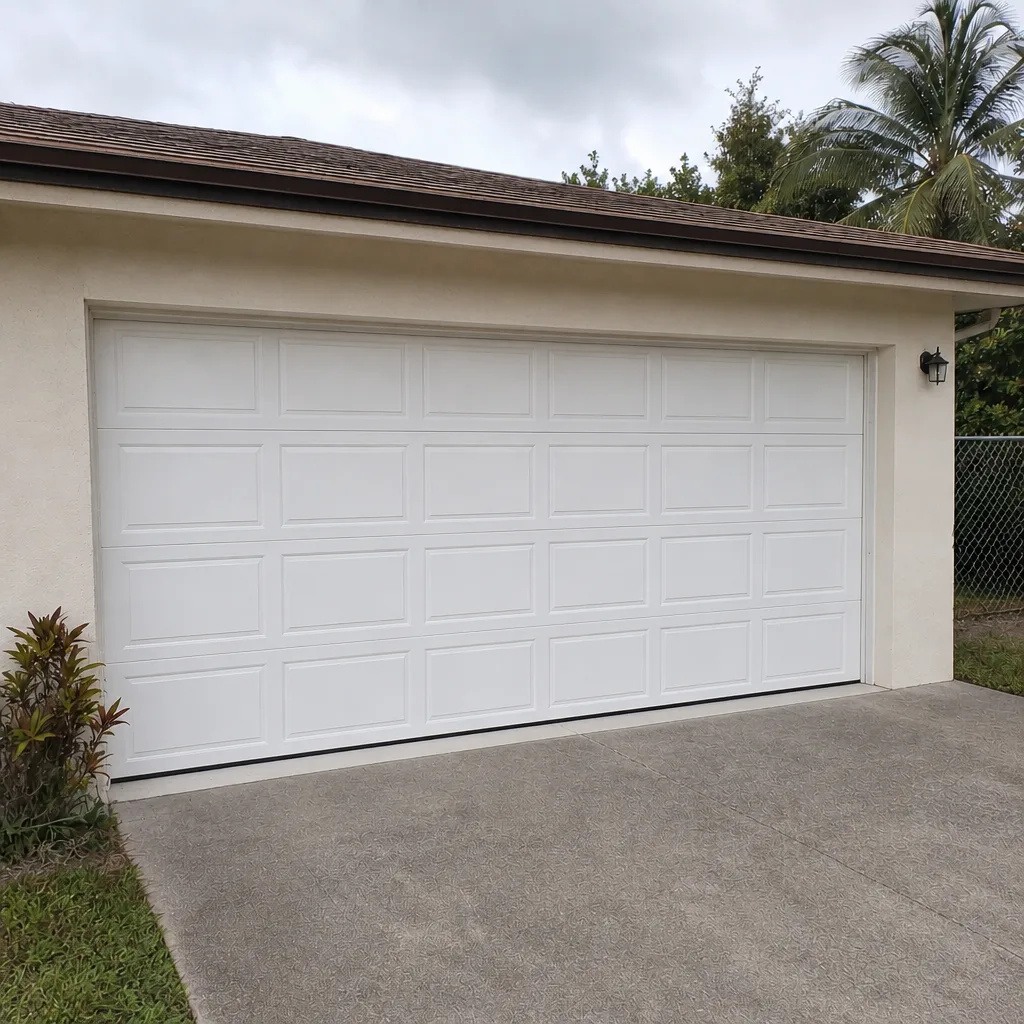
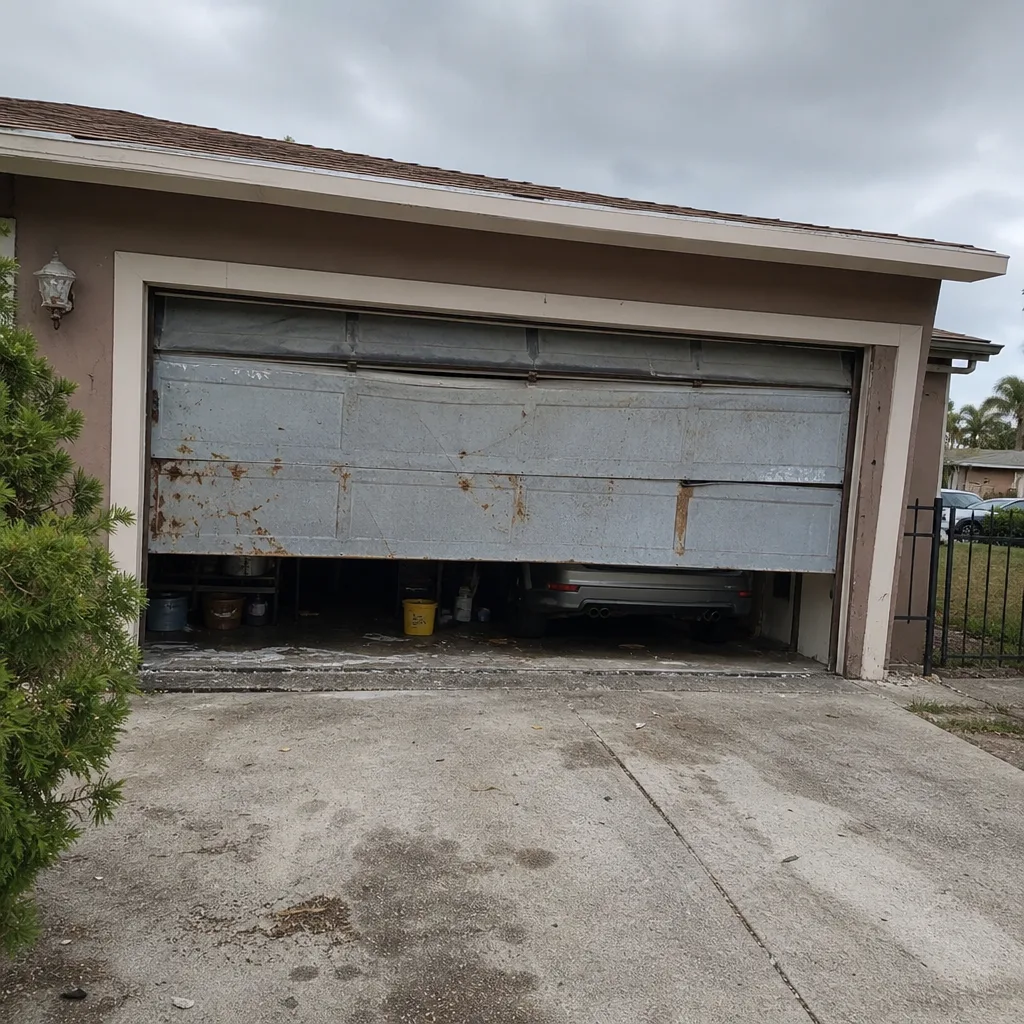
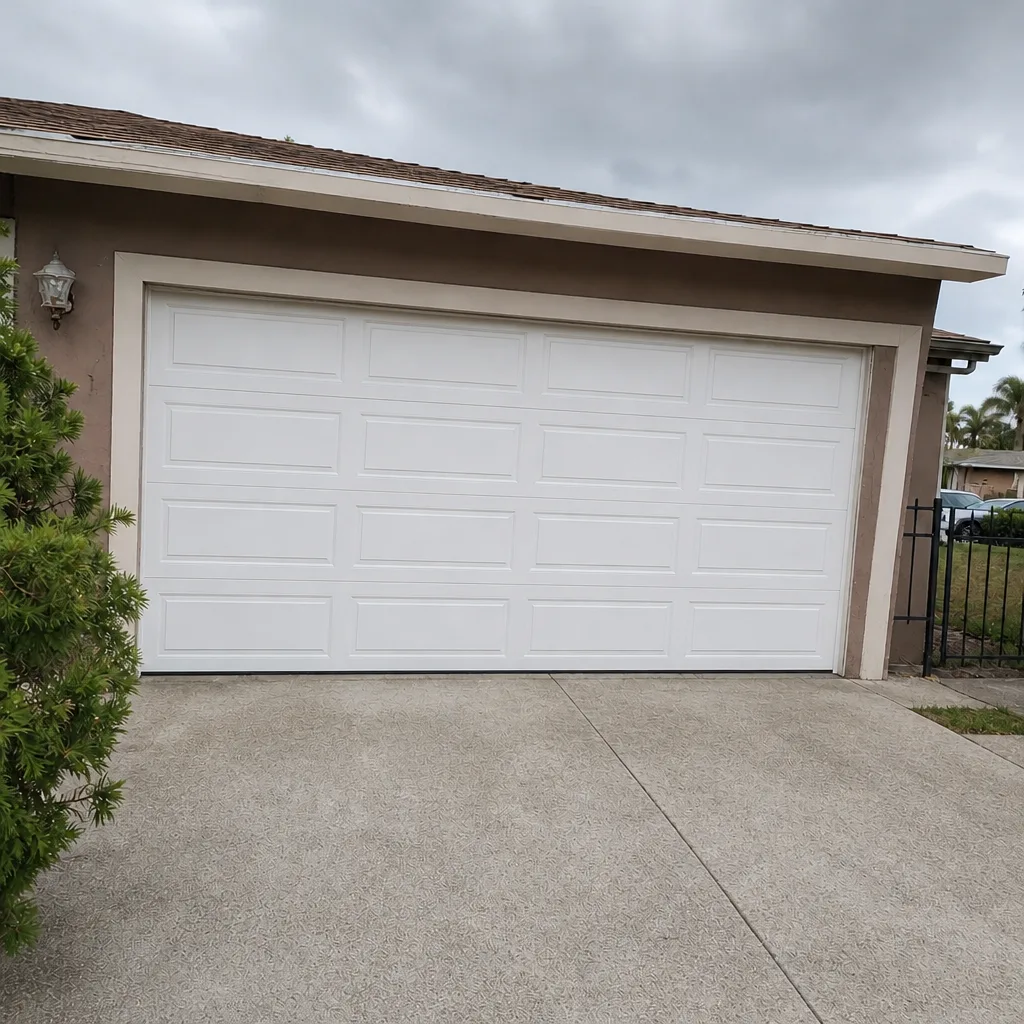
See the difference
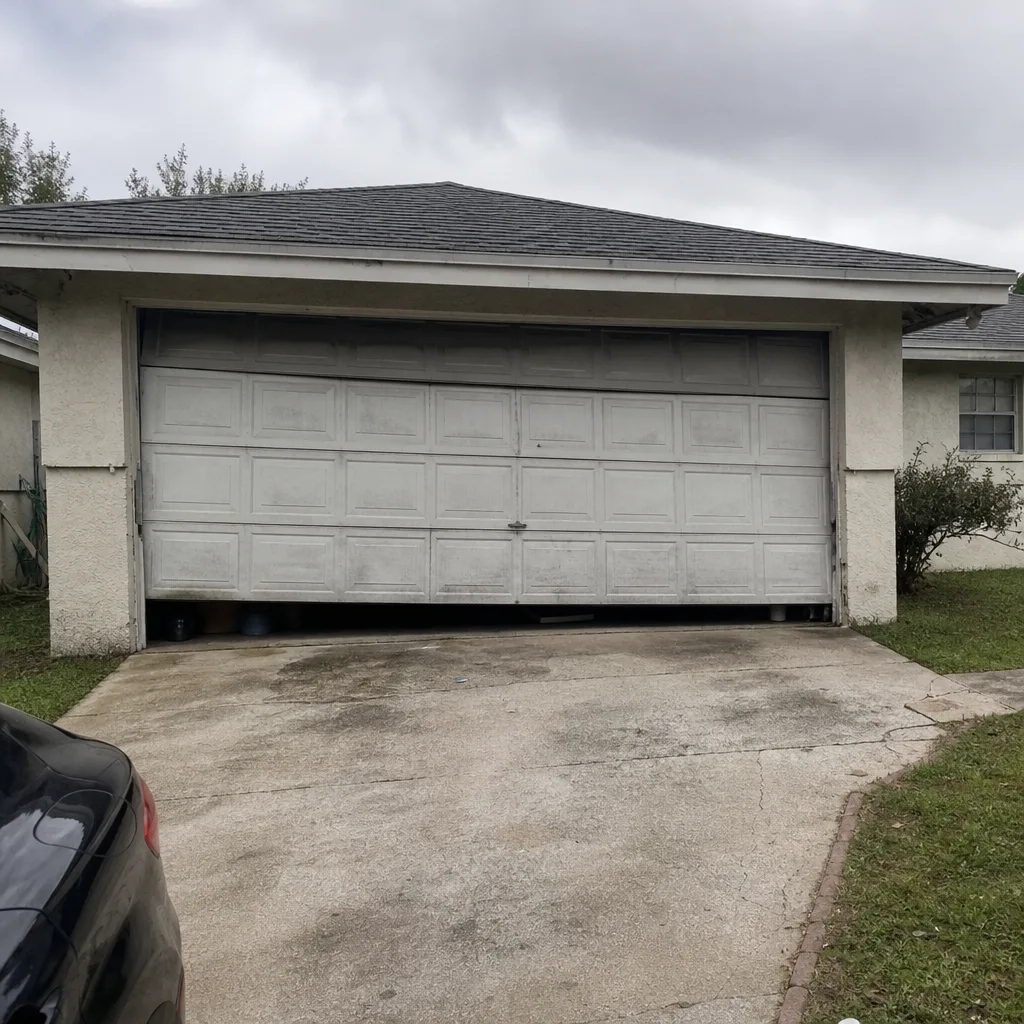 Before
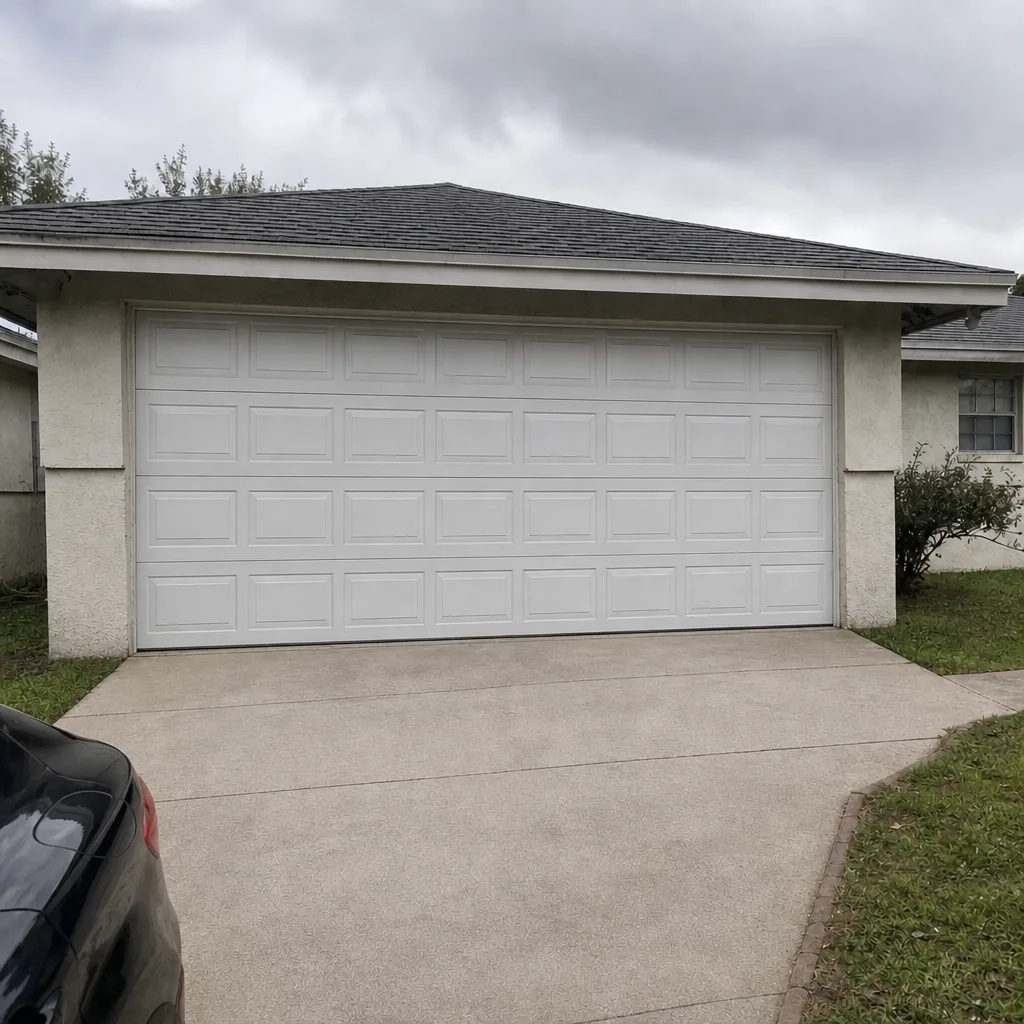 After
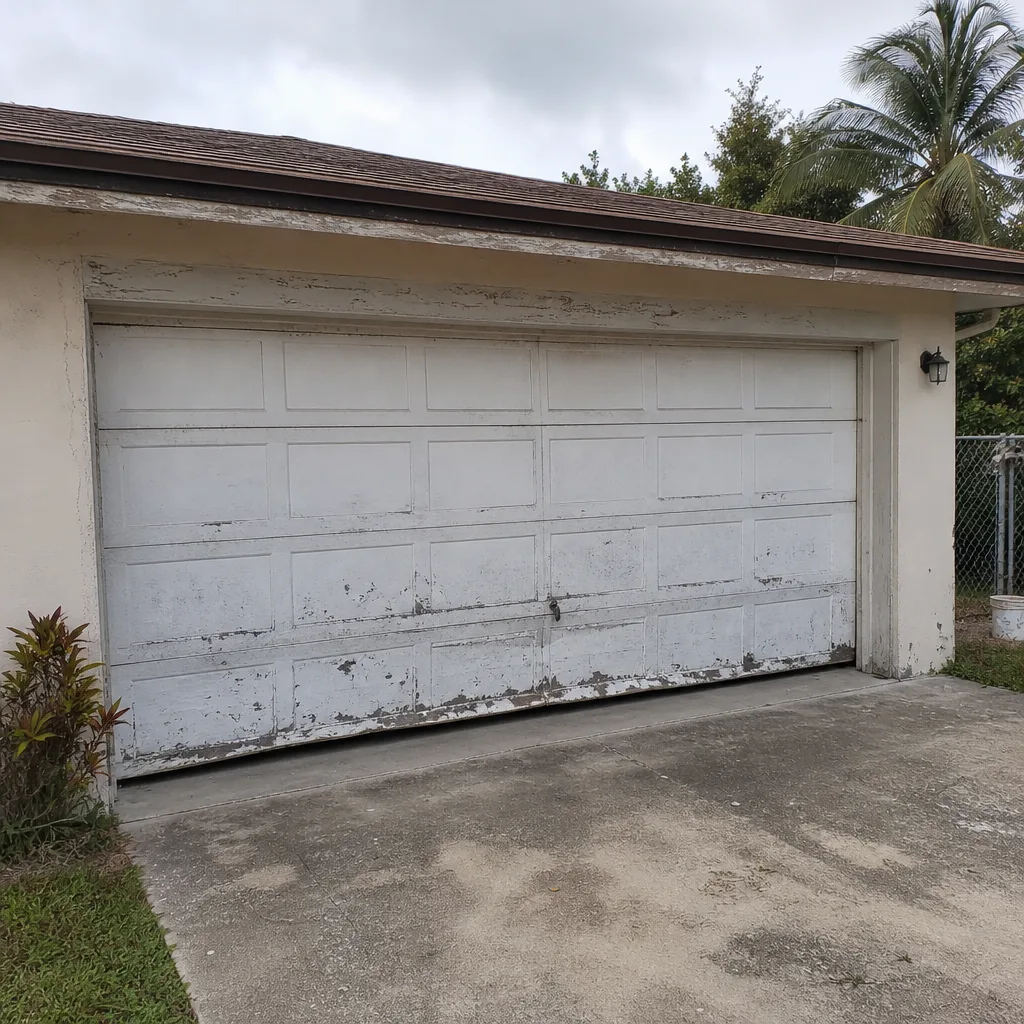 Before
 After
 Before
 After
When to Call a Professional
Some issues are clearly a technician’s job. If your door won’t open, won’t close, or won’t stay level, stop and call. If you hear a loud bang from the springs or see a visible gap in a spring, that’s a failed component – don’t run the door. If the door reverses unexpectedly, binds halfway, or the opener strains or grinds, it needs a diagnostic. If the tracks are bent, or a storm has left the door misaligned, don’t force it. And if your springs or cables haven’t been inspected in over a year, book a check. At Sunstone Garage Door Repair we offer free estimates in Miami Gardens and work on the brands you already own, whether it’s a Clopay door, a LiftMaster opener, or anything in between. Call (855) 360-7295 for an estimate. We answer 24/7. Fast dispatch from 7am to 7pm, Sunday through Friday.
Frequently Asked Questions
Every 12 to 24 months. The salt-laden air and heat cycles here accelerate corrosion on springs and cables faster than in drier climates, so a technician should physically inspect them at least once a year, ideally in spring before hurricane season. Call (855) 360-7295 for an exact quote on any spring work – estimates are free.
You can and should. Lubricating springs, hinges, and rollers with white lithium grease or a silicone-based product takes about fifteen minutes and is the cheapest way to extend hardware life. Reserve the tracks for cleaning, not greasing, and never touch the torsion springs if they need adjustment. Call (855) 360-7295 if you’re unsure where a specific issue falls.
Do a quick walk-around before using the door: check panels, tracks, hinges, the bottom seal, and the manual release. Run the door once slowly and listen for new noise. If anything looks bent, misaligned, or the door reverses unexpectedly, stop and call a technician. Call (855) 360-7295 and we’ll get you scheduled. We answer 24/7.
No. The written estimate sets the price, and it’s agreed before any work starts. You get the quote first, and the job is done to that figure. Call (855) 360-7295 for a free estimate.
Our technicians are trained professionals who work across major brands – LiftMaster, Chamberlain, Genie, Clopay, Amarr, Wayne Dalton, Craftsman, and Raynor – with up to 8 years of experience, and we diagnose by symptom before recommending any repair. Call (855) 360-7295 to discuss your door.
Same-day repair is often possible for doors that won’t open or close, or when a spring or opener has failed. We answer 24/7, and fast dispatch runs from 7am to 7pm, Sunday through Friday. Call (855) 360-7295 and we’ll find the earliest opening.
The Bottom Line
The maintenance schedule that works in Miami Gardens is not the one a national brand prints on a calendar. It front-loads hardware inspection before hurricane season, re-inspects after any storm with sustained winds above 45 mph, and runs quarterly lubrication and safety checks in between. Springs and cables belong in a technician’s hands every 12 to 24 months because corrosion moves on an 18-to-24-month cycle here, and the right lubricant – white lithium or silicone – holds up in 90-degree heat where the wrong one gums up rollers within weeks. Keep a simple maintenance log with receipts and dated photos; it matters if you ever file a claim. Do what you can yourself, call a professional for the springs and cables, and treat the April inspection as non-negotiable. That’s the whole schedule. Call (855) 360-7295 for a free estimate on any repair or maintenance visit. We answer 24/7. Fast dispatch from 7am to 7pm, Sunday through Friday.
Written by the team at Sunstone Garage Door Repair.