
Last updated November 16, 2026
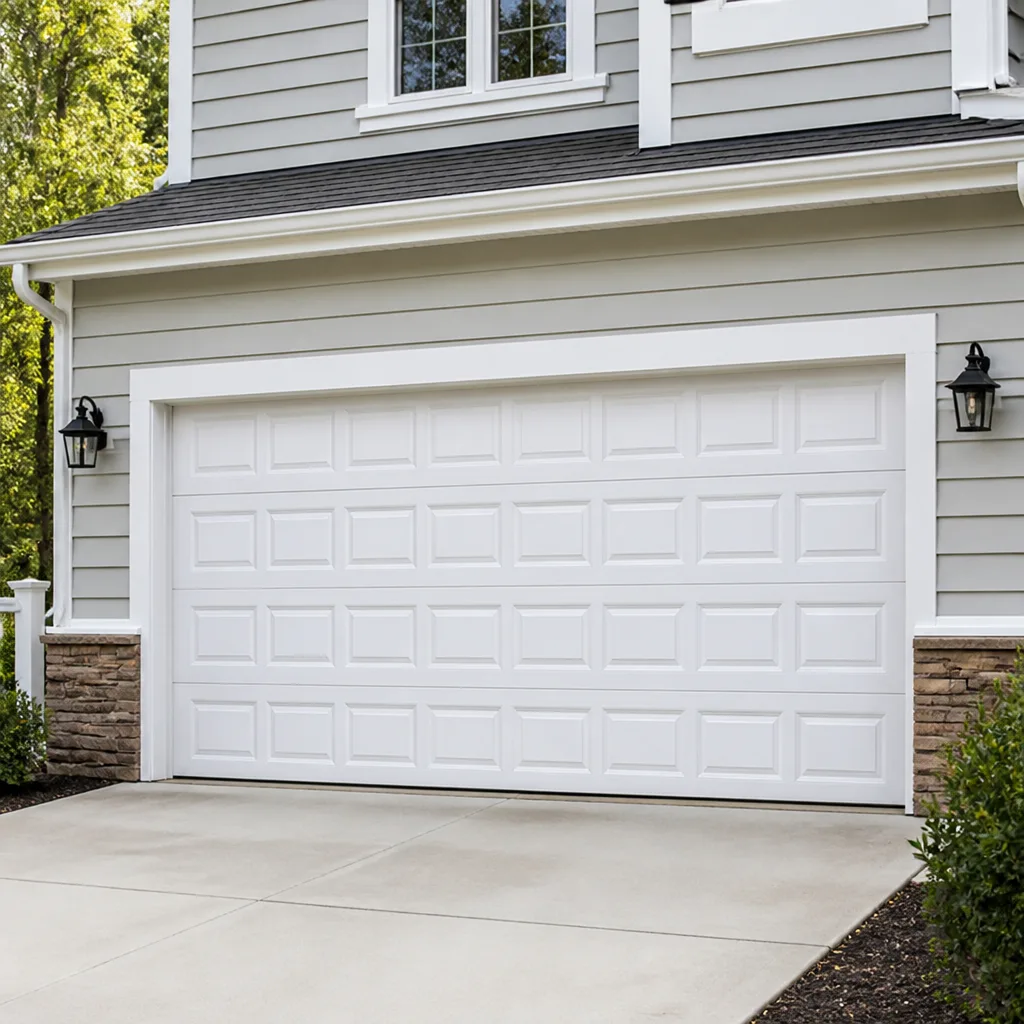 Raised-panel steel
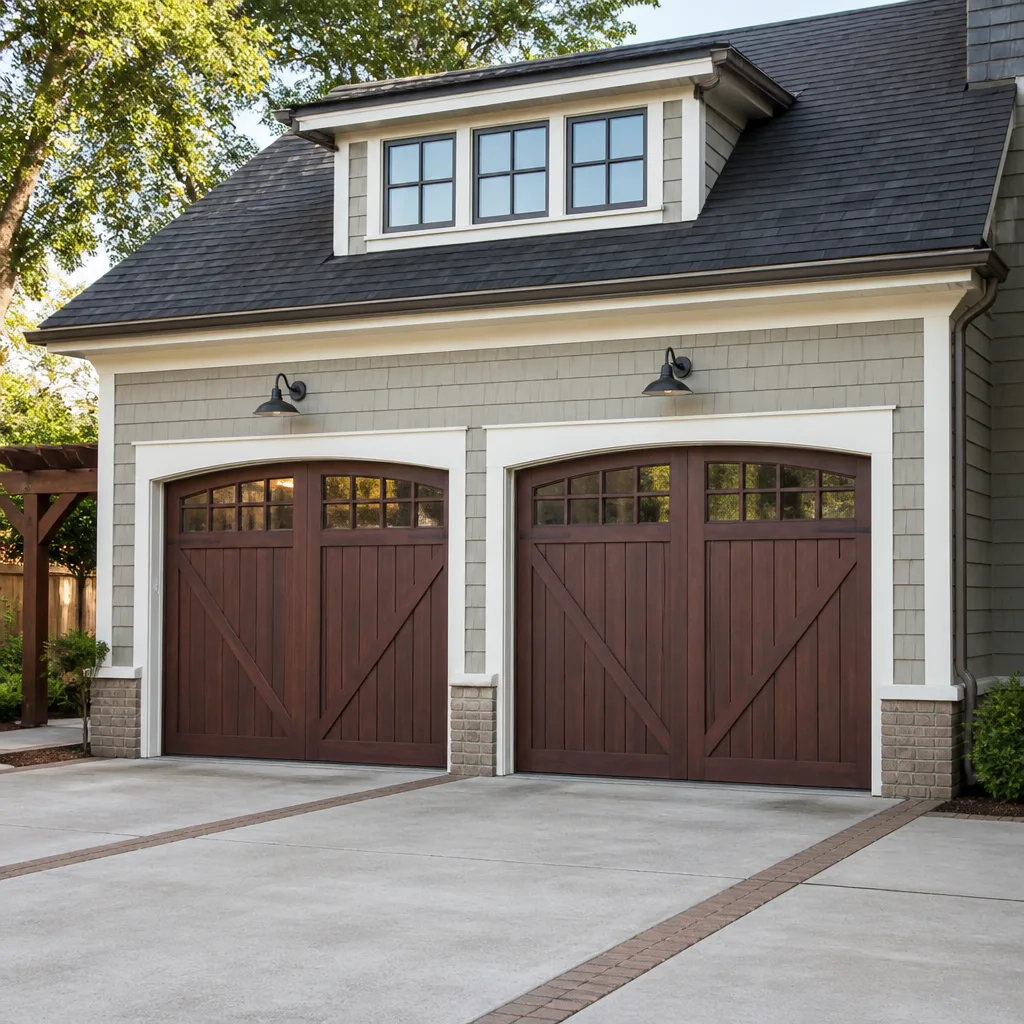 Carriage house
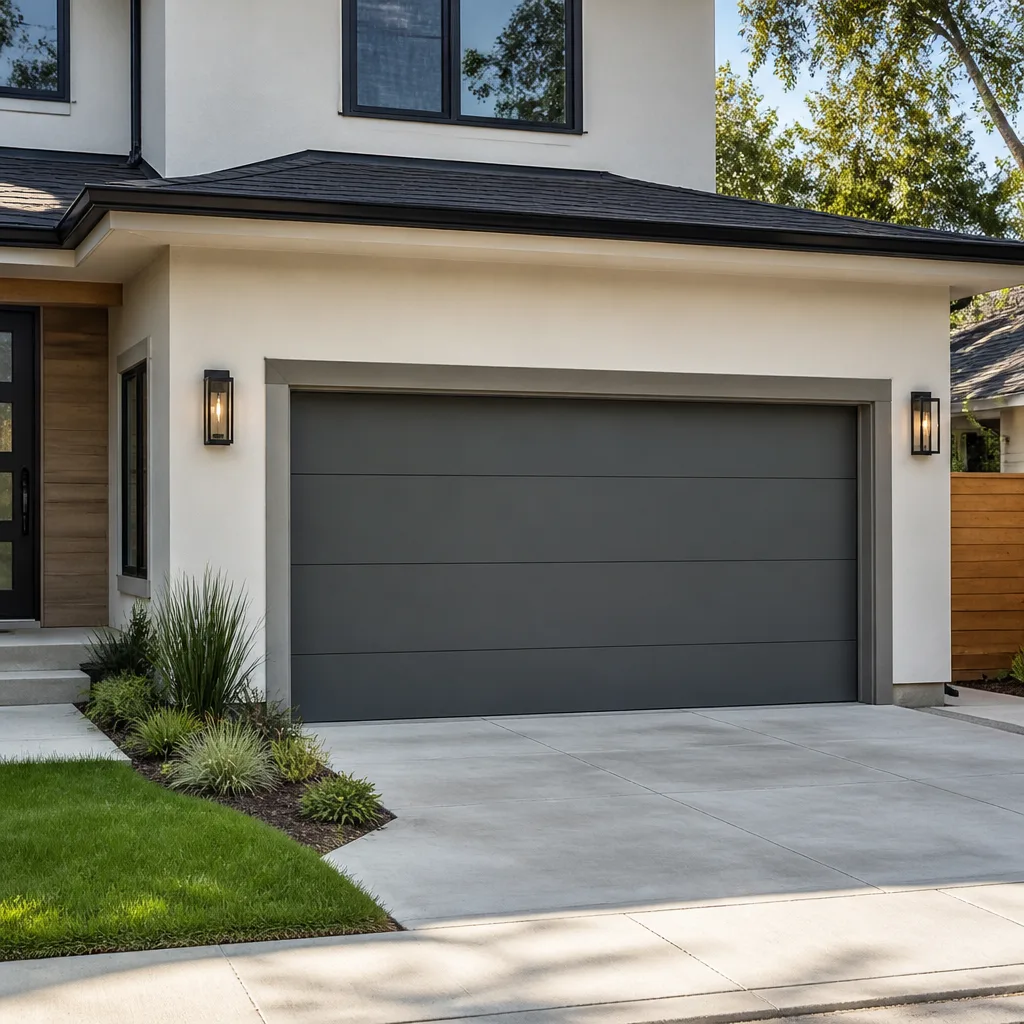 Modern flush
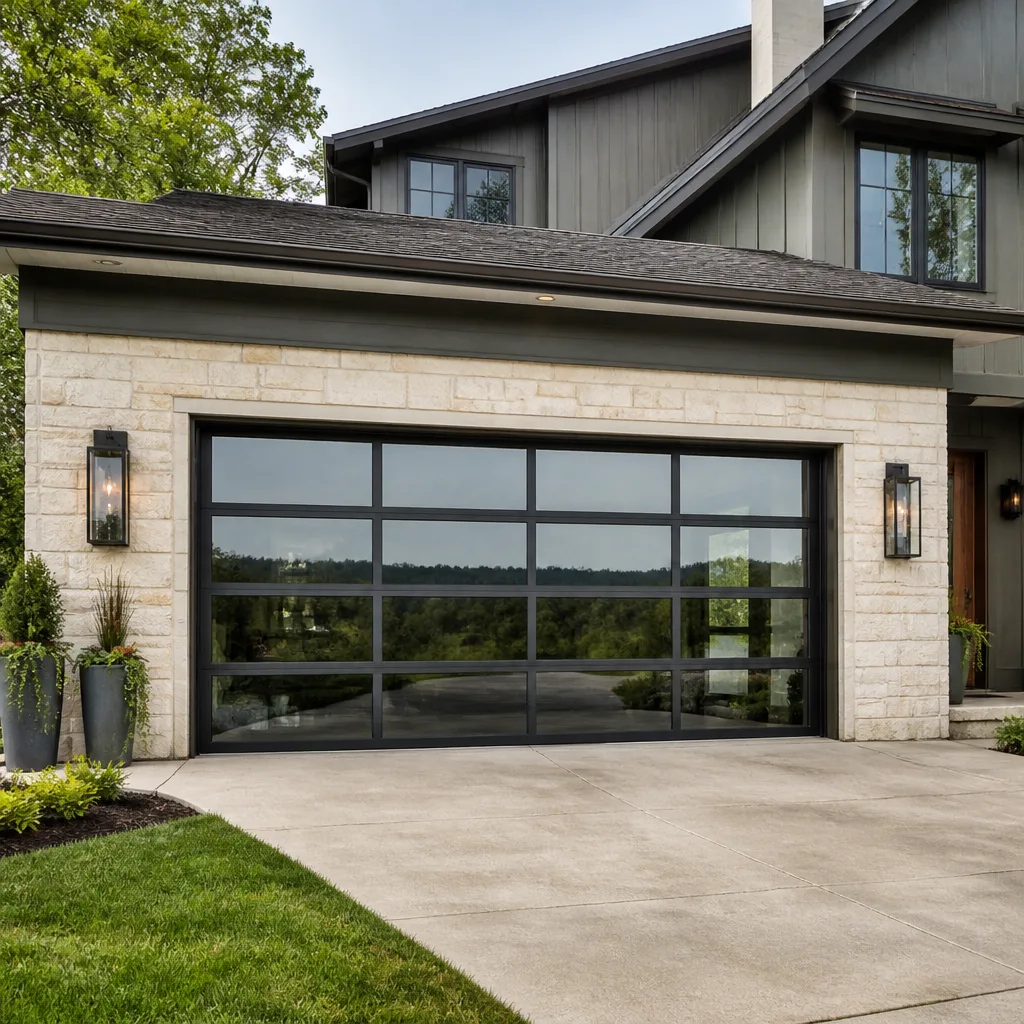 Full-view glass
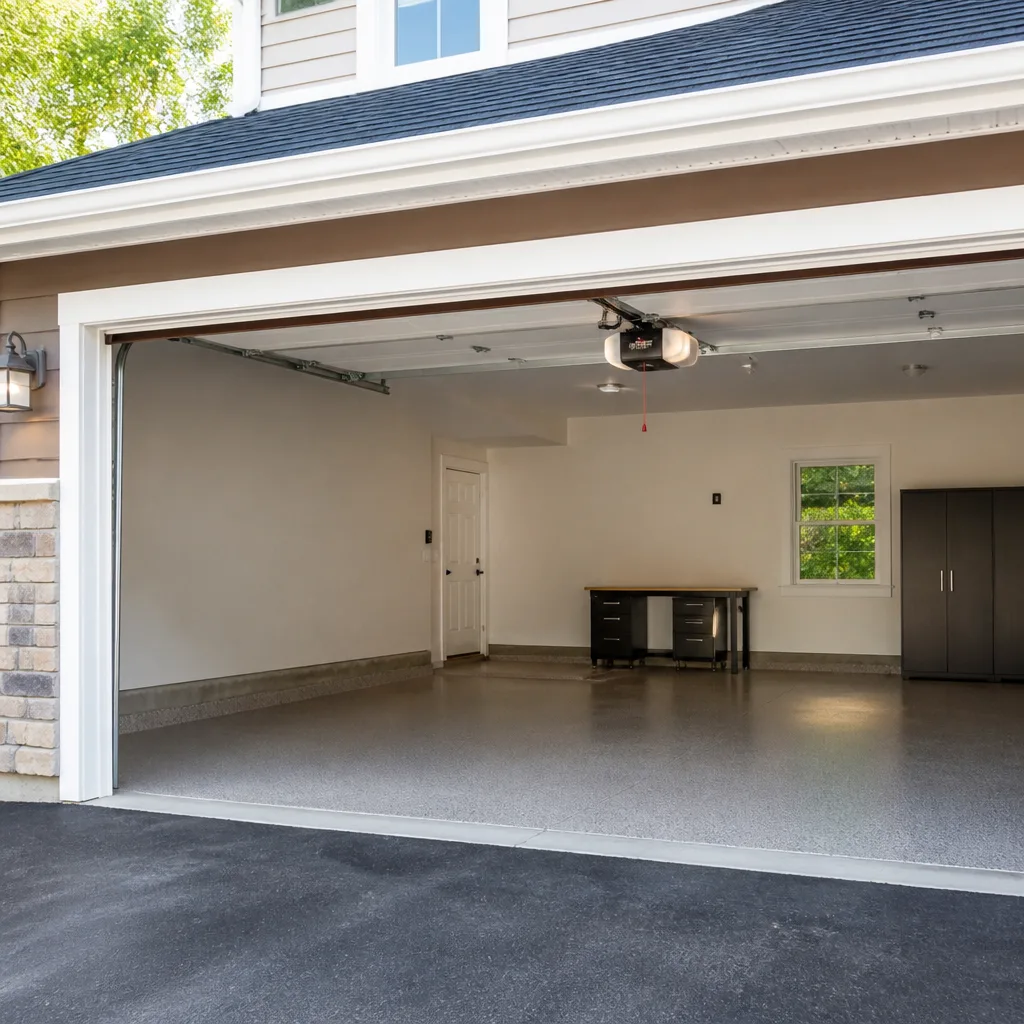 LiftMaster openers
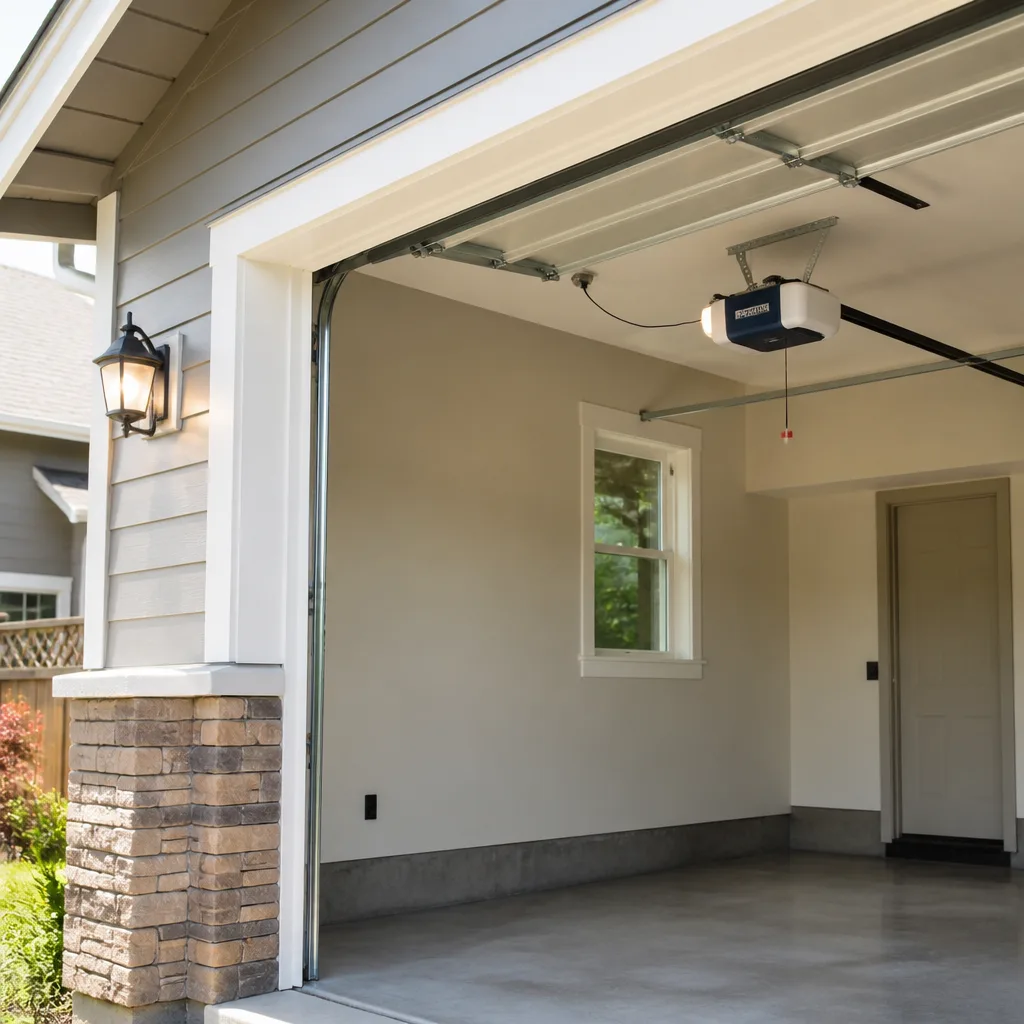 Chamberlain openers
Full 25-point door and opener safety check with every visit - springs, cables, rollers, tracks, and your LiftMaster or Chamberlain opener included
You get a price before we start. It does not change when the pro arrives.
Get your free estimateThe Complete Guide to Garage Doors in Miami Gardens
Most garage door advice you’ll find online was written for a climate with four seasons, cheap untreated steel, and code requirements that don’t mention wind. That advice doesn’t travel well to Miami Gardens. Here, a door faces heat that never really leaves, humidity that works on every seam and hinge, and a building code shaped by hurricanes rather than snow. A door that would last twenty years in a mild inland climate may show its first real problems here in a fraction of that time, and the fix isn’t always the cheaper one. This guide walks through the decisions that actually matter for a Miami Gardens homeowner: materials, wind-rated hardware, openers, maintenance, repair, and real lifecycle cost.
Quick Answer
A garage door in Miami Gardens should be wind-load rated and, in most cases, backed by a Miami-Dade Notice of Acceptance (NOA), because the county sits in a Windborne Debris Region where certain door constructions aren’t permitted at all regardless of price. Choose materials for how they handle heat and humidity, not for how they look in a showroom photo. Get the written estimate before work begins so the quoted price is the final price.
Styles & brands we work with
- Raised-panel steel
- Carriage house
- Modern flush
- Full-view glass
- LiftMaster openers
- Chamberlain openers
Table of Contents
- Why Miami Gardens Doors Wear Differently
- Wind-Load Requirements and the NOA Question
- Material Comparison: Steel, Aluminum, Fiberglass, Wood Composite
- Choosing an Opener for Heat and Power Outages
- A Maintenance Routine That Fits This Climate
- Repair or Replace? A Practical Decision Framework
- Lifecycle Cost in South Florida Terms
- How to Choose a Garage Door Company in Miami Gardens
Why Miami Gardens Doors Wear Differently
The first thing to understand about Miami Gardens garage doors is that the environment never gives them a break. There’s no cold season that slows corrosion or dries out the hardware. Humidity stays high enough that condensation forms on cool metal surfaces, and inside an attached garage, trapped heat builds through the day. That combination accelerates wear on the parts that move: springs, rollers, hinges, cables, and the opener’s mechanical drive.
The salt question is real here. Miami Gardens sits less than 15 miles from Biscayne Bay, and salt-laden air reaches inland neighborhoods. Untreated steel panels and plain zinc-plated hardware are the first things to show it, usually as surface rust at the bottom section, along the panel seams, and at the hinges and track brackets. Doors in neighborhoods closer to open water and on lots with more wind exposure tend to show it sooner. Doors under a shade tree or on the leeward side of the house get a little more time.
What this means for a homeowner is practical:
- Inspect the bottom section and hardware at least twice a year, not once.
- Treat any rust spot on a steel door as a maintenance item now, not a replacement decision later.
- Expect springs, rollers and hinges to wear faster here than the general “typical lifespan” numbers you’ll read.
- Keep the opener’s force settings and safety reverse tested, since heat and humidity can change how freely the door moves.
None of this is a reason to panic. It’s a reason to know the local conditions and plan for them.
Wind-Load Requirements and the NOA Question
Miami-Dade County is designated a Windborne Debris Region, and that designation changes which garage doors are legally allowed on a home. It isn’t a suggestion and it isn’t a matter of preference. It means the door, and in many cases its reinforcement hardware, must meet a defined wind-load standard and carry the documentation to prove it. A cheaper door that meets the same style criteria elsewhere may not be permitted here at all.
The documentation piece is the Notice of Acceptance, or NOA. A Miami-Dade NOA confirms a product has been evaluated for use in the county’s high-velocity hurricane zone conditions. For garage doors and the reinforcement systems that hold them in place during a storm, the NOA is the paper trail. If a company can’t produce it for the door or the hardware they’re installing, that’s a problem you find out about at inspection or, worse, when a storm arrives.
Here’s where the practical difference shows. A company that keeps Miami-Dade NOA-approved hardware on hand can measure, quote and schedule without waiting for parts to ship. A company that orders the approved hardware after the fact adds lead time to every job, and sometimes substitutes what’s available. For a homeowner, that means asking a direct question before you sign anything: is the door and the reinforcement hardware you’re proposing NOA-approved, and can I see the documentation?
The reinforcement side deserves as much attention as the door itself. Wind-rated doors rely on a system, including heavier track, additional anchors and a vertical reinforcement bar in many designs. Replacing a door without addressing the reinforcement is only half a job. Most cities require a permit for this kind of work, so ask your city’s building department what documentation they’ll want to see before the work starts.
Material Comparison: Steel, Aluminum, Fiberglass, Wood Composite
Material choice is where a lot of generic guides go wrong for South Florida. They compare products on price per square foot and ignore how each one handles constant humidity and salt exposure. In Miami Gardens, how a material behaves over time matters more than how it looks on day one.
Steel
Steel is the most common choice and the most widely available. It’s strong, it takes a wind rating well, and it can be insulated. The catch is corrosion. Untreated or thin-coated steel is the first material to show rust at the bottom section and along seams. If you choose steel here, choose a door with a proper galvanized substrate and a factory finish, and plan to inspect it twice a year.
Aluminum
Aluminum resists corrosion better than steel in humid, salt-influenced air, which is why it shows up on more doors here than in colder markets. It’s lighter, which is easier on the opener and springs. The trade-off is that aluminum dents more easily and typically needs a heavier gauge or a reinforced frame to meet wind ratings. Full-view aluminum doors are popular, but the glass and frame assembly has to be rated as a system.
Fiberglass
Fiberglass doesn’t rust, takes heat well, and holds its finish over a long stretch. It’s often used on doors that are exposed to more direct sun. It’s a reasonable choice for salt-influenced air, but it can crack on impact and generally needs to be paired with a wind-rated frame and hardware to be permitted here.
Wood Composite
Wood composite and wood-look doors offer the warmest appearance, and in Miami Gardens they can work well if the composite is engineered for humidity. Natural wood is the material to avoid here. It moves with moisture, it needs periodic refinishing, and it’s the hardest to keep ahead of in constant humidity. Engineered composites handle this climate far better than solid wood and still give you the look.
What to weigh
- Corrosion resistance: aluminum and fiberglass lead; steel depends entirely on finish and substrate.
- Wind rating: any material can be rated, but the frame and hardware system matters as much as the panel.
- Weight and wear on moving parts: lighter doors are easier on springs and openers.
- Maintenance: steel needs finish upkeep; fiberglass and aluminum need less; wood composite needs the most care of the engineered options.
- Look: if appearance is the priority, engineered composites and aluminum give you style without the humidity problems of natural wood.
If you want a specific recommendation for your house, that’s a conversation best had after a measure. We carry fluency across Clopay, Amarr, Wayne Dalton and the other major brands, so the recommendation comes from your situation, not from which brand pays better.
Choosing an Opener for Heat and Power Outages
The opener is where Miami Gardens conditions hit hardest and where most guides say the least. A garage interior can get hot, and heat is the enemy of opener electronics and the plastic gears inside many units. Add frequent power outages during storm season and you have two features that matter more here than anywhere: battery backup and a drive system that handles heat well.
Features that actually matter here
- Battery backup: when the power goes out, a battery-backup opener lets you open the door without disengaging the trolley by hand. In a storm-prone area, this is the single most useful feature.
- Heat tolerance: belt-drive and chain-drive systems differ in how they handle heat and noise. Belt drives run quieter and are easier on the door; chain drives are durable but louder. Ask what the opener is rated for in high ambient temperatures.
- Safety reverse and force settings: these need to be tested and adjusted so the door reverses on contact. Heat can change how freely a door moves, so settings that worked in cooler weather may need a check.
- Smart connectivity: useful for alerts and remote operation, and genuinely helpful if you want to know the door opened while you were away. It’s not a substitute for battery backup.
- Compatibility with your door: a heavy, insulated door needs an opener rated for it. Matching the opener to the door’s weight is part of the diagnosis.
Opener repair is its own specialty, and it’s one a lot of general repair shops decline or outsource. LiftMaster, Chamberlain, Genie and Craftsman units all have their own failure patterns. Diagnosing by symptom rather than guessing and swapping parts is what keeps you from paying for a second visit. If your opener is the problem, dedicated garage door opener repair is the right call rather than a general handyman.
A Maintenance Routine That Fits This Climate
A maintenance routine for Miami Gardens has to be built around humidity and heat, not around a cold-climate seasonal checklist. The goal is simple: keep the moving parts moving freely, catch corrosion early, and confirm the safety systems work. Here’s a routine you can follow.
- Look at the door, inside and out. Check the bottom section for rust, bubbling paint, or separation at the seams. Check the hinges, rollers and track brackets.
- Test the balance. Disengage the opener and lift the door by hand to about halfway. It should stay there with little effort. If it drops or is very heavy, the springs or cables need attention.
- Test the safety reverse. Put a piece of wood flat on the floor in the door’s path and close the door. It should reverse on contact. Then test the photo-eye sensors by blocking them.
- Lubricate the moving parts. Use a proper garage door lubricant on hinges, rollers and springs, not a general household oil that attracts grit.
- Clear the track. Wipe out debris and check that the track is straight and the rollers aren’t worn flat.
- Check the weather seal. The bottom seal takes the most abuse here. A worn seal lets in heat, moisture and pests.
- Listen. A door that suddenly gets louder, grinds, or hesitates is telling you something is wearing.
Do this twice a year, and pay particular attention after storm season. A door that came through a storm without visible damage can still have a bent track or a stressed spring that shows up weeks later.
A safety note: the springs and cables that lift a garage door are under high tension, and adjusting or replacing them is genuinely dangerous. Never attempt spring or cable work yourself. That’s a job for a trained professional, every time.
Repair or Replace? A Practical Decision Framework
The repair-or-replace question comes down to which parts are failing, how old the door’s structural components are, and whether the door meets current wind requirements. A door that’s mechanically sound but not wind-rated is a different decision than a wind-rated door that needs a spring.
Lean toward repair when:
- The problem is a single component: a spring, a roller set, a hinge, a cable, or the opener.
- The panels are straight and the track isn’t bent.
- The door is wind-rated and the hardware is intact.
- The opener has failed but the door itself is in good shape.
Lean toward replacement when:
- Multiple panels are dented, rusted through, or separating at the seams.
- The door isn’t wind-rated or lacks NOA documentation, and you’re planning to stay in the home.
- The track and hardware are failing together, not one part.
- Repairs would exceed the cost of a new, properly rated door.
Repairs need speed, and that’s where fast response matters. If a spring snaps or the door won’t close, you need it fixed today, not scheduled for next month, because a garage that won’t close is a security problem. Garage door repair on a dead spring or a jammed door is usually a same-day job, and the price is quoted and agreed before any work begins. Replacement is a different timeline: the door has to be measured, the right NOA-approved model ordered, and the installation scheduled. That’s why a replacement doesn’t come with a same-day promise, but it does come with a free measure and a written price.
Lifecycle Cost in South Florida Terms
The mistake most homeowners make is budgeting from a national average. In Miami Gardens, the accelerated wear on moving parts and the wind-rating requirement change the math. A lifecycle budget should account for three things: the door, the parts that wear out, and the cost of getting the rating wrong.
What drives the real cost over time
- Springs and cables: cycled more in a household that uses the door daily, and stressed by heat. These are a scheduled replacement item, not a surprise.
- Rollers and hinges: corrosion and grit wear these faster here than in a dry climate. They’re inexpensive individually but add up if ignored.
- Finish upkeep on steel: a door that needs repainting every few years costs more than one that doesn’t. Material choice affects this line directly.
- Opener replacement: heat and outages shorten opener life. Battery backup and a heat-tolerant drive reduce the frequency.
- The rating: the biggest hidden cost is a door that doesn’t meet current requirements. Replacing it on your timeline is far better than discovering the issue during a sale or an inspection.
What installation and repair typically involve
We don’t quote ranges that ignore your specific door, weight and rating, so treat any number you see online as a starting point and let the written estimate set the final price. A typical installation job includes a measure, the door and hardware selection, and scheduling with NOA documentation. A typical repair includes a diagnosis, the quoted parts, and the work after you’ve agreed to the price.
Treated as one decision
- Doors: choose material and rating for this climate, not for a generic market.
- Openers: prioritize battery backup and heat tolerance; match the opener to the door’s weight.
- Maintenance: budget for it twice a year and it stays cheap; skip it and the repairs get bigger.
- Documentation: keep your NOA paperwork with your home records. It matters at inspection and at resale.
How to Choose a Garage Door Company in Miami Gardens
A page about choosing a garage door company should tell you how to choose one, not rank one. Here’s the framework that actually protects you as a homeowner.
- Ask whether they handle installation, repair and opener work. A company that does all three can diagnose the real problem instead of sending you to a different vendor for the opener or the door. “One call, full service” is only worth something if the capability is real.
- Ask about wind rating and NOA documentation. If they can’t tell you whether the proposed door and hardware are approved for Miami-Dade, keep asking questions.
- Ask which brands they work on. The brand you already own matters. A company fluent in LiftMaster, Chamberlain, Genie, Clopay, Amarr, Wayne Dalton, Craftsman and Raynor can diagnose by symptom instead of by brand assumption. We work on the brand you already own.
- Get the price in writing before work starts. The written estimate is the price, and you should know it before a technician touches the door.
- Ask about safety and licensing. Springs and cables are dangerous. A company that treats that seriously will tell you so.
- Ask what the work looks like when it’s done. Durability matters more than speed here. Work done to last, not to come back, is what you’re paying for.
Sunstone Garage Door Repair is the kind of company this framework points toward: diagnosis first, brand-agnostic recommendations, and full-lifecycle service from installation to repair. Our technicians have up to 8 years of experience, and we work on the equipment you already have rather than pushing you toward a brand. If your door is due for repair today, we answer 24/7 and fast-dispatch from 7am to 7pm, Sunday through Friday.
Common Mistakes to Avoid
- Buying on price without checking the wind rating. A cheaper door that isn’t NOA-approved for Miami-Dade is not a bargain. It’s a future problem, and it could fail an inspection.
- Ignoring rust on the bottom section. In this humidity, a small rust spot is the first sign of a bigger corrosion problem. Deal with it early and it stays a maintenance item.
- Skipping battery backup on a new opener. In a storm-prone area, a power outage and a dead opener at the same time is avoidable. Battery backup solves it.
- Letting anyone adjust springs or cables. These parts are under high tension and cause serious injury. It’s a trained-professional job without exception.
- Choosing natural wood in constant humidity. Engineered composites give you the look without the movement and refinishing. Solid wood is the material to avoid here.
- Acquiescing to an open-ended price. If the price isn’t quoted and agreed before work starts, ask. The written estimate should be the price.
- Treating a replacement like a same-day repair. Replacements are measured, ordered and scheduled with the right documentation. Expecting a same-day install pushes companies to cut corners on the rating.
See the difference
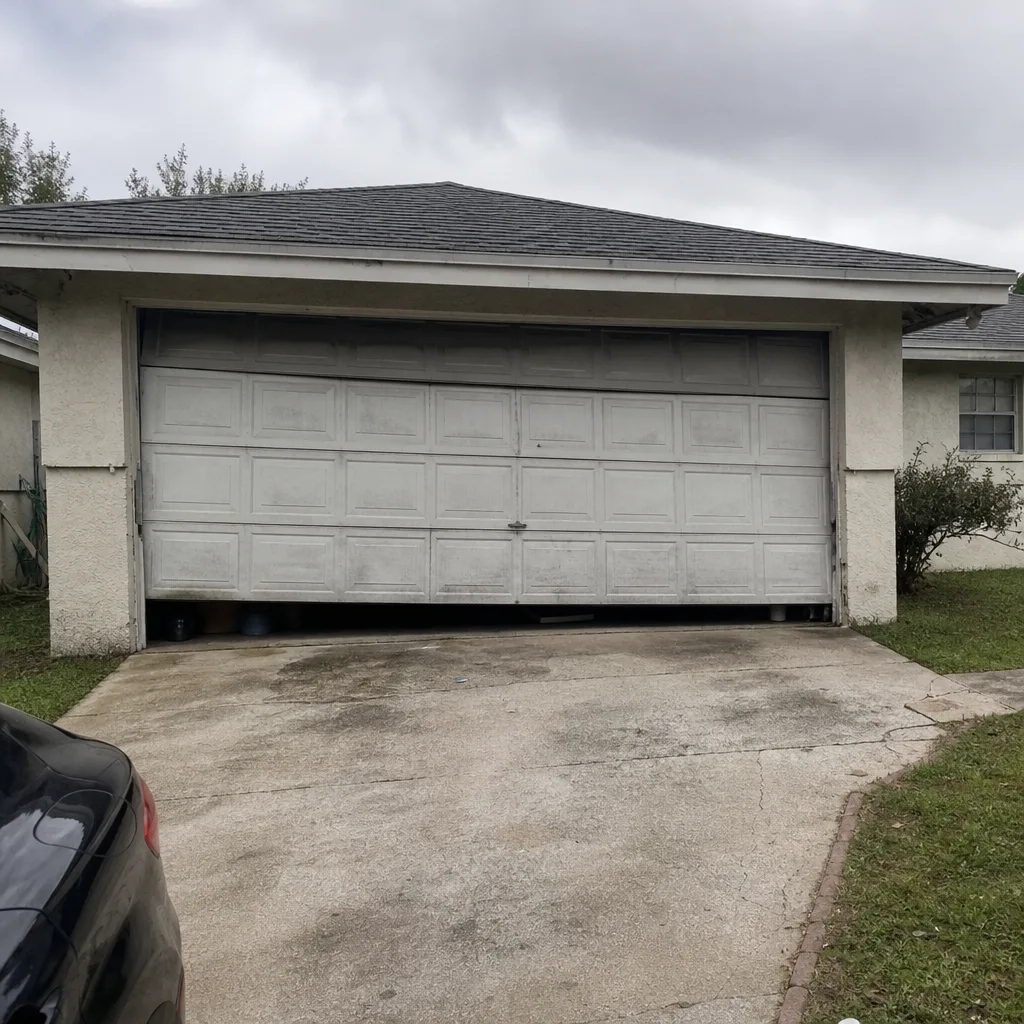 Before
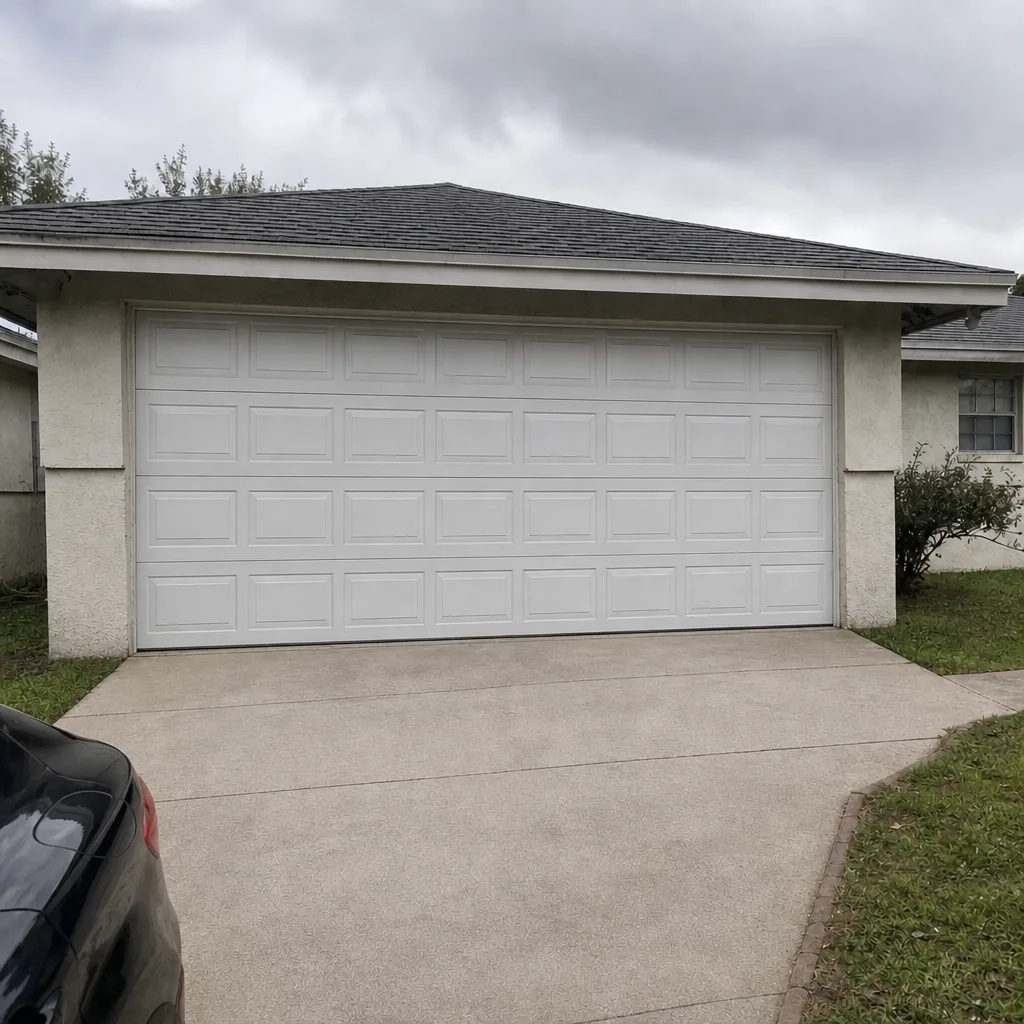 After
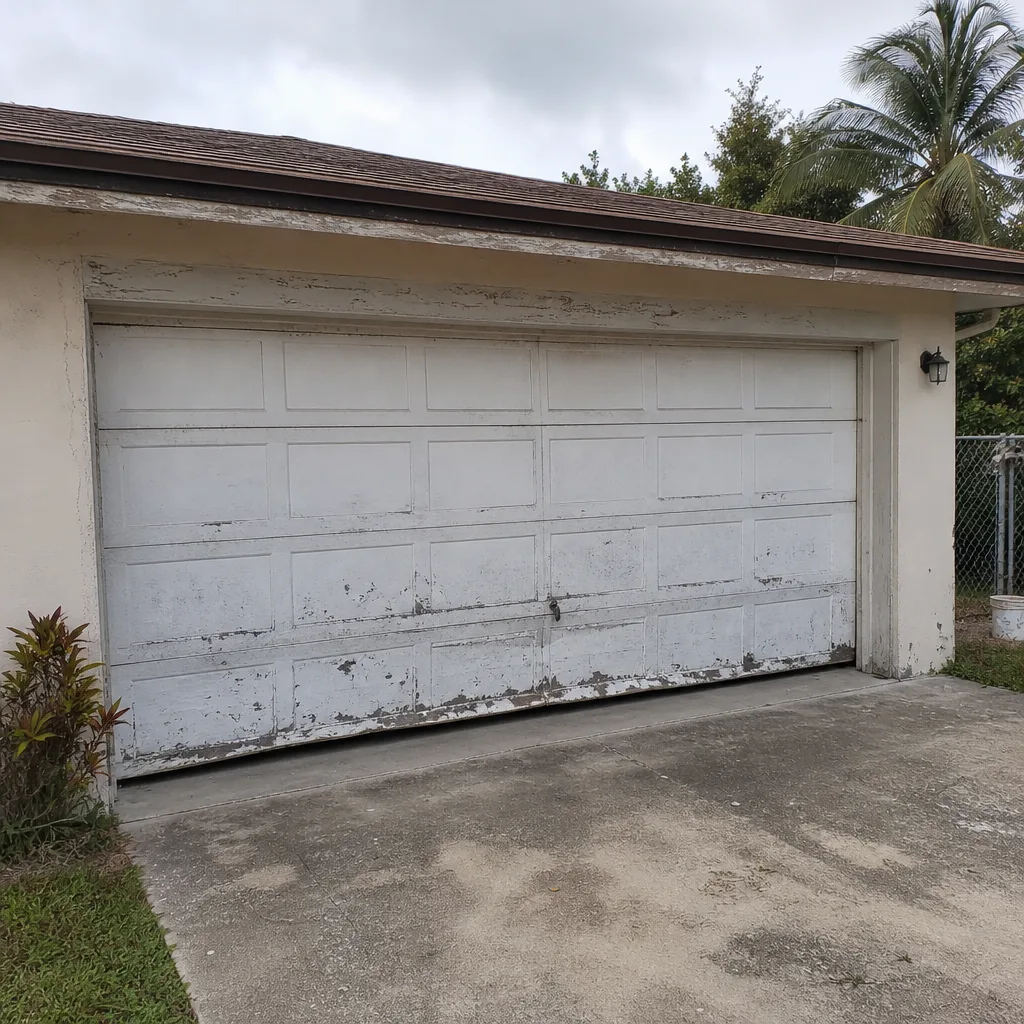 Before
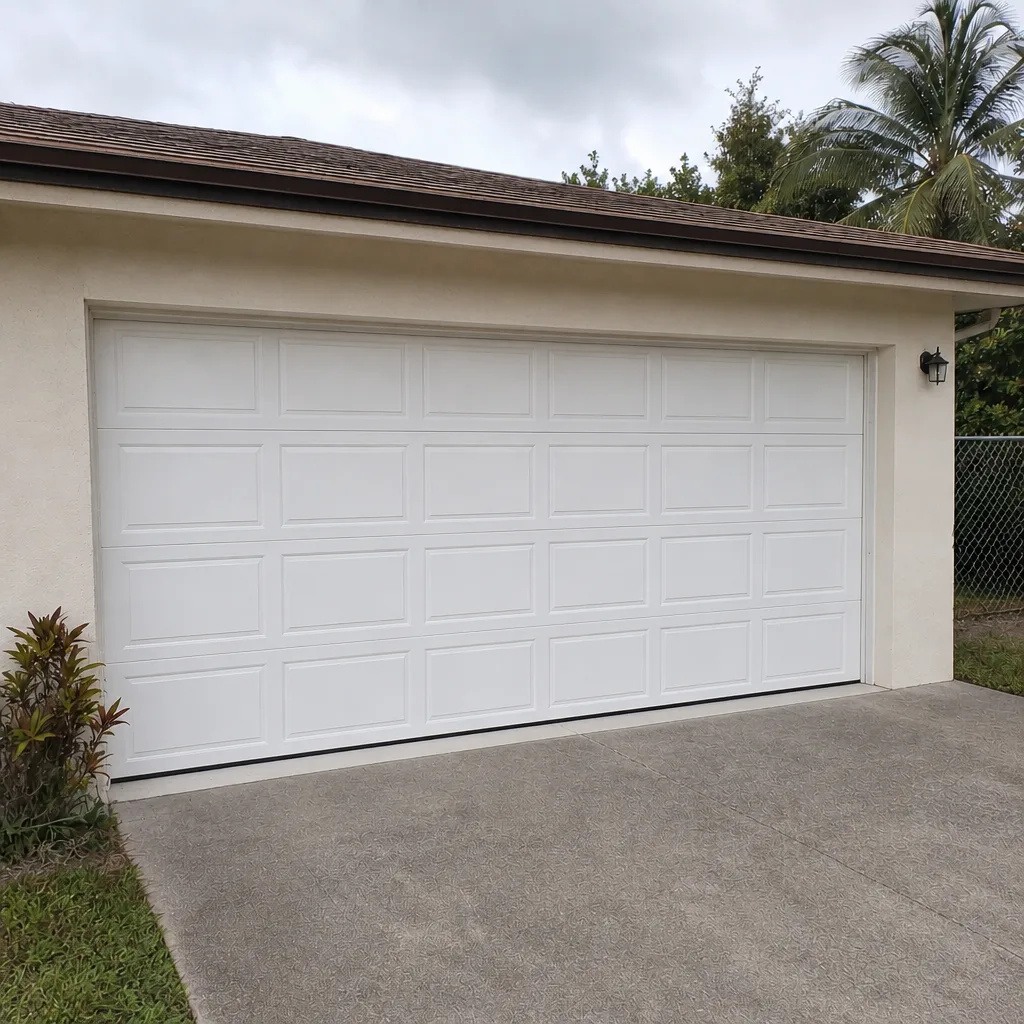 After
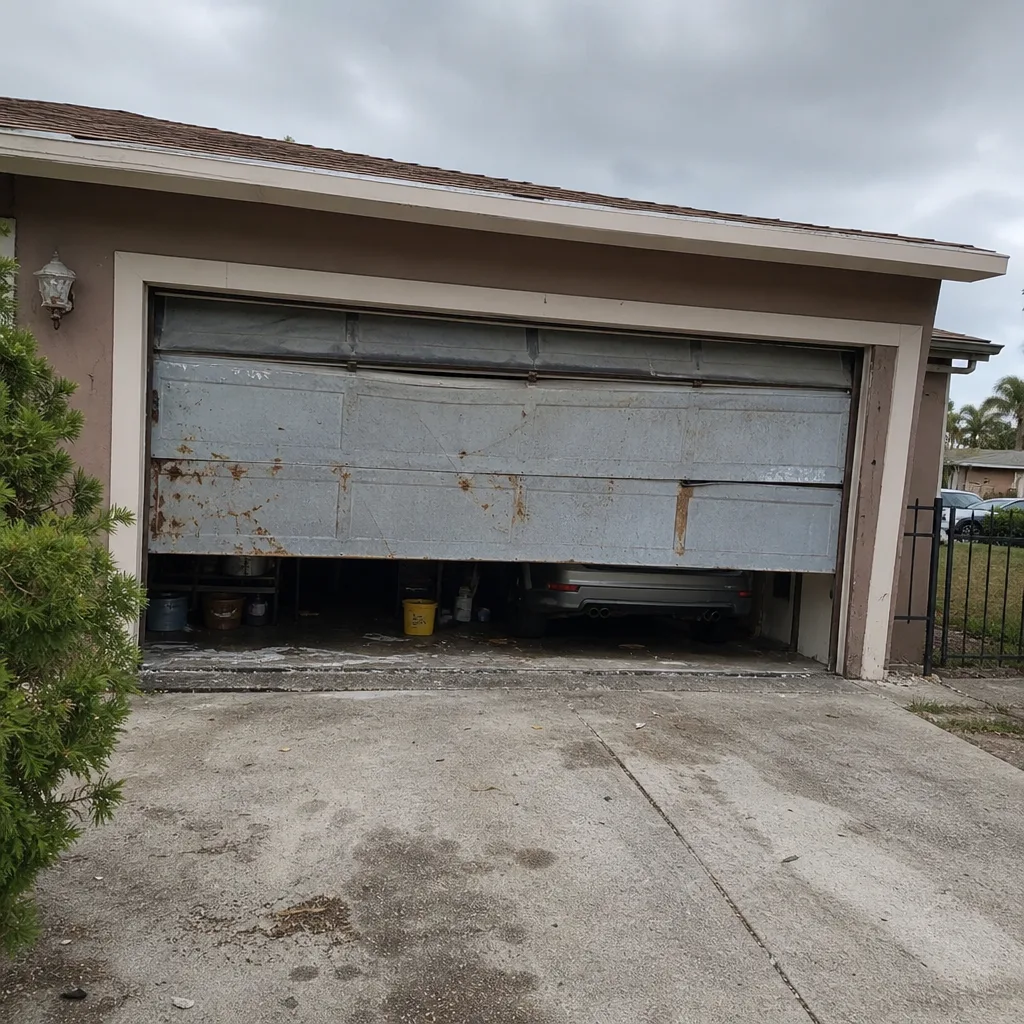 Before
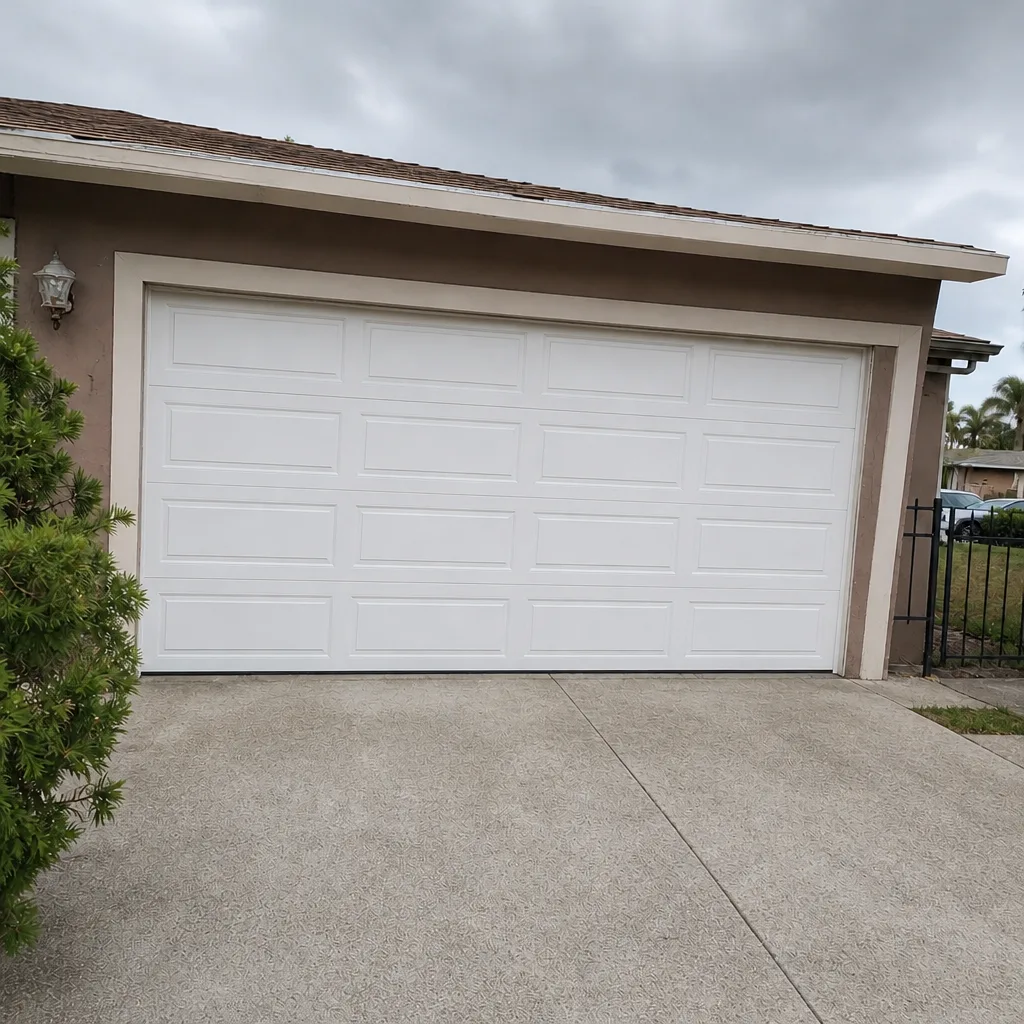 After
When to Call a Professional
Call a professional when the door won’t close or opens unevenly, when a spring snaps or the opener runs but the door doesn’t move, when the door is visibly bent or off its track, or when the safety reverse fails. Call if you see rust spreading beyond a small spot, if the opener has stopped responding to the remote or the wall control, or if the door has become noticeably heavier to lift. Call before a planned sale or inspection if you’re unsure about NOA documentation or the door’s wind rating. Springs, cables and electrical opener work carry real risk, so keep those tasks with a trained technician. Sunstone Garage Door Repair offers free estimates in Miami Gardens – call (855) 360-7295. We answer 24/7. Fast dispatch from 7am to 7pm, Sunday through Friday.
Frequently Asked Questions
The door has to be wind-load rated and, in most cases, backed by a Miami-Dade NOA, because the county is a Windborne Debris Region. Beyond the rating, choose materials for heat and humidity rather than for the look alone, and keep up with twice-yearly maintenance. If you’re not sure about your door’s rating, that’s the first thing to check.
Most replacements in Miami-Dade County require documentation showing the door meets the county’s wind requirements, and a Notice of Acceptance is the document that proves it. Ask your city’s building department what they require for your property before the work starts. A company that already keeps NOA-approved hardware on hand can quote and schedule without waiting on parts.
Twice a year is a practical baseline in Miami Gardens, plus a check after storm season. Constant humidity and heat wear moving parts faster than in temperate climates, so the schedule should reflect that. The routine is straightforward: inspect for corrosion, test the balance and safety reverse, lubricate the moving parts, and clear the track.
Aluminum and fiberglass resist corrosion and salt-influenced air better than plain steel, and engineered wood composites hold up far better than natural wood in constant humidity. Steel can work well with a proper galvanized substrate and factory finish, but it needs more finish upkeep. The best choice depends on your wind rating, your budget and how the door looks, so it’s worth getting a measured recommendation.
We work on the brand you already own. Our technicians are fluent across LiftMaster, Chamberlain, Genie, Clopay, Amarr, Wayne Dalton, Craftsman and Raynor, and opener repair is treated as a specialty rather than an afterthought. Diagnosing by symptom rather than by brand assumption is what avoids replacing parts that aren’t the problem.
Call (855) 360-7295 and we’ll book the earliest opening. We answer 24/7, and dispatch runs from 7am to 7pm, Sunday through Friday. A call outside dispatch hours is booked into the next opening, Sunday through Friday. Repair work on a dead spring or a jammed door is usually same-day, and the price is quoted and agreed before any work begins.
The Bottom Line
Garage doors in Miami Gardens don’t get the same life as doors in a four-season climate. The humidity, heat and salt-influenced air wear moving parts faster, and the county’s wind-code requirements mean the door and its hardware have to be rated and documented, not just installed. Choose materials for this climate, prioritize battery backup and heat tolerance in your opener, keep up with twice-yearly maintenance, and always get the price in writing before work starts. The written estimate sets the final price. If you’re not sure where your door stands, a free measure and a written price answers most of it.
Call (855) 360-7295 for a free estimate. We answer 24/7. Fast dispatch from 7am to 7pm, Sunday through Friday. We handle garage door opener repair, repair, and installation across Miami Gardens, and we work on the brand you already own.
Written by the team at Sunstone Garage Door Repair.